
What happened to the Trump administration’s in-your-face mass deportations?
The Evolution of Trump’s Deportation Strategy: From Bold Tactics to Subtler Enforcement
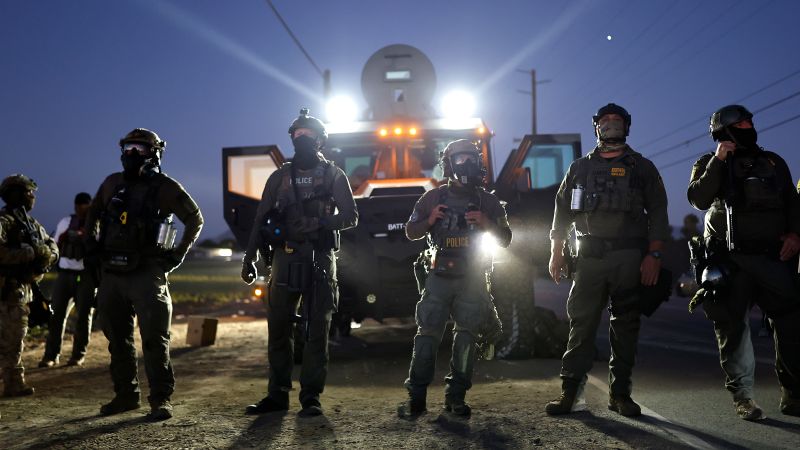
What happened to the Trump administration – Following a series of high-profile clashes between federal and state authorities, the Trump administration has noticeably adjusted its approach to immigration enforcement. These changes became evident in early 2026, when a dramatic confrontation in Minneapolis drew national attention. Video footage of agents wearing masks and confronting protesters sparked widespread criticism, highlighting the aggressive, public-facing nature of the previous deportation strategy. Now, as the political landscape shifts, the administration’s methods appear to be adopting a more discreet tone, while maintaining the core principles of its policy.
Leadership Changes and Policy Continuity
Key figures tied to the administration’s assertive deportation policies have either stepped down or been replaced. Greg Bovino, a prominent Border Patrol official known for his confrontational style, has retired from his position. Kristi Noem, who once served as Secretary of Homeland Security, was removed by President Donald Trump, paving the way for Markwayne Mullin to take over. These transitions mark a shift in the leadership dynamics that once fueled the administration’s visible enforcement campaigns.
“In the months since Minneapolis, there’s been a real change in how the administration is pursuing its mass deportation policy. What has happened?”
Priscilla Alvarez, a seasoned CNN immigration reporter, explained that the shift stems from the arrival of Tom Homan, the White House Border Czar. After the deaths of two U.S. citizens during a confrontation with federal agents, Homan was deployed to Minneapolis to recalibrate the approach. His presence signified a move toward a more strategic, behind-the-scenes enforcement model. Prior to this, the policy had been marked by its flashy and confrontational nature, with aggressive tactics like high-profile raids and publicized arrests dominating the narrative.
Under the previous administration, figures like Bovino and Noem were central to these efforts. Bovino, as a top Border Patrol official, had spearheaded the aggressive enforcement style, while Noem endorsed and supported it at the highest levels. This alignment created a culture of overt operations, often broadcasted on social media to showcase the administration’s commitment to immigration control. Homan’s arrival, however, introduced a more calculated method, reducing the emphasis on spectacle and increasing focus on operational efficiency.
Alvarez noted that the underlying policies have not changed, despite the shift in execution. “The substance of the policies remains the same,” she said. “Immigration officials are still targeting undocumented immigrants aggressively, but the way they do it and how it’s presented has evolved.” The new approach prioritizes discretion, with fewer publicized videos and a quieter, more coordinated strategy across agencies.
The Role of Homan and Mullin: A New Enforcement Partnership
Tom Homan, with his extensive background in law enforcement, has been pivotal in steering the administration’s tactics. Having worked for both Republican and Democratic administrations, his experience adds a layer of stability to the current approach. Now, under Secretary Mullin, the two officials regularly coordinate publicly, signaling a more unified front. This partnership has allowed Homan to implement his targeted strategy, which focuses on individuals with criminal records while remaining open to broader operations when necessary.
“The way to think about this is that Homan is very enforcement-minded. He’s focused on the operational side, while Mullin has been more involved in the overall policy direction.”
Stephen Miller, the White House deputy chief of staff, continues to shape the broader immigration agenda. His influence is evident in the policies that span multiple departments, ensuring consistency in the administration’s long-term goals. While Homan handles the day-to-day enforcement, Miller sets the strategic vision, which includes maintaining the momentum of mass deportations even as the methods become less visible.
This division of labor has led to a nuanced shift in the administration’s strategy. Homan’s targeted approach has reduced the frequency of large-scale, high-visibility operations, but the core objective—removing undocumented immigrants—remains unchanged. Alvarez emphasized that the public perception of the policy has shifted as well. “The enforcement is still happening, but it’s much more quiet now,” she said, noting that the new methods are designed to avoid the same controversies that emerged in Minneapolis.
Controversial Practices Remain: A Lingering Legacy
Despite the administration’s efforts to streamline its operations, some of the most contentious practices from the past persist. Agents continue to wear masks during raids, a tactic that was widely criticized in Minneapolis for creating an intimidating image. Additionally, the targeting of individuals near schools and other community spaces has not disappeared. These actions, which once drew sharp public backlash, are still being carried out, though they may now be less prominent in media coverage.
“The short answer is yes. Agents are still wearing masks, and people without criminal records are still being arrested, even as the administration’s methods grow more discreet.”
Alvarez clarified that while the administration has refined its approach, the underlying practices remain controversial. “The policy hasn’t changed in substance,” she said. “What has changed is the way it’s being executed. The public no longer sees the same level of drama, but the impact is still significant.” This evolution reflects a balance between maintaining the administration’s goals and adapting to political and social pressures.
The Minneapolis incident served as a turning point, prompting a reevaluation of how immigration enforcement is conducted. While the administration has moved away from the overt, high-profile raids that characterized its earlier strategy, the policies themselves remain intact. This shift has allowed officials to continue their work without the same level of public scrutiny, though the controversies that once defined the approach are not entirely behind them. As Alvarez put it, “The enforcement is still happening, but the way it’s being done has changed. It’s more about precision and less about spectacle.”
In summary, the Trump administration’s immigration strategy has adapted to new circumstances without abandoning its foundational principles. The transition from in-your-face deportations to quieter, more targeted operations reflects a broader effort to align enforcement with political realities while preserving the core mission of removing undocumented immigrants. As the policy continues to evolve, the balance between aggression and discretion remains a central theme in its ongoing implementation.
