
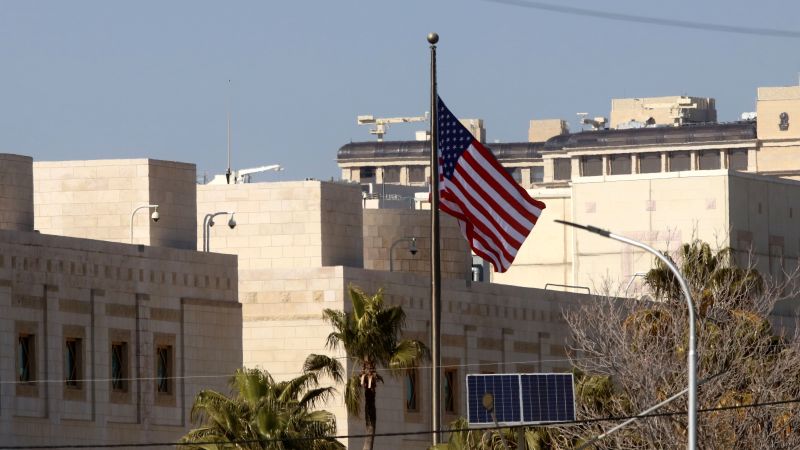
US Discreetly Moves Diplomats and Families Amid Tensions
Goldlaner.com – The US discreetly moves diplomats and families from several Middle Eastern posts as concerns grow that regional fighting could widen. The changes have renewed uncertainty for Foreign Service families who recently returned after earlier departures during the Iran war.
The moves follow an increase in attacks on Saudi Arabia by Iranian-backed Houthis. The State Department has warned that hostilities tied to those attacks could spread beyond the immediate area, prompting US missions to reassess staffing and emergency preparations.
Saudi Arabia Ordered to Reduce Staff
The State Department directed non-emergency personnel and all family members to leave Saudi Arabia this week, citing the Houthi escalation. Staffing restrictions have also been adjusted at US embassies in Jordan, Bahrain, Kuwait, Qatar, the United Arab Emirates and Lebanon.
A State Department official said temporary staffing changes affect Lebanon, the UAE, Qatar and Jordan as those posts operate under restricted conditions. Kuwait and Bahrain have no personnel changes because their missions remain within current staffing limits.
Unlike the Saudi Arabia order, departures from other posts have not been publicly announced. Embassies can remain under restricted operations while still making significant decisions about which employees and relatives stay or leave.
Another Disruption for Foreign Service Families
For many families, the US discreetly moves diplomats and families after they had only recently resumed life in the region. Previous departures required employees and relatives to find temporary housing, move children into new schools and manage long periods of separation.
“To say it has been chaotic is an understatement,” said one US diplomat, who said available financial assistance does not cover the full cost of relocating a family.
Nikki Gamer, a spokesperson for the American Foreign Service Association, said affected families had only recently begun returning to normal routines.
“This echoes the chaos families experienced earlier this year. Some had barely settled back in before being told to leave again,” Gamer said. “They are understandably upset, confused, and angry.”
Some embassies had not allowed children to return after the earlier departures, even where spouses were permitted back. That has left some families facing a new relocation or another period apart.
Support, Planning and Communication Concerns
Foreign Service personnel have questioned whether relatives returning to the United States will receive sufficient per diem and relocation support. Per diem is intended to help cover lodging and daily living costs for employees and eligible family members who must move.
A State Department official later said direct-hire US personnel and their families would receive per diem, lodging assistance and schooling support. Allowances will reflect government rates where families are staying.
Families have nevertheless raised concerns about the timing and clarity of instructions. Some embassy personnel said they had not received the planning sessions or town halls that often accompany a major departure process.
“There’s a very Groundhog Day vibe,” a source in Amman said, describing embassy employees being asked to leave Jordan’s capital again.
Another person familiar with the moves said coordination between State Department headquarters and officers abroad had been difficult, with some employees learning details through news coverage before receiving guidance from mission leadership.
FAQ: What the Diplomatic Moves Mean
Which countries are affected?
Saudi Arabia received a formal departure order for non-emergency personnel and family members. Staffing restrictions or adjustments also involve Jordan, Bahrain, Kuwait, Qatar, the UAE and Lebanon.
Are all US embassies being evacuated?
No. Saudi Arabia has a formal departure order, while other affected embassies remain under restricted operations. Restricted status can still lead to changes in staffing and family departures.
What support can affected US families expect?
According to a State Department official, direct-hire personnel and eligible family members will receive per diem, lodging support and assistance with schooling. The US discreetly moves diplomats and families while determining support based on government rates at their temporary locations.