
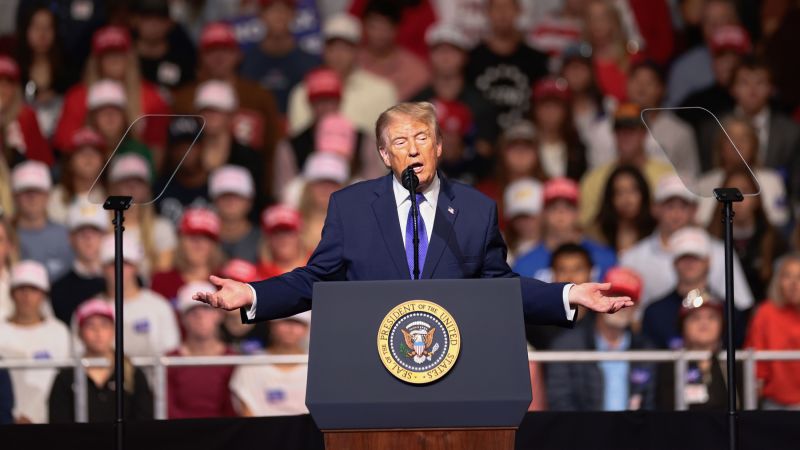
Trump Restores Kansas and Iowa Rallies After Brief Cancellation
Goldlaner.com – President Donald Trump will return to the campaign trail in Kansas and Iowa on Sunday after plans to replace the two in-person events with telephone appearances were reversed within a day.
The change came during the final push before Tuesday’s midterm elections, as Trump’s political operation works to turn out Republican voters through an intense schedule of rallies, virtual appearances and other campaign events. Trump had traveled to South Carolina on Thursday for his 25th midterm rally of the month when his team initially decided that a planned Kansas stop would become a telerally instead. An Iowa rally was later removed from the weekend schedule as well.
The cancellations represented a notable adjustment to a strategy centered on large, high-energy gatherings in conservative districts. Trump has spent the closing weeks of the campaign moving rapidly between states in an effort to reinforce support among his political base.
A rapidly changing weekend schedule
When Trump returned from South Carolina, he said he did not believe a Kansas visit was necessary because Republican Sen. Roger Marshall was performing strongly.
“I don’t feel I have to go to Kansas,” Trump said, describing Marshall as “doing really well.”
For some Republican operatives, the temporary decision to use telephone events was welcome. Telerallies are generally more tightly managed than Trump’s arena-style appearances, where the president can range beyond the messages local candidates hope to emphasize.
“Thank God,” one senior Republican official said privately. “He hasn’t moved the needle anywhere.”
But the arrangement did not last. Less than 24 hours after the events were removed, both stops were restored to the calendar for Sunday. Trump said people in Iowa and Kansas had urged him to appear in person, arguing that a live rally would be more valuable than a virtual event.
“We have a couple of races that are very important,” Trump said at the White House on Friday afternoon. “And they said if you could go it would be better than a telerally. And I tried to talk him out of that and I said, ‘What about a telerally?’ But they asked me. So I’m going to do two on Sunday.”
Trump also pointed to Saturday college football as a practical reason for shifting the rallies to the following day. The White House maintained that the revised itinerary was intended to create more time for him to participate in virtual campaign events.
Frustration over the cancellation narrative
People familiar with the planning said the president became irritated by coverage suggesting that the canceled rallies reflected a retreat from the campaign trail. After initially approving the schedule changes, Trump demanded that the events be restored, leaving staff members to rebuild plans they had only recently taken apart.
His frustration was visible during his return from South Carolina, when a reporter asked whether he was feeling unwell or exhausted by weeks of campaigning. Trump rejected the premise and turned the criticism toward the reporter.
“You’ve been following me for two weeks. I feel perfect,” Trump said. He added that the reporter looked “like hell.”
A statement announcing the renewed plans declared: “Rallies are BACK ON!” The reversal highlighted the degree to which the Republican Party’s late-campaign approach remains closely connected to Trump’s personal decisions, including where he travels, whom he endorses and how he chooses to frame the election.
Campaign value and political risk
Trump advisers maintain that the president remains in demand among Republican candidates and campaigns. His team has continued to receive requests for appearances in the days before the election. The original case for switching to virtual events was that Trump could speak to voters in far more places without spending hours traveling between physical rally sites.
By Thursday evening, MAGA Inc., Trump’s super PAC, had announced plans for virtual appearances in 19 states. The effort was presented as a way to energize supporters, increase turnout and help Republican candidates finish their campaigns strongly.
The short-lived cancellation also illustrated a recurring tension for GOP candidates. A Trump visit can generate attention, media coverage and enthusiasm among loyal supporters. At the same time, the president’s unscripted appearances can pull focus from local contests or the policy themes candidates want voters to hear in the final days before an election.
Marshall appeared ready to accept the earlier decision when news of the Kansas cancellation emerged. The senator told reporters that his polling position might mean Trump had more urgent places to visit.
“I think that I’m doing so well in the polls that he’s got, probably got better places to spend his time,” Marshall said.
For Republicans in competitive states, the episode offered a compressed view of the campaign’s central calculation. Trump’s presence can be a powerful organizing tool, but it also requires candidates and party officials to adapt quickly to changes in his plans and messaging. With Election Day approaching, the restored rallies in Kansas and Iowa will give Trump two more opportunities to make his closing argument directly to voters in person.
Related Reading
Frequently Asked Questions
What is Trump fumed at coverage of rally?
Trump fumed at coverage of rally is the main topic of this guide. The article explains the context, practical details, and next steps readers should understand.
Why does Trump fumed at coverage of rally matter?
Trump fumed at coverage of rally matters because readers are looking for a useful answer, not just a short summary. Good content should match search intent and help them decide what to do next.