
Yosemite Land-Swap Proposal Sparks Outcry Over Private Development on Federal Ground
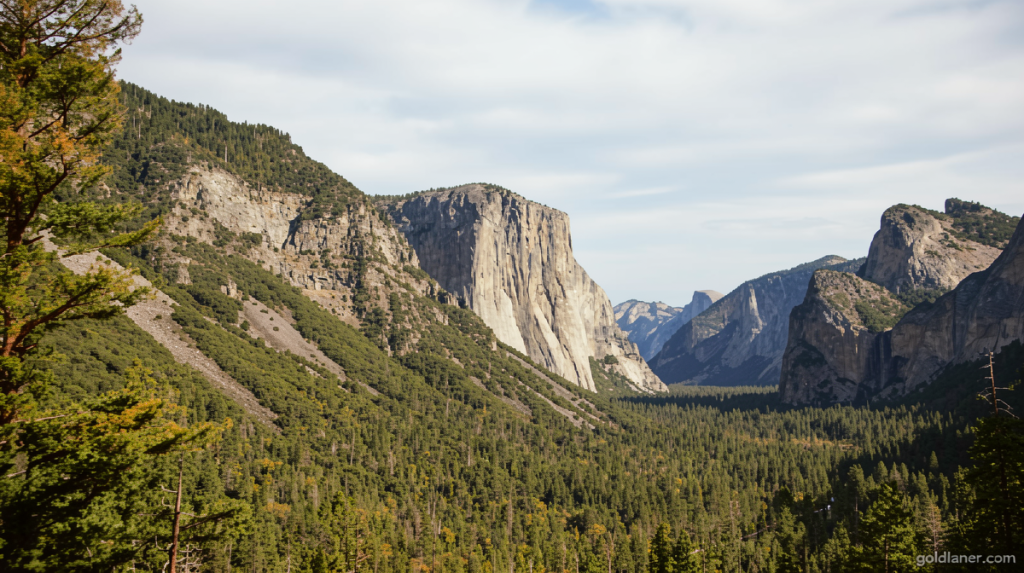
Goldlaner.com – A quiet 83-acre parcel sitting just outside the boundary of Yosemite National Park has become the flashpoint in a widening debate over whether America’s most iconic public landscapes should remain untouched by private enterprise. The Trump administration’s National Park Service is weighing a land-exchange arrangement that would hand a Nevada-based developer a slice of parkland in return for a smaller parcel, effectively clearing the path for a new access road and a planned residential-and-retail village. Elected officials, labor unions, conservation groups, and outdoor enthusiasts have pushed back hard, framing the move as part of a broader pattern of converting federally protected terrain into private or commercial use.
The Mechanics of the Proposed Swap
Under the arrangement under review, Kingsbarn Realty Capital would receive a strip of land currently held by the park. In exchange, the company would transfer a smaller parcel to the federal government. The practical effect, as laid out in internal documents and confirmed by the developer’s attorney, Lanny Davis, is to open a shortcut road that threads through what is today parkland. Today, reaching the 83-acre site — known locally as “Hazel Green Ranch” — requires a 25-mile drive along existing public roads. Kingsbarn’s stated goal is to build a considerably shorter connector that would shave minutes off that trip, though the company has acknowledged that even with the new road, a trip from the development site to the Yosemite Valley floor would still take roughly 45 minutes.
The swap structure exists because the National Park Service acknowledged in a budget submission to Congress for the current fiscal year that it lacks the statutory authority to simply hand the land over. A formal exchange, by contrast, fits within existing legal frameworks and triggers the full suite of environmental review and public-comment requirements that apply to federal land transactions.
Who Is Kingsbarn, and What Does It Want to Build?
Kingsbarn Realty Capital acquired the Hazel Green Ranch parcel from a private owner in February 2024. The company’s stated vision for the site is a compact village comprising single-family homes alongside retail space. Jeff Pori, the firm’s chief executive, made multiple contributions to President Donald Trump’s joint campaign-fundraising committee during the 2024 election cycle, as campaign-finance records show. Kingsbarn told CNN, through Davis, that it had not discussed the proposal with the White House.
“While it’s true that the National Park Service is part of the executive branch of the federal government and is an agency within the U.S. Department of the Interior, Kingsbarn has had not had any communication or contact with the White House on this proposed plan,” the company said in a statement.
The Department of Interior, which oversees the National Park Service, issued its own statement insisting that no political pressure had been applied to steer the outcome and that no final decisions had been made. A spokesperson added that any land exchange or access proposal touching NPS lands would be governed by all applicable federal statutes, regulations, and departmental policies, including mandatory environmental review and public-notification procedures.
Union and Local-Official Backlash
The Yosemite chapter of the National Federation of Federal Employees, Local 465, which represents park rangers and other NPS staff at the site, called the proposal “appalled” in a social-media post.
“As stewards of Yosemite, the ceding of public lands for private interests is antithetical to what we stand for as employees of the National Park Service,” the local said, adding that it is “incredibly concerned about the implications of this private development for the working conditions of an already overwhelmed staff.”
County officials in Mariposa and Tuolumne — the two California counties that partially contain Yosemite — said they had received no advance notice from either the National Park Service or Kingsbarn about the proposal. Both said they first learned of the plan on a Friday, underscoring a perception among local leaders that the process is being handled at a distance from the communities most directly affected.
A Pattern of Shrinking Public Land
The Yosemite proposal does not exist in isolation. Earlier in the administration’s tenure, officials moved to reduce the acreage of federally protected land in Utah and to carve out sections of Big Bend National Park in Texas for border-security infrastructure. Separately, the White House has directed the removal of certain interpretive signs, the rollback of species protections, and the reassignment of park staff — actions that have strained already thin ranger workforces and drawn criticism from the outdoor community.
For many Californians and national-park advocates, the cumulative effect is a systematic narrowing of what the public can claim as its own. Democratic lawmakers, climbing organizations, and conservation groups have voiced swift opposition, with several describing the nation’s parks as “sacred” spaces that should not be subject to private development pressure.
Political Reaction and Legal Precedent
California Governor Gavin Newsom, a Democrat, took to social media to condemn the move.
“Trump is hellbent on destroying everything that is sacred and beautiful about this country. California won’t stand by while he grifts our public lands.”
His office had not, as of reporting time, confirmed whether it had opened direct communication with the National Park Service or with Kingsbarn regarding the proposal.
The idea of a shortcut road through parkland is not new. Media reports from 2012 indicate that a previous owner of the same parcel attempted to construct a similar shorter access route and was blocked by a court ruling. That earlier defeat suggests the legal and environmental hurdles facing the current proposal could be substantial, particularly given the National Environmental Policy Act review that any federal land transaction would trigger.
Rock climber Alex Honnold, who in 2017 became the first person to free-solo Half Dome without ropes or protective gear, has been among the outdoor figures voicing alarm over the proposal, reinforcing the argument that Yosemite’s value lies precisely in its inaccessibility to commercial development. Whether the land exchange ultimately proceeds, stalls in review, or is withdrawn remains uncertain, but the episode has sharpened a national conversation about how much of the public domain should be open to private hands.
Related Reading
Frequently Asked Questions
What is Trump administration faces pushback after looking?
Trump administration faces pushback after looking is the main topic of this guide. The article explains the context, practical details, and next steps readers should understand.
Why does Trump administration faces pushback after looking matter?
Trump administration faces pushback after looking matters because readers are looking for a useful answer, not just a short summary. Good content should match search intent and help them decide what to do next.