
Federal Machinery Grinds Toward the November Ballot: What Washington Is Doing Right Now
Goldlaner.com – With fewer than sixty days separating Americans from the 2026 midterm ballot, a constellation of federal actions is converging on the election process in ways that have alarmed election administrators, whistleblowers, and legal scholars alike. The pattern is unmistakable: agencies that historically kept a wide berth from electoral mechanics are now inserting themselves into the machinery of voting, ballot verification, and voter-eligibility scrutiny. Whether these moves will ultimately alter outcomes remains uncertain, but the sheer volume and timing of the interventions warrant close scrutiny from every voter who intends to cast a ballot this November.
The Mail-Ballot Verification System Under Fire
The most acute alarm came this week from an unnamed federal employee who filed a whistleblower report warning that the administration’s new system for authenticating mail-in ballots has collapsed into operational chaos. Workers inside the system describe it, in their own words, as a
“sh*t show” that could lead to mass disenfranchisement of mail voters.
The report was made public by Democratic Senator Richard Blumenthal of Connecticut. Its central claim is mechanical but devastating: under the current protocol, if even one envelope scan within a large batch of ballots fails to match the data stored in the verification database, the United States Postal Service will hold the entire batch pending resolution. In a state that processes millions of mail ballots, a single mismatched scan could strand thousands of votes in limbo for days or weeks.
Election officials had raised testing concerns months earlier, arguing the system had not undergone adequate stress-testing before being deployed at scale. The whistleblower’s account suggests those warnings were prescient. The system’s fate is now entangled in extensive litigation, so it remains unclear whether it will actually be activated for November. Yet the political stakes are asymmetric. President Trump, who has himself cast ballots by mail while residing in Florida, has spent years railing against mail voting as inherently suspect. Because mail-ballot participation skews heavily toward Democratic voters, any large-scale disenfranchisement of that channel would land disproportionately on one party’s electorate.
DHS Investigates “Voter Fraud” Weeks Before the Vote
In parallel, the Department of Homeland Security has accelerated a push to identify alleged voter fraud in a small number of states. The agency is deploying Homeland Security Investigations, a division of Immigration and Customs Enforcement whose usual portfolio includes human trafficking, drug smuggling, and transnational organized crime. Assigning that unit to scrutinize voter rolls is irregular in itself; what makes it more irregular is the calendar. The midterms sit barely two months out, and federal practice has long held that overt investigatory actions of this kind should be avoided in the run-up to an election. The rationale is straightforward: unvetted allegations, aired publicly before courts can weigh them, can shape voter behavior and candidate strategy in ways that distort the contest.
Priscilla Alvarez, Tierney Sneed, and Gabe Cohen, who first detailed the DHS surge, underscored that point. Their reporting noted that the government typically steers clear of such visible enforcement posturing in the final weeks before a vote precisely because the mere existence of an investigation can function as a signal to voters.
For the Trump administration, however, the signal appears to be the product. Over the past decade, multiple attempts to document widespread electoral fraud have come up empty. A voter-fraud commission launched during his first term dissolved without producing meaningful findings. After the 2020 contest, campaign operatives were paid to canvass for evidence of systemic cheating; nothing material surfaced. More recently, the administration advanced a claim that roughly 250,000 noncitizens were registered to vote across just four states — a figure experts have challenged. Last month, an unsigned report from the U.S. Census Bureau asserted that tens of thousands of noncitizens had voted in the 2020 presidential election, a document that drew sharp criticism from demographers and statisticians for its methodology and its lack of authorship.
Given that prior probes yielded nothing substantive, the probability that DHS will produce ironclad evidence of fraud within two months appears low. The more plausible reading is that the investigation’s purpose is not to confirm fraud but to keep the question alive in the public mind, seeding doubt that could later justify further federal intervention in state-run elections.
A Timeline of Escalation
The current posture did not emerge overnight. In March, Trump signed an executive order granting the Postal Service an unprecedented role in screening mail ballots before delivery. By June, administration officials were reportedly preparing to threaten non-delivery of mail ballots in states that had not surrendered their voter registration lists to the federal government — a move that drew resistance even from some Republican-led states. In July, the president delivered a primetime address that offered no new documentary evidence of widespread fraud but amplified claims about Chinese interference in American elections and asserted, without substantiation, that such interference had been concealed from the public. The invocation of national security was deliberate: courts traditionally afford presidents broad latitude to act unilaterally when they frame a domestic measure as a matter of foreign threat.
What Voters Should Watch
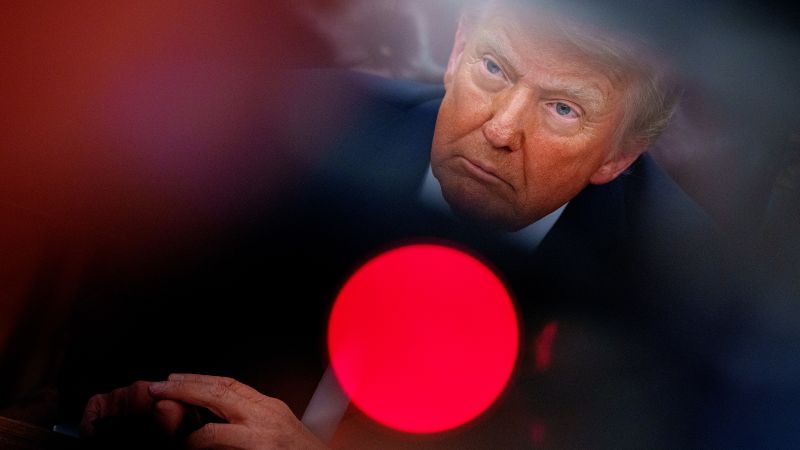
None of these developments, taken individually, guarantees that the November election will be compromised. But their simultaneity, their proximity to the ballot, and their departure from decades of federal restraint create a landscape in which ordinary voters face unfamiliar obstacles: a verification system that may quarantine entire batches of ballots over a single data mismatch, a federal investigation that could cast a shadow over state election administration, and an executive branch that has repeatedly signaled willingness to treat electoral administration as a lever of political advantage. The January 6, 2021, episode — in which supporters of the then-president stormed the Capitol over an election he had already lost — should remind every citizen that the stakes of getting these questions wrong are not abstract. The light on the dashboard is blinking red. What happens next depends on whether voters, courts, and state election officials respond with the same urgency that Washington has shown in reaching into the process.
Related Reading
Frequently Asked Questions
What is The light is blinking red on Trump?
The light is blinking red on Trump is the main topic of this guide. The article explains the context, practical details, and next steps readers should understand.
Why does The light is blinking red on Trump matter?
The light is blinking red on Trump matters because readers are looking for a useful answer, not just a short summary. Good content should match search intent and help them decide what to do next.