
Tehran Threatens Tankers in Bahrain After US Strikes
Goldlaner.com – Two senior American officials confirmed that US military forces struck several Iranian oil tankers in waters around Kharg Island on Tuesday, a move that pushed the Gulf conflict into open naval confrontation. The operations, aimed at vessels tied to the Islamic Revolutionary Guards Corps, came in direct reply to what Washington characterized as attempted missile fire on a US Navy warship transiting the Strait of Hormuz. Within hours of the strikes, Tehran threatens vessels in Bahrain and Kuwait, ordering crews to abandon their ships at once.
From Deterrence to Active Interdiction
The Tuesday attacks were not the first of the weekend. Earlier that same period, American forces had already hit an Iranian tanker sitting roughly six miles off Kharg Island, a signal that Washington had moved past passive deterrence into active interdiction within the strait’s tight corridors. By Tuesday the tempo had stepped up: two more tankers were struck, one of them only four miles from the island’s shore — a range that places the vessel squarely inside the reach of Iranian coastal defenses.
Tasnim News Agency, Iran’s semi-official wire, supplied the four-mile figure for the nearest hit. State broadcaster IRIB reported that a second vessel was struck off the coast of Jask, a southeastern Gulf port roughly 700 miles south of Kharg. Crews on both ships were reported moving to shore in lifeboats, indicating damage severe enough to make the vessels unseaworthy but short of an immediate sinking.
The “Full Court Press” and Its Economic Logic
Officials have framed the strikes as part of a broader operational concept they call a “full court press,” designed to compound economic pressure on Iran’s leadership. Under that doctrine, US forces pursue three simultaneous objectives in and around the strait: disabling Iranian military and commercial targets that threaten transit; escorting commercial tankers and container ships through safe passage; and enforcing a naval blockade on Iranian ports to cut off the oil revenue that underwrites the regime’s domestic programs and regional proxy network.
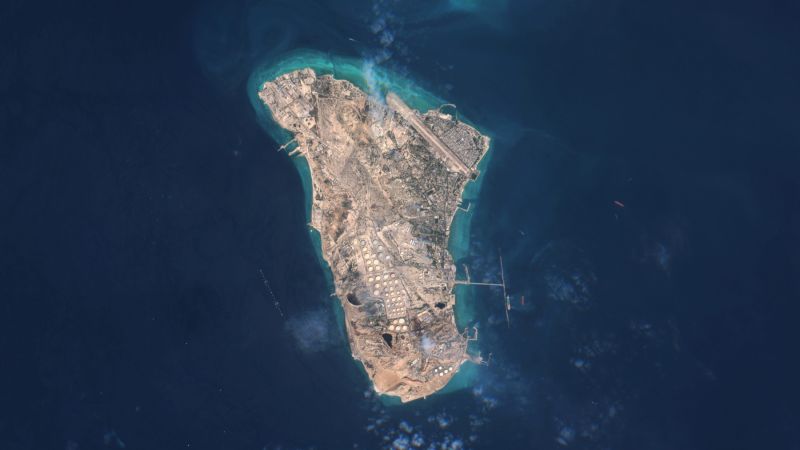
The stakes are structural. At its narrowest, the Strait of Hormuz spans roughly 33 miles between Oman and Iran and carries about one-fifth of global petroleum consumption each year. Kharg Island, a small landmass in the northern Gulf, functions as the principal loading terminal for Iranian crude, handling the bulk of the country’s estimated 3 to 4 million barrels per day in oil shipments. A sustained American naval presence immediately around that terminal effectively places a gun to the head of Iran’s single most important revenue stream.
Iran’s response widened the geographic footprint of the conflict almost immediately. IRIB carried an IRGC statement warning crews aboard oil tankers operating near the ports of Kuwait and Bahrain to leave their vessels at once, whether at anchor or alongside a berth. The message cast the two Gulf states as hosts of American forces and partners in what it termed hostile actions against Iran. The threat against vessels in Bahrain carries particular weight because that island nation houses the headquarters of US Fifth Fleet at Naval Support Activity Juffair, while Kuwait’s port of Mina Al-Burayhan and its oil terminals process substantial volumes of regional petroleum trade. A credible Iranian capability to strike tankers in those waters would compel commercial operators to reroute or suspend transits, spike insurance premiums and freight rates across the Gulf, and accelerate inflation in energy-importing economies from South Asia to Western Europe.
“We warn all crews aboard oil tankers in the vicinity of ports in Kuwait and Bahrain — which host these (American) terrorists and are partners in their hostile actions — to immediately leave their vessels, whether they are at anchor or docked at the ports, as the vessels will be targeted.”
Frequently Asked Questions
Where exactly did the US strikes take place? The Tuesday operations targeted tankers in waters surrounding Kharg Island in the northern Persian Gulf. An earlier weekend strike hit a tanker roughly six miles from the island, and one of the Tuesday targets sat just four miles from shore.
What is the “full court press” strategy? It is the American operational framework combining three simultaneous actions: striking Iranian targets that threaten transit, escorting commercial shipping through the strait, and blockading Iranian ports to choke off oil revenue. Officials describe it as a way to compound economic pressure on Tehran’s leadership.
Why does the threat against vessels in Bahrain matter commercially? Bahrain hosts US Fifth Fleet headquarters, making it a natural target in Iran’s calculus. Kuwait’s Mina Al-Burayhan port handles large petroleum volumes. If operators believe tankers in those waters face credible strike risk, they will reroute or suspend transits, driving up insurance costs, freight rates, and ultimately energy prices for importing economies.
Were there casualties reported? Both crews were reported transferring to shore in lifeboats, suggesting the vessels sustained significant damage but had not sunk. No casualty figures were confirmed in the reporting available at time of publication.