
Takeaways From Maine’s First Senate Debate: Trump and Abortion Rights Dominate
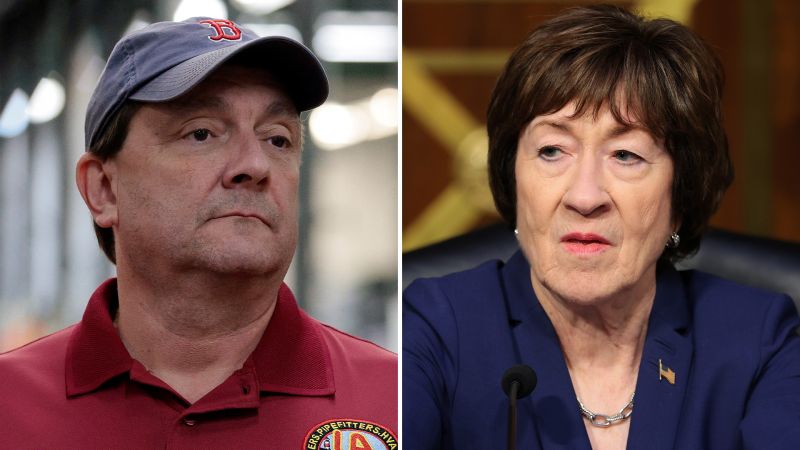
Goldlaner.com – The first major debate in Maine’s Senate race put two issues at the center of the campaign: President Donald Trump and abortion rights. Republican Sen. Susan Collins and Democratic challenger Troy Jackson met in Portland for the first of four debates scheduled over 10 days, offering sharply different views of Collins’ record, independence and role in Washington.
These takeaways from the opening debate show why the race has drawn national attention. Collins is seeking another term in a state Trump has lost three times, while Democrats see the seat as an important opportunity in the fight for Senate control.
Jackson Ties Collins Closely to Trump
Jackson, a former president of the Maine Senate, repeatedly argued that Collins has not done enough to stand up to Trump. He said Collins had voted with the president “96% of the time” and criticized her positions on tariffs, immigration policy and the war in Iran.
Collins disputed the calculation behind Jackson’s figure, while Jackson brushed aside the methodological argument. “Whatever, it’s far too often,” he said.
Collins presented herself as an independent Republican willing to oppose her party and the president when necessary. She also rejected the suggestion that Trump would be eager to campaign on her behalf in Maine, saying, “I’m not exactly his favorite senator.”
Tariffs Create a Maine-Specific Clash
One of the debate’s more pointed exchanges involved tariffs affecting Canada. Collins said she has been among the Senate’s strongest critics of Canadian tariffs and cited exemptions she helped secure for products including road salt.
Jackson argued that those efforts did not address the financial pressure facing Mainers dealing with higher grocery bills and other household costs. “We can’t eat road salt,” he said, turning a policy dispute into a broader argument about affordability.
Jackson also compared Collins’ response to the effects of Trump-era policies to an arsonist seeking credit for bringing water after starting a fire. The exchange underscored his campaign’s central strategy: portray Collins as responsible for policies she now says she is trying to limit.
Kavanaugh Vote Keeps Abortion Rights in Focus
Abortion rights were among the clearest takeaways from the debate. Jackson has made Collins’ 2018 vote to confirm Supreme Court Justice Brett Kavanaugh a central campaign issue. Kavanaugh later joined the majority that overturned Roe v. Wade and ended the federal constitutional right to abortion.
Jackson raised the issue in his opening remarks and returned to it when questioning Collins directly. The timing was especially notable after Justice Samuel Alito said he had “thought about” retirement, prompting renewed attention to the possibility of another Supreme Court vacancy.
“Would you trust her to pick the next Supreme Court justice?” Jackson asked.
Collins said she disagreed with Kavanaugh’s vote to overturn Roe v. Wade. She maintained that it would have been improper to require a judicial nominee to reveal how he would rule in a particular case during the confirmation process.
Still, Collins said she was troubled by Kavanaugh’s description of Roe as settled law, because she understood that language to mean the precedent would remain in place. Jackson pressed her to acknowledge that supporting Kavanaugh had been a mistake.
Both Candidates Face Questions About Their Records
Collins must continue defending a confirmation vote that remains deeply unpopular with many abortion-rights supporters. Her argument rests on her opposition to the ruling that overturned Roe, as well as her broader claim that she has acted independently in the Senate.
Jackson, meanwhile, must address anti-abortion positions from earlier in his political career. Collins used those past positions to challenge his standing on the issue, highlighting how both candidates will face scrutiny over long records in Maine politics.
The debate suggested that the campaign will be fought on both national and local terrain. Jackson is trying to make the election a judgment on Trump and Collins’ Senate votes, while Collins is emphasizing her ability to deliver for Maine through her leadership of the Senate Appropriations Committee.
FAQ: What Maine Voters Should Know
How many Senate debates are planned in Maine?
Collins and Jackson are scheduled to hold four debates over 10 days. The Portland event was the first in that series.
Why are abortion rights so important in this race?
Jackson is focusing on Collins’ vote to confirm Kavanaugh, who later voted to overturn Roe v. Wade. Collins says she opposed the decision to overturn Roe but believes nominees should not be required to disclose positions on specific future cases.
What do these debate takeaways mean for Maine?
The race is likely to remain focused on the cost of living, trade with Canada, federal resources for Maine and the candidates’ contrasting relationships with Trump. The remaining debates will give voters further opportunities to compare Collins’ record in Washington with Jackson’s case for change.