
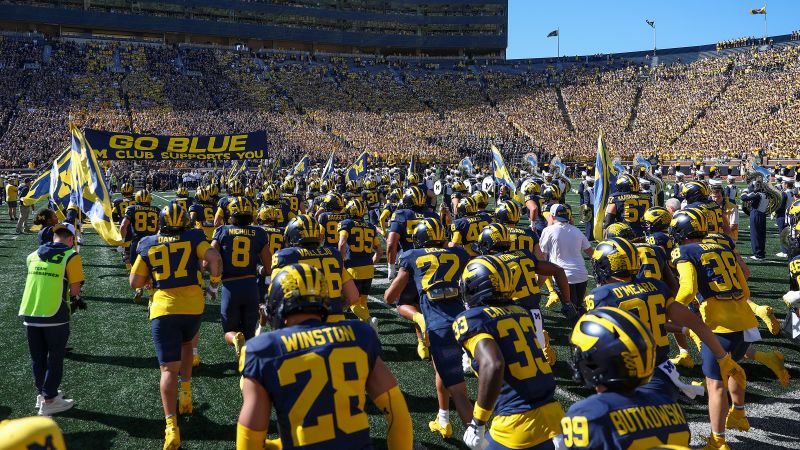
Senate Advances Sweeping College Sports Overhaul
Goldlaner.com – A broad effort to reshape the rules governing college athletics cleared the Senate on Monday, with lawmakers approving the Protect College Sports Act by a 77-22 bipartisan margin. The legislation now heads to the House, where its future is uncertain because members are not scheduled to return until after the November midterm elections.
The proposal would create nationwide standards for athlete compensation tied to name, image and likeness opportunities, commonly known as NIL. Supporters say federal rules are needed to replace the uneven patchwork that has emerged across college sports. Critics contend the bill would strengthen the power of universities, conferences and the NCAA at the expense of athletes.
Its path in the House could be complicated by organized opposition, including from the Congressional Black Caucus. The National College Players Association, the NAACP and the AFL-CIO have also objected to the measure, arguing that it does not adequately protect the rights of student athletes.
What the bill would change
The Protect College Sports Act would authorize the NCAA to regulate player compensation while recognizing athletes’ ability to receive revenue-sharing payments from their schools and legitimate NIL compensation. It would also establish a five-year eligibility framework and generally limit athletes to one transfer.
The legislation addresses the expanding financial and organizational pressures facing major college programs. Conferences would be permitted to negotiate future television agreements collectively, but they would not be allowed to exceed 19 member institutions. The Big Ten currently has 18 teams, illustrating how close some of the nation’s largest conferences are to that ceiling.
For fans and athletes, the measure could affect everything from roster movement to the structure of media deals and the way schools distribute athletics revenue. Backers argue the legislation is meant to preserve opportunities across a wide range of sports, not merely at the highest-profile football and basketball programs.
Supporters call for national standards
Sen. Ted Cruz of Texas, chairman of the Senate Commerce Committee and the bill’s principal sponsor, has argued that Congress must respond to what he describes as disorder in the current system of college sports contracts.
The Protect College Sports Act is bipartisan legislation designed to bring order to the chaos, designed to put simple, common sense rules in place to that college sports remain strong and vibrant for decades to come.
Cruz has rejected concerns that the proposal would weaken athletes’ financial position. He said the legislation would explicitly protect both revenue sharing and authentic NIL earnings.
It does the exact opposite, which is it protects student athletes. It protects, in law, their right, No. 1, to participate in revenue sharing from their schools, but No. 2, to receive genuine name, image and likeness compensation.
The Texas senator has emphasized that the policy debate extends beyond college sports’ most marketable stars. In his view, preserving athletic programs matters especially for participants who will not go on to professional leagues.
Right now, sports gives them a ticket to college, and the skills they learn — hard work, discipline, excellence, teamwork, sportsmanship — those skills set them up for success.
He warned that failing to establish a federal framework could lead to the loss of a large number of athletic opportunities, which he characterized as potentially devastating for student athletes.
Sen. Maria Cantwell, the measure’s leading Democratic co-sponsor, presented the bill as a way to restrain escalating spending in college athletics. She argued that colleges should be able to direct more resources toward their educational missions rather than responding to an increasingly expensive competition for athletic talent.
This is about reining in the bad practices that are happening in college sports today, the runaway costs that are sending people to the state legislature asking for bailout from taxpayers to pay for sports.
Cantwell also raised concerns that funds better suited for research or emerging priorities such as artificial intelligence could be diverted by the accelerating financial competition among sports programs.
The NCAA and leading athletic conferences have endorsed the bill. President Donald Trump has urged Congress to send it to his desk. The White House has said he “believes wholeheartedly that college sports are worth fighting for — for the athletes, the schools, the fans, and America.”
Opponents see risks for athlete rights
Opponents focus heavily on the antitrust protections contained in the legislation. They argue that granting exemptions could give universities and the NCAA excessive control over a marketplace in which athletes have increasingly sought greater freedom and compensation.
Democratic Sen. Chris Murphy criticized the proposal in a joint statement with labor organizations, arguing that its central effect would be to preserve an unequal system.
What this bill does, at its core, is protect a system of exploitation.
This bill protects the billions of dollars that coaches and executives are making by suppressing compensation for some of the most highly valued athletes in the world.
Sen. Cory Booker, a former Stanford University football player, also opposed the bill. He said it serves “the large, wealthy interests that have been controlling college sports for a long time.”
The National College Players Association has raised an additional concern involving legal accountability. The organization argues that a provision allowing schools to remedy a violation within 30 days could create a loophole affecting athletes seeking to sue universities after sexual abuse, catastrophic injury or death.
The Senate vote gives the legislation substantial momentum, but House consideration will determine whether it becomes the national framework for college athletics. The dispute is likely to remain focused on a central question: whether a federal system can create stability for schools and conferences while preserving meaningful economic and legal protections for the athletes whose performances drive college sports.
Related Reading
Frequently Asked Questions
What is Senate passes major bill to overhaul?
Senate passes major bill to overhaul is the main topic of this guide. The article explains the context, practical details, and next steps readers should understand.
Why does Senate passes major bill to overhaul matter?
Senate passes major bill to overhaul matters because readers are looking for a useful answer, not just a short summary. Good content should match search intent and help them decide what to do next.