
Kennedy Center Dismantles Joel Shapiro’s “Blue” as Trump-Driven Overhaul Accelerates
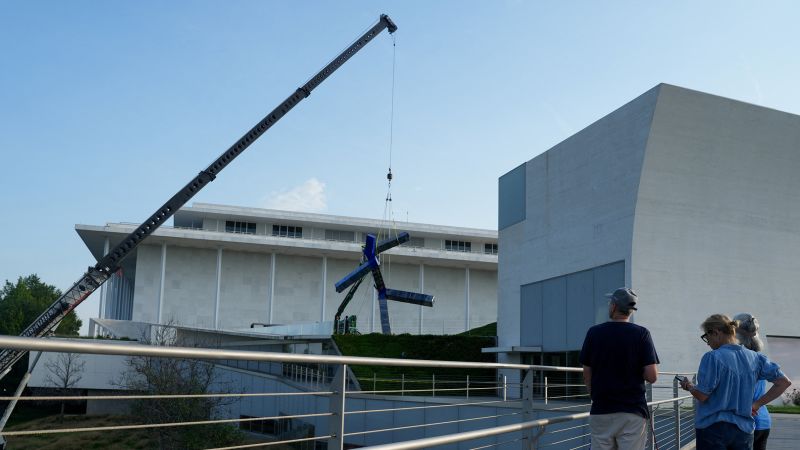
Goldlaner.com – On the morning of Wednesday, September 2, 2026, heavy cranes descended on the grounds of the Kennedy Center in Washington, D.C., to pull apart one of the most recognizable public artworks in the nation’s capital. The sculpture, a towering stick figure caught mid-kick, had stood outside the performing arts institution since 2019. Its removal marks the latest chapter in a sweeping transformation of the Kennedy Center ordered by President Donald Trump, who has sought to remake the institution’s leadership, its physical identity, and its artistic programming.
The National Park Service, which oversees the surrounding grounds, temporarily shut down a nearby road for several hours while crews worked. A local affiliate camera captured the operation in progress, showing sections of the steel figure being lifted away from their foundations.
The Sculpture and Its Creator
“Blue” is the work of American artist Joel Shapiro, known for his minimalist, oversized stick-figure sculptures that have occupied public spaces across the country. The piece depicts a simple human form frozen in the act of kicking, rendered in a vivid cobalt blue. Installed in 2019, it quickly became a fixture of the Kennedy Center’s exterior landscape and a familiar sight for commuters and tourists passing along the Potomac waterfront.
A Kennedy Center spokesperson issued a written statement describing the operation as a routine “deinstallation,” a term the venue said reflects “common practice” in the management of public art collections. The statement offered a tone of gratitude toward the artist:
“We are deeply grateful to Joel Shapiro for the years Blue has spent animating our campus and connecting visitors to his vision. We are honored to have been stewards of his vibrant work and a part of his enduring legacy.”
The language of stewardship and legacy, however, sits in tension with the circumstances surrounding the removal, which critics say was driven not by curatorial judgment but by presidential preference.
Inside the Decision
Josef Palermo, a former curator at the Kennedy Center, provided a more pointed account of how the order came about. Speaking in September 2025, Palermo said he was instructed to remove every piece of outdoor art on the campus, “Blue” included, because the president wanted “all new art for the reopening.” In other words, the sculpture’s departure was not an isolated curatorial choice but part of a blanket directive tied to the institution’s planned renovation and relaunch.
That renovation plan has itself become entangled in litigation. Earlier in 2026, Trump announced that the Kennedy Center would close for approximately two years to undergo a major physical overhaul. The closure was originally scheduled to begin on July 4, but a federal judge intervened, ruling that the renovation plans had been enacted unlawfully. The Trump administration and the center’s board of trustees have continued to contest the ruling, pressing forward with their agenda despite the court’s order.
In a particularly aggressive move last month, attorneys representing the center threatened to demolish the building outright if renovations were not permitted to proceed. The board has also reaffirmed its intention to once again affix Trump’s name to the structure, an effort that previously encountered its own round of legal challenges after trustees voted to add the presidential nameplate.
Trump’s Grip on the Institution
The sculpture’s removal is one visible symptom of a broader consolidation of presidential control over the Kennedy Center. Since returning to the White House in January 2025, Trump has personally selected members of the center’s board of trustees and was subsequently elected to its chairmanship. Under that arrangement, the president has effectively become the institution’s chief patron, shaping its governance, its branding, and its artistic direction.
The board’s decision to append his name to the building, and its subsequent reversal and renewed pursuit of that branding, have drawn scrutiny over the separation between executive authority and independent cultural governance. Legal observers note that the Kennedy Center, while receiving federal support, has historically operated with a degree of curatorial autonomy that the current leadership structure appears to have eroded.
Public Reaction
The activist group Hands Off the Arts, which advocates for independent arts funding and institutional autonomy, reacted swiftly to the removal. In an Instagram post, the organization labeled the sculpture a “beloved figure” and called its dismantling “buffoonery.” The post took aim directly at the president:
“Wednesday, September 2, 2026 will forever be known as the day the United States government tore down a piece of public art at the behest of a petulant crybaby. But it won’t be the last.”
The organization’s framing underscores a wider anxiety among arts advocates: that the removal of “Blue” is not a one-time event but the opening move in a sustained campaign to replace existing public art with works aligned to the president’s aesthetic preferences.
What Comes Next
With the sculpture now gone and the renovation question still before the courts, the Kennedy Center’s campus stands in a state of flux. The two-year closure, if it proceeds, would erase the institution from the cultural calendar for a significant stretch. New art, commissioned or selected under the current board’s direction, is expected to fill the vacated spaces. Whether that replacement will be received as a renewal or as an imposition remains, for now, an open question in a dispute that has moved from the gallery to the courtroom.
Related Reading
Frequently Asked Questions
What is Kennedy Center begins removal of outdoor?
Kennedy Center begins removal of outdoor is the main topic of this guide. The article explains the context, practical details, and next steps readers should understand.
Why does Kennedy Center begins removal of outdoor matter?
Kennedy Center begins removal of outdoor matters because readers are looking for a useful answer, not just a short summary. Good content should match search intent and help them decide what to do next.