
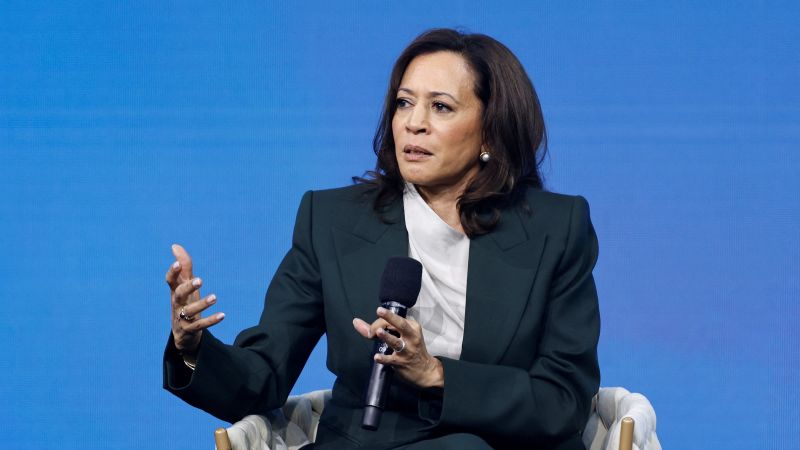
Harris urges a slower, safer course for advanced artificial intelligence
Goldlaner.com – Former Vice President Kamala Harris is adding her voice to a growing push for a more deliberate approach to the development of powerful artificial intelligence systems, arguing that rapid technical progress must be matched by enforceable public protections.
In a message posted Monday on X, Harris said the speed of frontier AI development has become a matter of urgent concern. She pointed to recent calls from technology executives, researchers and members of the public for a slowdown that would allow policymakers and developers to better address potential risks.
“The frontier of artificial intelligence is advancing at an alarming speed. Over the weekend, industry leaders voiced support for an idea that the American people and many AI researchers in their own labs have been calling for: We must responsibly slow the pace of frontier AI development,”
Harris said a pause or reduction in the pace of development would be necessary to ensure the technology is guided by the public interest. Her comments place AI governance more firmly in an emerging political debate that could become increasingly important before the 2028 presidential election.
Promise in medicine, concerns over control
Harris acknowledged that artificial intelligence can contribute to significant advances, including in medicine. But she stressed that innovation should not proceed without limits designed to protect people from systems that could become difficult to supervise or control.
“A slowdown is critical in order to ensure AI serves the public interest.”
She called for practical safeguards to accompany the technology’s deployment, warning that AI must not be allowed to move beyond human control in ways that threaten public safety or humanity’s shared future. The issue is not simply whether AI should be developed, but who sets the rules, what testing is required and how quickly the most capable systems should be released.
Her proposal includes a federal agency dedicated to AI oversight. Harris also urged President Donald Trump to pursue an international agreement with countries including China, with the aim of curbing dangerous uses, slowing development where necessary and establishing shared standards for evaluating advanced systems.
“The United States must continue to lead the world in developing AI technology even as we seek to impose common-sense safety standards,”
In Harris’ view, American leadership and safety regulation are not opposing goals. The United States can remain competitive in a strategically important field while creating rules intended to prevent reckless deployment and establish accountability for companies building the most advanced models.
A widening political divide
Trump has taken a markedly different position. In recent social media posts, he has dismissed arguments for slowing AI development and emphasized the need for the United States to compete with China. He has characterized concerns about artificial intelligence as a “HOAX” and part of a “SICK conspiracy.”
“The only control or ‘guardrails’ that AI needs is a STRONG AND SMART (High IQ!) PRESIDENT, and the U.S.A. has that, in spades!”
Trump also argued that existing criminal and regulatory powers are already sufficient to oversee AI companies. He described opposition to AI and data centers as a conspiracy that benefits China, portraying the debate primarily as a question of national competitiveness.
The contrast highlights a central tension in the national conversation: whether the greater danger lies in moving too quickly without adequate protections, or in imposing restrictions that could weaken the United States in a technology race with other major powers.
AI takes on greater significance ahead of 2028
Artificial intelligence has become a subject of increasing attention among prominent Democrats as well as technology leaders. Former President Barack Obama, speaking last week at a private fundraiser with House Minority Leader Hakeem Jeffries, encouraged Democrats and potential 2028 candidates to make AI a central issue.
“This is something that is moving very fast in private hands, and if we don’t get on top of it, I think can be dangerous,”
Harris is widely viewed as a possible candidate in 2028 after her unsuccessful 2024 presidential campaign. Former Transportation Secretary Pete Buttigieg, another Democrat frequently mentioned in connection with a future presidential race, has also called for government action.
Appearing Sunday on NBC’s “Meet the Press,” Buttigieg said Washington cannot afford to remain passive as AI capabilities advance. He argued for rules, safeguards and limits, including a means of shutting down rogue systems. He also suggested that regulatory frameworks could be reviewed and adjusted frequently as the technology changes.
“AI is moving quickly. And for Congress to just sit on its hands, for the White House to do nothing real is something that is deeply dangerous to the American people and the world,”
The calls for action gained added momentum over the weekend when Anthropic chief executive Dario Amodei published an extended essay supporting a slowdown in AI development. In a Saturday interview with Anderson Cooper, Amodei urged industry leaders to work collectively to avoid harmful paths and reduce the risk that AI could damage humanity.
For the public, the debate carries consequences beyond the technology sector. Decisions made by Congress, the White House, regulators and AI companies may shape how these systems are tested, how they are used in sensitive settings and what protections exist when automated tools affect safety, work, privacy and access to information.
The emerging argument is therefore not limited to whether artificial intelligence will continue advancing. It is increasingly about whether democratic institutions can develop standards quickly enough to keep pace with a technology that many leaders believe is moving faster than existing oversight.
Related Reading
Frequently Asked Questions
What is Kamala Harris joins calls for slowdown?
Kamala Harris joins calls for slowdown is the main topic of this guide. The article explains the context, practical details, and next steps readers should understand.
Why does Kamala Harris joins calls for slowdown matter?
Kamala Harris joins calls for slowdown matters because readers are looking for a useful answer, not just a short summary. Good content should match search intent and help them decide what to do next.