
Federal Judge Invokes Dr. Seuss as DC Golf Course Fight Enters Procedural Maze
Goldlaner.com – The courtroom drama surrounding President Donald Trump’s ambitious plan to transform a municipal golf course in Washington, DC, into a championship-caliber facility took an unexpected literary turn on Thursday, when the presiding judge invoked a beloved children’s book character to explain her role in the dispute. US District Judge Ana Reyes, a Biden-era appointee, made clear she would not become an advocate for the trees felled at the East Potomac Golf Course, even as she acknowledged the public fury the removals have ignited.
“I do not speak for the trees, I am not the Lorax,” Reyes told the assembled parties, adding, “I am a judge.”
The remark landed amid a proceeding that was formally a status conference — a routine check-in to determine the litigation’s next procedural steps — but which quickly became dominated by weeks of community outrage over the National Park Service’s late-August clearing of roughly 150 trees from the course grounds. The controversy had consumed local news cycles, social media, and activist organizing for nearly a month before the hearing.
A President’s Golf Ambition Meets Legal Resistance
Trump, a longtime avid golfer, first floated the idea publicly in May of this year: take over the municipal course situated on a 300-acre manmade peninsula just south of the National Mall and expand it into a championship-level property. Interior Secretary Doug Burgum subsequently unveiled a rendering of the planned renovations produced by Fazio Design, the consultancy of golf architect Tom Fazio, who previously designed Trump’s Bedminster course and three other presidential properties. The existing Links at East Potomac currently operates two nine-hole layouts alongside an 18-hole course.
The legal challengers — the DC Preservation League joined by two local golfers — are pressing the court for an order that would bar the administration from advancing the renovation plan. They argue the project implicates environmental review requirements and public-land stewardship obligations that have not been adequately satisfied. The administration, for its part, has sought outright dismissal of the case.
The Tree Removal Controversy and Its Resolution
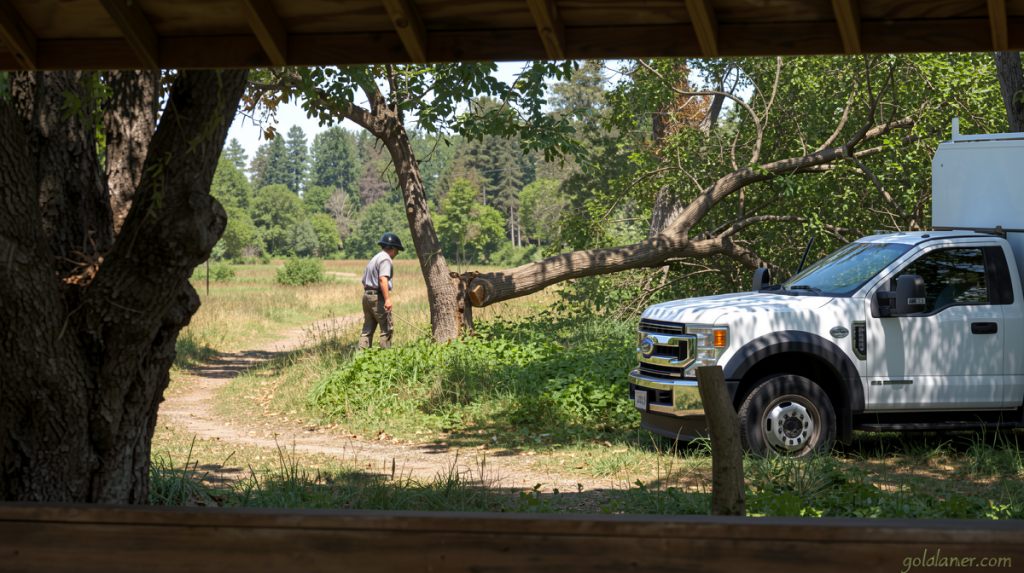
Beginning in late August, the National Park Service removed approximately 150 trees from the course area. Department of Justice lawyers told the court the tally comprised 77 invasive-species trees and 77 trees classified as dead, dying, or hazardous. The park as a whole contains roughly 3,800 trees.
In a statement, the Department of Interior explained that arborists regularly monitor trees throughout the park for potential safety impacts to visitors, and that removal decisions are made when a tree is determined to be declining or posing a hazard. Shortly before Thursday’s hearing, however, the plaintiffs filed court declarations questioning whether the removed trees were genuinely rotting or dangerous to players. During the hearing itself, though, the challengers walked back that position, telling the court they had no reason to dispute the government’s stated rationale for the felling.
Reyes noted the irony of the timing: this year marks America’s 250th birthday, and the prospect of “a president chopping down cherry trees” becoming a court matter harkened back to the apocryphal tale associated with George Washington. She acknowledged that residents and activists were “pretty upset” and that she herself had received threats, including one from a caller who said he would remove her from her position if she did not “save the trees.”
Supreme Court Precedent Reshapes the Litigation Landscape
In filings submitted Wednesday, the Department of Interior pointed to recent Supreme Court rulings — decisions siding with the administration in matters concerning construction of the White House East Wing ballroom and an executive order governing mail voting — and argued those rulings effectively meant the case should be thrown out. Rather than ruling on that dismissal request immediately, Reyes indicated she would decide quickly whatever motion the government files, but first the challengers are being permitted to amend their earlier complaint to account for those new legal developments.
Over the summer, Reyes had instructed both sides to reach an agreement requiring the Trump administration to report any new golf-course activity to the court while the initial stages of the litigation play out. On Thursday she expressed satisfaction with how the government had kept her apprised of developments. She was, however, unwilling to order additional notification steps beyond what had been agreed, while simultaneously voicing sympathy for the preservation league’s concern that the administration might take a drastic, irreversible action without adequate advance warning — an action that would be difficult to unwind if a judge later found it unlawful.
“What I don’t want is to be here with a fait accompli,” Reyes said.
The judge has previously declined to issue a preliminary injunction blocking work on the course, explaining she was unconvinced that any specific statute had been violated. That posture leaves the challengers in a precarious position: they must navigate an amended complaint through a court that has so far found no clear legal hook for intervention, while the physical transformation of a 300-acre public peninsula proceeds under the watchful eye of a judge who has made clear she will not be the arbiter of aesthetic or environmental preference — only of law.
For residents of the capital who have watched the peninsula’s tree canopy thin over the past weeks, the procedural wrangling offers little comfort. The question that now frames the case is not whether the trees were removed for stated horticultural reasons — that dispute has been effectively settled — but whether the broader renovation plan, once underway, can be meaningfully checked by the courts before the final stroke of a swing is struck on a course that no longer exists in its current form.
Related Reading
Frequently Asked Questions
What is Judge declares she s not the Lorax?
Judge declares she s not the Lorax is the main topic of this guide. The article explains the context, practical details, and next steps readers should understand.
Why does Judge declares she s not the Lorax matter?
Judge declares she s not the Lorax matters because readers are looking for a useful answer, not just a short summary. Good content should match search intent and help them decide what to do next.