
Trump’s Texas Midterm Gathering Failed to Deliver a Clear Republican Lift
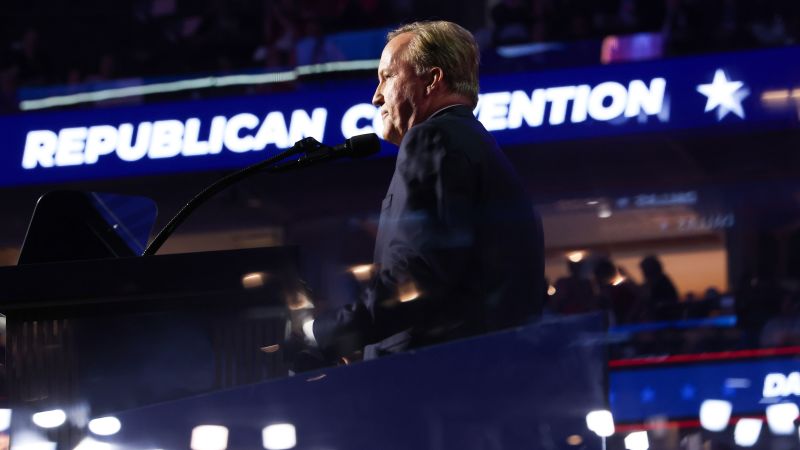
Goldlaner.com – President Donald Trump’s unusually styled midterm convention in Dallas was designed to energize Republicans and place the party’s most prominent figure at the center of the 2026 campaign. Instead, the September 9-10 event appears to have produced little measurable benefit for the GOP — and may have coincided with a worsening political environment for Republican candidates.
The gathering, informally branded “Trump-a-palooza,” was an unconventional choice for a midterm year. National party conventions are typically associated with presidential nominations, where they can create a short-term burst of attention and improve a party’s standing in public polling. This event put a historically unpopular president at the center of the message, while Republican officials publicly offered little resistance to the plan.
Available polling since the Dallas convention does not show the kind of post-event momentum Republicans might have hoped for. In several measures, Democrats have moved in the opposite direction.
Generic ballot numbers tilt toward Democrats
The clearest gauge is the generic congressional ballot, which asks voters whether they would prefer a Republican or Democratic candidate for Congress without naming specific contenders. It is an imperfect measure, but it is widely used to assess the broader national political mood before an election.
Major polling averages maintained by Nate Silver and FiftyPlusOne show Democrats increasing their generic-ballot edge by at least two points from September 9. The movement is modest and may fall within normal polling uncertainty, but it does not suggest a Republican convention bounce.
Several individual surveys reinforce that conclusion. Polling conducted by CNN, NBC News and Fox News found no shift from their previous results. Stability alone can be disappointing for a party investing heavily in a high-profile political event meant to build enthusiasm and alter the campaign narrative.
Only one major survey, conducted by The New York Times and Siena College, indicated that Republicans had improved on the generic ballot following the convention. Its earlier comparison point, however, came from May, making it less useful for isolating the convention’s immediate effect.
It is also possible that the convention had little direct influence on voters. Relatively few people appear to have watched beyond those already highly engaged in politics, despite Trump’s false claims of enormous viewership. Midterm voting preferences can change for many reasons, and the convention was not the only development affecting public opinion during September.
Texas race highlights the concern
If any candidate was positioned to gain from the Dallas event, it was Texas Attorney General Ken Paxton. Paxton is running for the US Senate in his home state, and the convention featured extensive attention on him and his campaign. Trump’s involvement was expected to help a Republican candidate trying to consolidate support among conservative voters in a red state.
Instead, Paxton privately voiced concerns that the gathering damaged the political standing of candidates connected to it.
“So to be honest with you, the numbers — when we did that convention — it dropped our numbers,” Paxton said. “Everybody’s numbers dropped. Right now, yeah, not good.”
Paxton senior adviser Nick Maddux dismissed the account as “manipulated nonsense” intended to “create a story that doesn’t exist,” without offering further detail about that characterization. Maddux also said that “every serious pollster will tell you that our numbers have improved since early September.”
Yet recent Texas polling shows Paxton still facing significant difficulties. A ReconMR-Siena College survey conducted across the convention period and a Marist College poll released last week both put Democratic state Rep. James Talarico ahead by 6 points. The ReconMR-Siena result surveyed likely voters, while the Marist poll surveyed registered voters.
Those results represent Talarico’s largest general-election leads so far. A Texas Southern University poll found a much narrower contest, with Talarico leading 47% to 46%, but it also did not show Paxton gaining a decisive advantage.
Paxton’s standing remains a central vulnerability
Candidate image ratings offer another warning sign for Paxton. In the Siena poll, his favorability stood at 38%, while 55% viewed him unfavorably, leaving him 17 points below water. Marist measured his ratings at 33% favorable and 54% unfavorable, a net deficit of 21 points.
The Texas Southern survey showed some improvement, but Paxton still remained underwater by a double-digit margin. For a Republican running statewide in Texas, those numbers indicate that personal perceptions could be as consequential as broader partisan preferences.
Trump’s appearance may not have helped resolve that problem. During the convention, he spent considerable time criticizing Paxton’s appearance, clothing and speaking style. Even in a setting meant to showcase party unity, the comments drew attention away from the central goal of strengthening a Republican Senate candidate.
Enthusiasm gap adds pressure for Republicans
The convention also does not appear to have erased signs of a Democratic engagement advantage. In a Marist poll, 76% of Democrats said they cared a great deal about which party controls Congress, compared with 67% of Republicans.
That difference does not determine election results on its own. Turnout depends on candidate quality, campaign organization, local issues and late-breaking events. Still, enthusiasm gaps matter in midterm elections because the side whose voters are more motivated is often better positioned to turn support into ballots.
For Republicans, the larger implication is that a Trump-centered convention may have consumed attention without changing the conditions that matter most. The party did not receive an obvious national boost, its enthusiasm challenge remains visible, and its marquee Texas candidate continues to confront weak personal ratings.
A single event is unlikely to decide control of Congress. But the Dallas convention was meant to demonstrate the political value of Trump’s influence before the midterms. So far, the available evidence suggests it delivered neither a broad Republican surge nor a clear rescue for Paxton’s campaign.
Related Reading
Frequently Asked Questions
What is It s official?
It s official is the main topic of this guide. The article explains the context, practical details, and next steps readers should understand.
Why does It s official matter?
It s official matters because readers are looking for a useful answer, not just a short summary. Good content should match search intent and help them decide what to do next.