
Iran weaponized the Strait of Hormuz. Now its neighbors are building around it
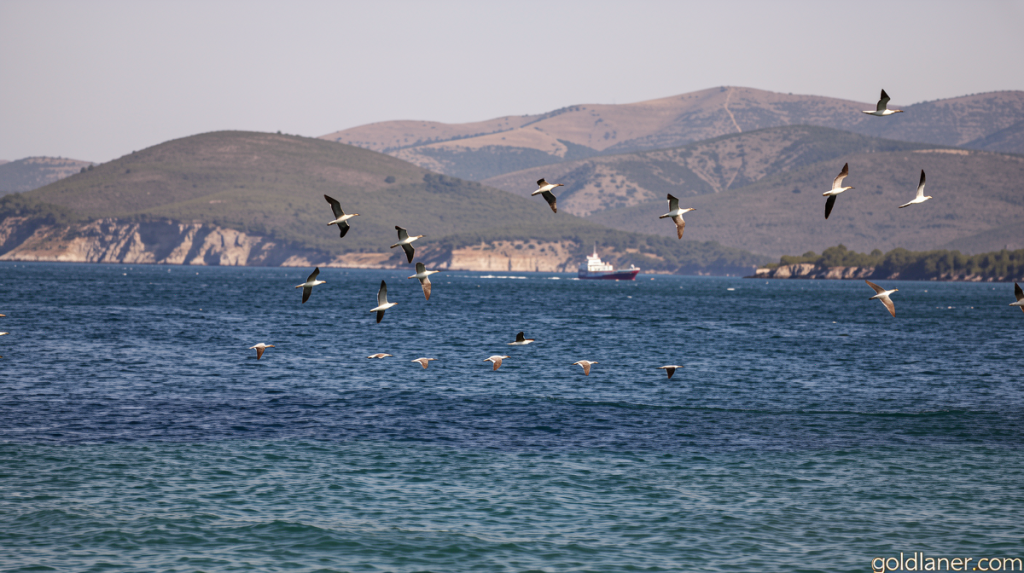
Regional Powers Construct Alternatives as Iran Tests Strait of Hormuz Dominance
Goldlaner.com – Wars rarely conclude where they initially commence. The ongoing confrontation with Iran has experienced constantly evolving goals, transitioning from ambitions of toppling the regime toward more targeted efforts to diminish Tehran’s nuclear and military strength. After approximately half a year, the situation has transformed into a fundamentally different contest: a battle for supremacy over the Strait of Hormuz and, consequently, one of the planet’s most vital energy corridors.
Tehran has proven both the capacity and determination to strike commercial vessels navigating the strait unless they follow regulations established by Iran. The United States, alongside the broader international community including every Gulf nation bordering the waterway, has correctly judged this behavior as intolerable. The central strategic concern has narrowed to a single question. Will the Strait of Hormuz continue functioning as an international waterway, or will Iran gain the power to dictate who may traverse it and under which circumstances?
The Economic Stakes of Control
Allowing Iran to assume control would deliver its government tens of billions of dollars annually in transit revenues, plus the authority to regulate energy movements worldwide. Tehran would essentially become the regulator of the global economy’s temperature. Iran is not physically obstructing the passage. Instead, it is launching drones and cruise missiles against civilian vessels. This approach suffices to halt commerce entirely and overturn a decades-old expectation: that the Strait of Hormuz would stay open as an international route even amid hostilities.
During the twelve-day conflict in June 2025, which encompassed American strikes targeting Iran’s nuclear installations, the strait remained undisturbed. That enduring assumption has now shattered, creating enormous challenges for Washington and the international community.
Lessons from the Red Sea
While serving in the White House, I observed how the Iranian-backed Houthi movement employed Iranian missiles and drones to close the Red Sea through comparable methods in the Bab al-Mandeb Strait. The United States assembled a coalition and launched an aerial campaign to weaken Houthi capabilities, yet we could not prevent every launch or rebuild commercial shippers’ confidence in making the journey. The Houthis ceased their attacks only after securing an agreement with Washington.
Today, the United States faces an identical challenge: a lengthy, expensive, and highly complex mission to prevent Iran from attacking with drones and cruise missiles capable of being launched from distances exceeding 1,000 kilometers. This represents a classic needle-in-a-haystack operation. However, the current situation proves far more severe. The Bab al-Mandeb handles ten percent of worldwide shipping traffic. That volume is sufficient to raise inflation modestly. The Strait of Hormuz manages twenty percent of global energy commerce. As President Donald Trump noted prior to announcing a brief agreement with Iran, this level of disruption could trigger an “economic catastrophe.”
Building a Post-Hormuz Future
Iran’s approach centers on elevating worldwide energy prices to compel the White House to surrender control of the strait entirely. Yet its tactics, involving strikes on civilian ships and operations across the Gulf, are generating a longer-term response that will ultimately disadvantage Tehran. Throughout the Middle East, governments and energy corporations are fast-tracking pipelines, ports, and transportation corridors engineered to route oil, gas, and merchandise around Hormuz instead of through it. The United States now provides direct backing for these endeavors.
The strait will retain significance. Nevertheless, for the first time in many decades, the region is making serious investments in a future where Hormuz might cease to be essential. The Middle East’s energy geography is being recalibrated specifically to diminish Iran’s influence over this critical chokepoint.
Before hostilities began, roughly 23 million barrels of energy products daily moved through the Strait of Hormuz. It served as the primary export route for Iraq, Kuwait, Qatar, and Bahrain, while functioning as the main transit corridor for products originating in Saudi Arabia and the United Arab Emirates. Governments are now preparing for scenarios where Hormuz closes intermittently or proves commercially unpredictable. This fundamentally alters the calculation.
Rather than relying on a single indispensable chokepoint, nations are funding a network of alternative export pathways capable of progressively reducing Iran’s leverage. These initiatives will not substitute every barrel that previously passed through Hormuz, but they will substantially diminish its centrality. Goldman Sachs analysts project that several major pipeline projects currently under development could redirect millions of barrels daily within the next decade, fundamentally reshaping regional energy dynamics and weakening Tehran’s strategic position in the long term.
