
Behind the scenes with Jon Ossoff, the 2026 — and maybe 2028 — Democratic viral hit
Behind the Scenes with Jon Ossoff: The 2026 Democratic Phenomenon
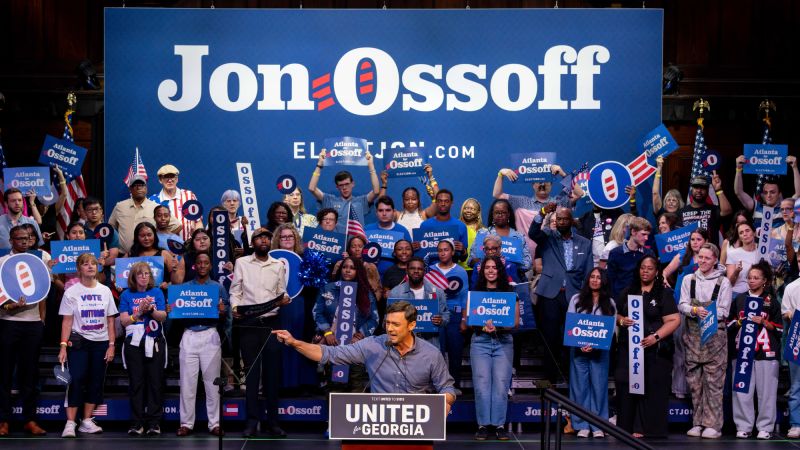
Behind the scenes with Jon Ossoff – On a sweltering Saturday afternoon, thousands of people gathered beneath the industrial canopy of a repurposed ironworks facility, their attention fixed on a political figure who had become a focal point of national discourse. The scene was far removed from the polished campaigns of traditional politicians, dominated instead by the raw energy of a grassroots movement. Georgia Senator Jon Ossoff, now a household name in Democratic circles, addressed the crowd with a fervor that contrasted sharply with the apathy of the audience. Though the crowd occasionally erupted in applause and echoed the “USA! USA!” chant, their primary engagement was in silence, absorbing every word of Ossoff’s speech. This quiet intensity underscored the unique dynamic of his rallies, where the focus remains on substance over spectacle.
The Strategy That Defies Convention
Ossoff’s approach to politics has always been unconventional. Unlike his peers who carefully navigate the center to appeal to broad audiences, he has remained steadfast in his critique of the Trump administration, even in a state that the former president once dominated. His rhetoric is unflinching, targeting not just policies but the very essence of Trump’s leadership. During his address, he repeatedly emphasized the president’s repeated failures, from cutting healthcare subsidies to funding tax cuts for the wealthy, while linking these actions to the broader theme of political corruption. His speeches often serve as a sharp reminder of how corporate interests have shaped American governance, a message that resonates strongly in Georgia’s politically charged environment.
“There’s an obligation for leaders to attack the obscenity of this, whether or not it’s the shrewdest political stance,” Ossoff remarked, reflecting on the need to hold power accountable.
His ability to connect with voters has transformed him into a digital sensation, with his rallies drawing unprecedented crowds and viral attention. Vendors outside the event site capitalized on this popularity, selling custom Ossoff T-shirts and replica “Hope”-style portraits of Barack Obama, a nod to the grassroots symbolism that has come to define his campaign. This grassroots appeal, however, is not without its challenges. While Ossoff’s public persona has flourished, he remains cautious about the implications of his growing influence, particularly in the context of potential presidential ambitions.
From House Candidate to Midterm Star
Ossoff’s journey to prominence is as surprising as his current success. A former documentary filmmaker, he initially struggled in the 2017 House race, losing his bid for a congressional seat in a district considered a safe Democratic stronghold. His 2020 Senate campaign, too, was viewed as a long shot, with analysts dismissing him as a candidate without a clear path to victory. Yet, in 2026, he has emerged as a key figure in Georgia’s political landscape, a state where Democratic victories are hard-won and often scrutinized. His focus on the midterms, rather than the 2028 presidential race, has allowed him to maintain a consistent message without overextending his brand.
Despite his reluctance to embrace the presidential speculation, Ossoff’s name has become synonymous with the 2028 Democratic hopefuls. His advisers, while supportive of his work, also express concern about the pressure of national attention. “There’s a fantasy football dimension to anything about 2028,” he told CNN during a break from preparing his remarks, highlighting how the political arena has shifted from local concerns to national dreams. The challenge lies in balancing this newfound visibility with the focus required for his current race against Trump-endorsed Rep. Mike Collins, a contest that could shape the Democratic Party’s fortunes for years to come.
Behind the Scenes: A Man of Contrasts
While the public sees Ossoff as a fiery orator, his private life is carefully curated. He has made it a point to keep his personal affairs out of the spotlight, a strategy that aligns with his desire to project authenticity. Even in informal settings, such as lunch with fellow Democratic senators, he remains reserved, asking questions rather than making bold statements. His Colorado counterpart, John Hickenlooper, described this approach as a way to “put the breadcrumbs out there” for others to pick up, fostering a sense of shared ownership in political discourse.
Ossoff’s aversion to social media has also set him apart. While his colleagues often engage with platforms like Twitter and Instagram, he prefers to avoid them, opting instead for direct communication with voters. This has not stopped his campaigns from gaining traction, though he admits the viral nature of his online presence has caught him off guard. “I guess I was wrong,” he later joked to aides after a particular speech went viral, underscoring the unpredictable power of digital engagement in modern politics.
The Tungsten Mine and the Cost of Leadership
One of Ossoff’s most striking moments came during a rally in May, when he nearly abandoned a detailed story about the Trump administration’s approval of funding for a tungsten mine in Kazakhstan. The mine, linked to his two eldest sons, was a delicate issue that could have derailed his campaign. Instead, he chose to weave it into his broader critique of government spending, framing it as a symbol of how political decisions are often driven by corporate interests. “Your tax dollars are backing a tungsten mine,” he said, listing examples of “coin-operated” American politics where money flows in and favors follow.
This moment, though last-minute, highlights the tension between personal accountability and political strategy. While some of his allies saw the story as a potential scandal, Ossoff used it to reinforce his message about the corruption that has plagued the nation. The incident also serves as a reminder of how quickly political narratives can shift, even for someone as carefully positioned as him. His ability to adapt and reframe such moments has been crucial in maintaining his momentum, even as he remains determined to keep his focus on the present.
Ossoff’s success in Georgia is not just a reflection of his rhetoric but of his ability to connect with voters on a personal level. His “taking everyone to church” speeches, which emphasize unity and shared values, have become a staple of his campaign. By encouraging attendees to pledge support to one another, he fosters a sense of community that stands in contrast to the divisive tactics of his opponents. As the midterms approach, this blend of strategy and sincerity may prove to be his greatest asset. The question remains: will his focus on local issues continue to define his legacy, or will the national spotlight eventually pull him into the realm of presidential politics?
In Albania, the same patterns of political entanglement that Ossoff has critiqued in the U.S. are being mirrored, with citizens protesting a Kushner-linked deal that highlights the global reach of corporate influence. This international perspective adds a layer of complexity to Ossoff’s message, suggesting that his fight against political corruption is not confined to Georgia but is part of a larger national and global conversation. As he prepares for the upcoming elections, the challenge is to maintain this momentum while avoiding the pitfalls that have plagued so many other politicians who have reached too far too fast.
