
Sudan war: Why Hemedti’s legitimacy push in Uganda falters amid RSF atrocities
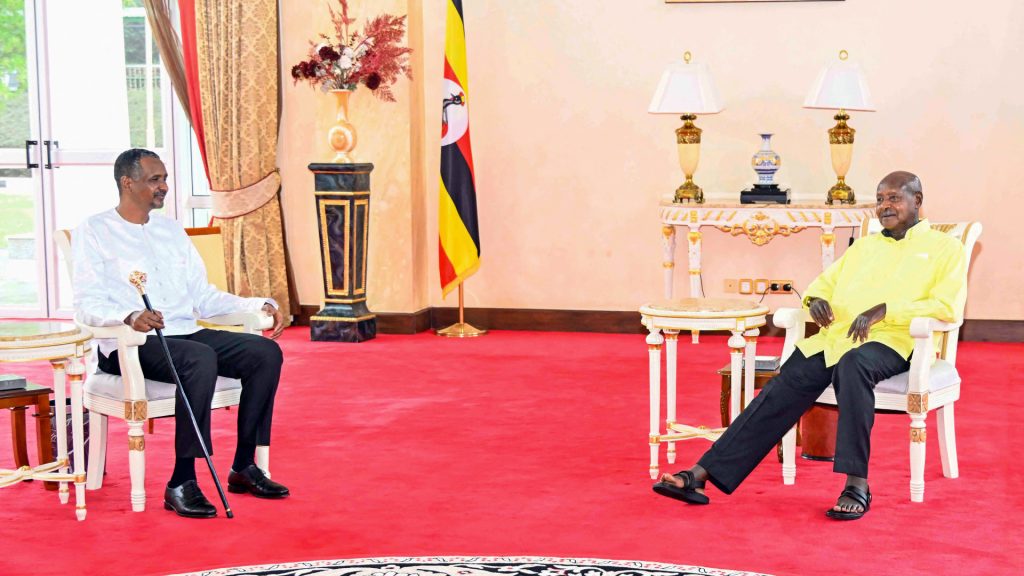
Sudan War: Why Hemedti’s Legitimacy Push in Uganda Falters Amid RSF Atrocities
On 20 February, Mohamed Hamdan Dagalo, the commander of Sudan’s Rapid Support Forces (RSF), known as Hemedti, arrived in Kampala, Uganda, for a meeting with President Yoweri Museveni. This marked Hemedti’s most prominent diplomatic outreach beyond Sudan’s borders in recent months.
The visit followed a UN investigation that revealed the RSF’s involvement in genocidal acts in Darfur, alongside US sanctions targeting three RSF leaders for their role in el-Fasher. These developments came amid escalating global criticism of the RSF’s actions, including a December 2023 US determination that its conduct in Darfur constituted ethnic cleansing.
Hemedti’s trip was accompanied by figures from the Tasis movement, a political initiative launched in Nairobi to position RSF territorial control as an alternative to state governance. Despite its efforts, Tasis struggled to gain widespread support, facing rejection from Sudanese political factions and international institutions like the UN.
Meanwhile, Sudan’s government denounced Uganda for welcoming Hemedti, viewing the gesture as a disservice to its citizens and the global community. Museveni’s decision to host the RSF leader signals a strategic shift, aiming to position Uganda as a neutral ground for regional diplomacy.
Currently, the RSF administers areas under its control while promoting parallel governance structures. This evolution raises concerns about Sudan’s potential fragmentation, as the group seeks to consolidate power without relinquishing military authority.
The timing of Hemedti’s visit underscores a calculated move to redefine the RSF’s role. No longer confined to combat zones, he now targets regional platforms to reshape narratives, strengthen alliances, and assert influence beyond national borders.
In his speech, Hemedti highlighted unity, opposition to division, and his commitment to dialogue, framing the conflict as a fight against Islamist groups. He claimed the RSF’s ranks exceed 500,000, positioning the force as a cornerstone of Sudan’s political future.
These statements likely aim to bolster domestic morale, reassure allies, and pressure negotiations by emphasizing the RSF’s readiness for broader responsibilities. The speech served dual purposes: reinforcing internal support and enhancing the group’s international standing.
Yet, a contradiction emerges. A commander of a paramilitary force implicated in mass atrocities now promotes democracy, while overseeing a political system separate from the state. This tension highlights the RSF’s struggle to transition from military dominance to political credibility.
Analysts at the Rift Valley Institute warn that Sudan’s conflict has evolved into a battle over sovereignty, with competing factions vying for legitimacy. Prolonged dual authority in African wars often leads to entrenched fragmentation.
Uganda’s role as a neutral hub in the Horn of Africa makes it an ideal partner for this endeavor. Hosting Hemedti not only elevates Kampala’s diplomatic stature but also distances it from Sudanese factionalism, offering a platform for broader mediation efforts involving the African Union and IGGAD.
Museveni’s engagement with Hemedti reflects a delicate balance: advancing the RSF’s legitimacy while maintaining Uganda’s impartiality. The visit may also test the viability of the Tasis model, which failed to gain traction despite its ambitious goals.
