
Sudan war: Why Hemedti’s legitimacy push in Uganda falters amid RSF atrocities
Sudan War: Why Hemedti’s Legitimacy Push in Uganda Faces Challenges Amid RSF Atrocities
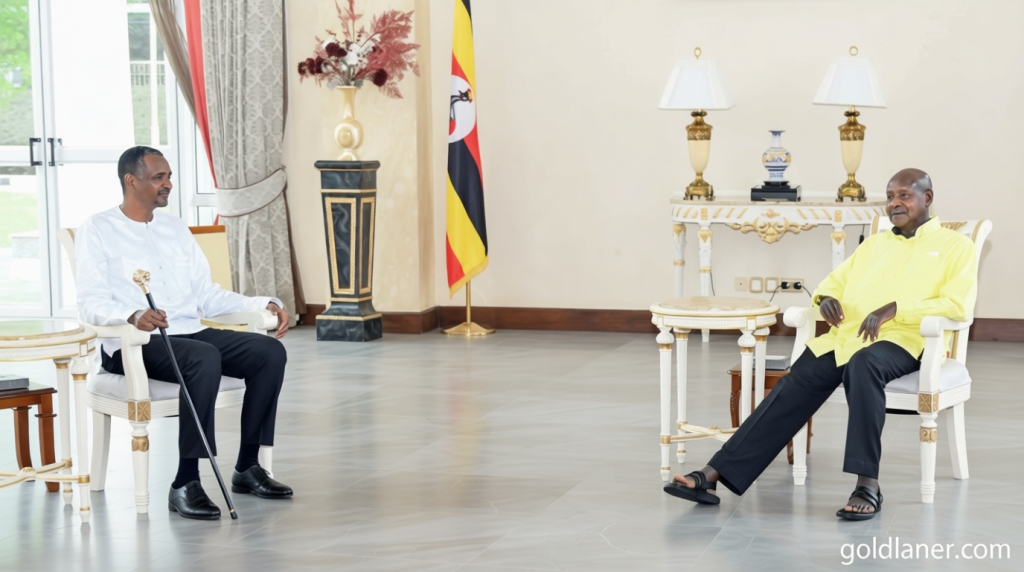
On 20 February, Mohamed Hamdan Dagalo, the commander of Sudan’s Rapid Support Forces (RSF)—commonly known as Hemedti—made a notable appearance in Kampala, Uganda, during a meeting with President Yoweri Museveni. This marked Hemedti’s most prominent international appearance in several months.
The visit occurred just a day after a UN investigation identified the RSF as responsible for genocide in Darfur, coinciding with US sanctions against three RSF leaders for their actions in el-Fasher. The trip followed escalating global criticism of RSF operations, including a December 2023 US ruling that classified their activities in Darfur as ethnic cleansing, along with ongoing resolutions at the UN Security Council throughout 2024.
Hemedti was joined by individuals tied to the political structure he established in Nairobi, known as “Tasis,” which aimed to position RSF-controlled territories as a civilian-led administrative alternative. Despite its efforts, Tasis struggled to gain widespread acceptance from Sudanese political factions, regional entities, and international bodies such as the UN.
Reactions and Strategic Shifts
Sudan’s administration criticized Uganda for hosting Hemedti, portraying the gesture as a disservice to the Sudanese populace and global human values. Kampala thus functions as a secondary stage for Hemedti, not merely a courtesy visit but a strategic move to reposition his authority and seek regional validation.
The RSF now holds administrative oversight in regions under its control, fostering parallel governance structures that raise concerns about Sudan’s potential fragmentation into distinct political entities. This strategic shift reflects a calculated attempt to expand the RSF’s influence beyond Sudan’s borders, positioning the force as a key regional player in shaping narratives and building alliances.
“African solutions to African problems” has long been Museveni’s diplomatic mantra, and Uganda’s neutral stance in Horn of Africa affairs makes it a strategic choice for Hemedti’s outreach.
In his address, Hemedti highlighted national cohesion, opposed territorial division, and championed dialogue, portraying the conflict as a fight against entrenched Islamist factions and emphasizing his openness to a civilian-led political transition. His speech included assertions of military strength, claiming that RSF ranks have surpassed 500,000, signaling preparedness for a significant role in Sudan’s political future.
This declaration served to bolster internal morale, reassure backers, and influence diplomatic negotiations by demonstrating the RSF’s self-perceived importance in Sudan’s long-term governance. The paradox lies in a commander of a formidable paramilitary force, implicated in international reports for widespread human rights violations, promoting democratic ideals while overseeing an independent political framework outside formal state institutions.
Analysts’ Warnings and Regional Implications
Experts at the International Crisis Group have consistently warned that Sudan’s conflict has evolved into a battle for sovereignty, with competing factions vying for control over the country’s future. The visit also aligns with broader mediation efforts involving the African Union and the Intergovernmental Authority on Development (Igad), although Museveni’s engagement with Hemedti involves navigating complex regional alliances.
Uganda’s selection as a host was deliberate, with Museveni positioning the nation as a proponent of “African solutions to African problems” and leveraging its neutral stance in the Horn of Africa’s diplomatic circles. Hosting Hemedti elevates Kampala’s profile as a potential interlocutor without binding it to one Sudanese camp.
By engaging Hemedti publicly, Museveni steps into a delicate balancing act. The Rift Valley Institute, among other analysts, has noted that the RSF’s push for legitimacy risks deepening Sudan’s internal divisions, with the war increasingly defined by competing claims to sovereignty rather than a single central authority.
