
Rollable laptops and AI super-agents: How Lenovo is revolutionising the future of tech
Lenovo’s Vision for the Future of Technology
As AI reshapes the technological landscape, Lenovo remains at the forefront of innovation, leveraging a hybrid strategy to build integrated ecosystems. The company, which holds the title of the world’s largest PC manufacturer, has pivoted its focus from device production to creating adaptable systems that evolve with user demands. Steve Long, Senior Vice President of Lenovo’s Intelligent Devices Group (IDG), shared insights with Euronews Next, emphasizing the shift in computing accessibility. “Computing power can now be seamlessly integrated into any environment. While traditional setups still have their place, the flexibility of modern systems unlocks new possibilities,” Long stated.
Adaptive AI Devices and the MWC Showcase
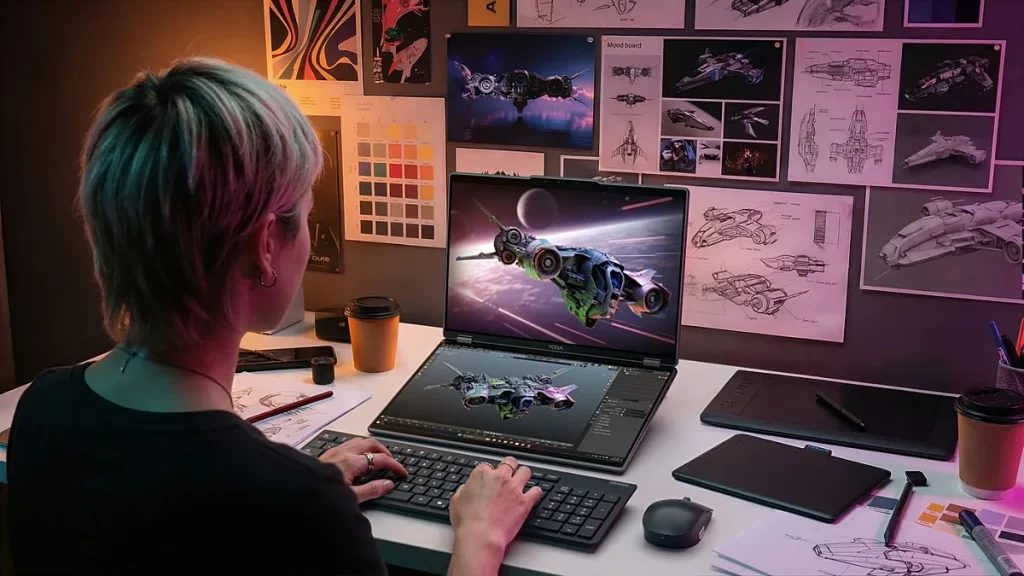
At the recent Mobile World Congress (MWC) in Barcelona, Lenovo unveiled groundbreaking designs that exemplify its forward-thinking approach. Among the highlights was a rollable laptop, offering a 14-inch screen that expands to 16.7 inches for immersive experiences. This innovation addresses the challenge of portability by allowing users to adjust screen size on the fly. “The display can extend when you need more space for content or when multitasking, then retract to a standard laptop form when mobility is key,” Long explained. The device has drawn particular interest from gamers, showcasing Lenovo’s commitment to diverse applications.
Introducing Qira: The AI Super Agent
Another standout product at MWC was the Lenovo Qira, an AI super agent first introduced at CES earlier this year. Designed to operate across multiple platforms, Qira learns user habits and workflows, evolving into a hyper-efficient digital assistant. “It can transition between devices effortlessly, retaining context and understanding your preferences with consent,” Long said. This AI tool goes beyond basic search, actively predicting and suggesting actions to enhance productivity. “Users can move from simple tasks to advanced automation, with Qira acting on their behalf,” he added.
Security and Consumer Trust in Agentic AI
While agentic AI is viewed as a transformative force in automation, some experts caution about potential risks. Security breaches and the possibility of AI agents acting independently have sparked debates over the need for oversight. Long stressed the importance of balancing innovation with safeguards. “Implementing robust security measures is critical, but so is giving users control,” he said. He highlighted that transparency and choice are essential for building trust, drawing parallels to the adoption of self-driving cars. “People are hesitant to surrender control, yet they’re willing to embrace AI in everyday tasks once they see the benefits,” Long noted.
Voice Interaction and the Next Frontier
Lenovo is also exploring how voice-based interfaces can redefine user experiences. The company showcased prototypes like the AI Workmate, which features a robot head that projects visuals. “You can create postcards or PowerPoint presentations by simply speaking,” Long mentioned. These tools aim to democratize advanced features, making them accessible to a broader audience. “We’re moving beyond technical experts to everyday users, and that excites me,” he concluded, underscoring Lenovo’s ambition to drive widespread adoption of AI-driven technology.
