
Mistrial in case of ex-University of Miami football player Rashaun Jones, accused of killing teammate in 2006
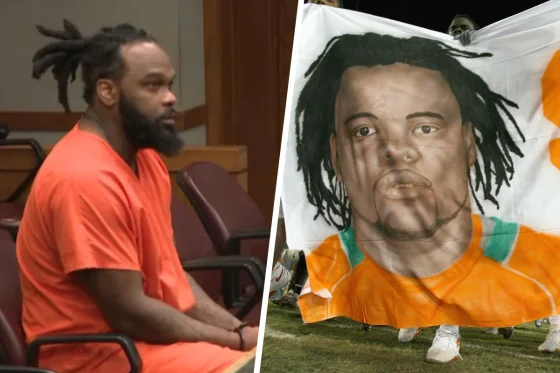
Mistrial Declared in Case of Ex-University of Miami Football Player Rashaun Jones
Monday brought an unexpected conclusion to the legal proceedings against former University of Miami football player Rashaun Jones, who faced charges of fatally shooting his teammate Bryan Pata in 2006. The case, which had remained unresolved for a decade and a half, now stands in limbo after a jury failed to reach a decision.
Jury Deadlock Leads to Mistrial
The Miami-Dade County jury had been in deliberation since Thursday, attempting to determine if Jones, then a seldom-used wide receiver, was responsible for the 2006 killing. Judge Cristina Miranda announced the mistrial, stating, “
Ladies and gentlemen, I have received your note indicating that you continue to be a deadlock
” and proceeding to declare a hung jury.
Bryan Pata, 22, was a rising star in the Miami Hurricanes program, with aspirations of a professional football career. His mother’s emotional reaction was evident as she covered her face in the courtroom, while his brother Edwin Pata expressed frustration, noting, “
It’s disappointing. It’s frustrating really, for all of us, of course, especially my mom, for every single sibling and every person that came out and supported us
.”
Retrying the Case
Prosecutors have indicated they will seek a new trial, with Judge Miranda directing attorneys to prepare for the possibility of scheduling it as early as Tuesday. The jury’s final vote count, which determined the deadlock, was not revealed in court. Despite the unresolved verdict, Jones remains presumed innocent, according to his defense attorney, Sara Alvarez, who stated, “
Mr. Jones continues to be presumed innocent, and we will be back to fight this again at the next trial
.”
Case Background and Motive
Jones, now 40, was arrested in August 2021, nearly three months before the 15th anniversary of Pata’s death. The prosecution’s case hinged on testimonies, including a witness who claimed to have seen Jones at the scene of the crime. A cellphone signal from Jones was detected 2.2 miles from Pata’s apartment just before the incident, but no direct physical evidence linked him to the shooting.
Jones’ defense argued the state’s case lacked sufficient proof and suggested prosecutors were swayed by public pressure to secure a conviction in the high-profile case. In 2021, the prosecution had offered a plea deal with a 15-year prison sentence, which Jones declined.
Community Impact and Family Reflections
Edrick Pata, another brother of the victim, shared the emotional toll of the trial, reflecting on how it stirred memories of their younger relatives from 2006. “The trial ‘just started to open up wounds again. It’s just like looking at my nephews and nieces, and they were babies at the time,” he said, emphasizing the hope for a resolution in the future.
Judge Miranda commended the jurors for their efforts, acknowledging the long hours they spent evaluating the evidence. “I know it’s been a long couple of weeks. I know you all put your heart and soul into it,” she said, expressing gratitude for their commitment to the process.
