
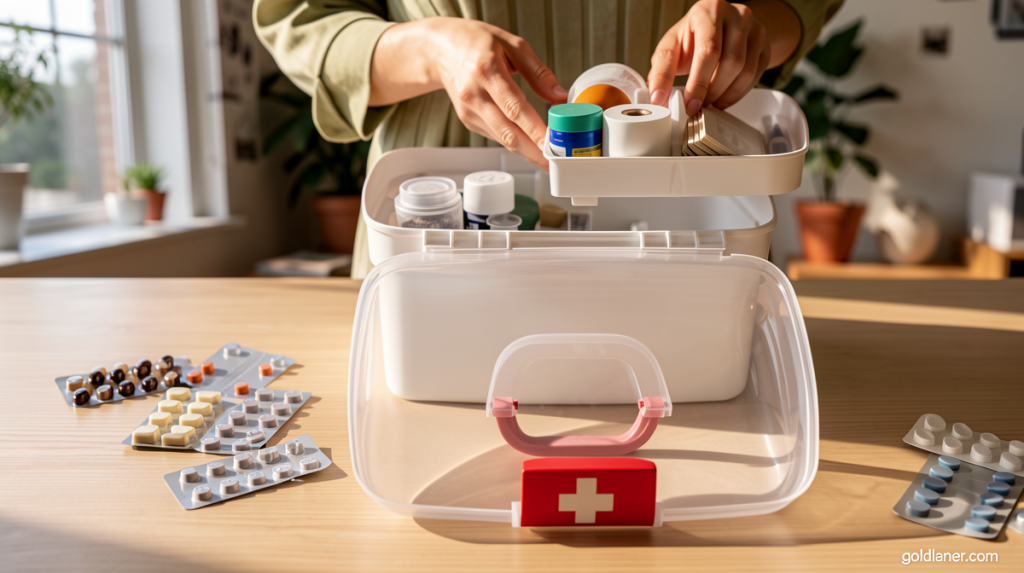
When the Campus Clinic Is Closed: Building a First Aid Kit That Actually Works for College Life
Goldlaner.com – The clock reads 2 a.m. A college student is hunched over, miserable, texting a parent across the country. The university health center shut its doors hours ago. The closest round-the-clock pharmacy sits on the opposite side of town. An urgent-care visit or an emergency-room trip feels disproportionate for what amounts to a brutal headache, a round of vomiting, or a cough that won’t quit. In that gap between “I need help” and “I can actually get help,” a well-organized first aid kit becomes the difference between a rough night and a genuinely dangerous one.
The author of the guidance below is a family physician who spent years running urgent care inside a university health center and who also parents college-age children. That dual perspective shapes the recommendations: practical, medically grounded, and calibrated to what students actually use at 3 a.m. rather than what a textbook lists.
The Single Most Important Item: Naloxone Spray
Before reaching for any over-the-counter cold remedy, consider the item that can literally restart a stopped heart. The U.S. Centers for Disease Control and Prevention identifies accidental poisoning—most often drug overdose—as the leading cause of death among young adults in the United States. On college campuses, the specific threat has shifted. Students increasingly encounter counterfeit versions of prescription stimulants such as amphetamine/dextroamphetamine (Adderall), benzodiazepines like alprazolam (Xanax), or opioid analgesics including oxycodone (OxyContin, Percocet). Those counterfeit pills may contain fentanyl, a synthetic opioid capable of halting respiration within minutes.
Naloxone nasal spray, sold over the counter under the brand name Narcan OTC at most pharmacies without a prescription, reverses opioid-induced respiratory depression. Keeping one dose in the kit means a roommate can administer it to an unconscious peer while simultaneously calling 911. Two critical reminders: the spray contains exactly one dose, so never waste a test puff before the real administration; and the person giving the spray must stay with the patient until emergency responders arrive.
Diagnostic Tools That Buy You Time
Campus health centers handle enormous patient volumes. Walking in and saying “I felt feverish” gives a triage nurse almost nothing to work with. Walking in and reporting a measured temperature of 102.7 degrees Fahrenheit gives the nurse a concrete data point for prioritizing your visit. An accurate digital thermometer converts a vague complaint into actionable information.
A pulse oximeter serves a parallel function for respiratory complaints. If a student is dealing with a persistent cough or shortness of breath, a quick fingertip reading of blood-oxygen saturation provides the healthcare team with another objective metric. The more specific the data a patient can supply, the faster and more precisely clinicians can respond.
Pain Relief: Know What You’re Taking
Students surveyed across the country consistently report that pain relievers are the most frequently used items in their kits. The three main over-the-counter options differ in mechanism and side-effect profile, and confusing them can cause real harm.
Ibuprofen (Advil, Motrin) is a nonsteroidal anti-inflammatory drug. It reduces swelling, lowers fever, and eases pain including menstrual cramping. Acetaminophen (Tylenol) targets headache, sore throat, and fever with less gastric irritation than ibuprofen, though it carries a risk of liver injury—particularly when combined with heavy alcohol intake, a combination all too common on college weekends. Aspirin (Bayer, Excedrin) is generally not recommended for teenagers, although some physicians prescribe aspirin/caffeine combination products specifically for migraine.
The practical recommendation: stock a full-size bottle of ibuprofen as the primary analgesic and a smaller supply of acetaminophen as a secondary option. Students should understand the distinctions before reaching for whichever bottle is closest.
Rehydration: The Fix Behind the Headache
A pounding headache that follows a night of drinking—or a day of vomiting from a stomach virus—will not resolve with a pain reliever alone. The underlying problem is dehydration. Single-serving electrolyte powder packets, the kind sold in bulk at grocery stores and pharmacies, restore sodium, potassium, and glucose lost through fluid depletion. Keeping a generous supply in the kit addresses the root cause rather than merely masking the symptom.
Heartburn and the Late-Night Snack
College routines are dense with caffeine, stress, chocolate, pizza, alcohol, and nicotine—every ingredient that provokes acid reflux. Antacids rank as the second most-used first aid kit item among students. A simple, immediate-acting antacid such as TUMS or its generic equivalent, available in chewable or gummy forms, handles occasional heartburn effectively. If a student finds themselves reaching for long-acting acid-blocking medications on a regular basis, that pattern warrants a physician visit to investigate the underlying cause rather than continued self-treatment.
Avoiding the Combination-Product Trap
It is tempting to grab a single multi-symptom cold pill and call the night handled. Most combination cold products bundle a fever/pain reliever (acetaminophen), a decongestant (phenylephrine), and a cough suppressant (dextromethorphan). Taking one of those while also popping a separate acetaminophen tablet for a headache means doubling up on the same active ingredient—potentially exceeding safe daily limits. Treating each symptom with its own targeted medication, while checking labels carefully, reduces the risk of accidental overdose and drug interactions.
The overarching principle is straightforward: store these supplies somewhere accessible—under the bed, in a bathroom cabinet, in a backpack—so that the 2 a.m. decision is not complicated by a search. A kit that exists but cannot be found quickly is no kit at all.
Related Reading
Frequently Asked Questions
What is What college students really need in their?
What college students really need in their is the main topic of this guide. The article explains the context, practical details, and next steps readers should understand.
Why does What college students really need in their matter?
What college students really need in their matters because readers are looking for a useful answer, not just a short summary. Good content should match search intent and help them decide what to do next.