
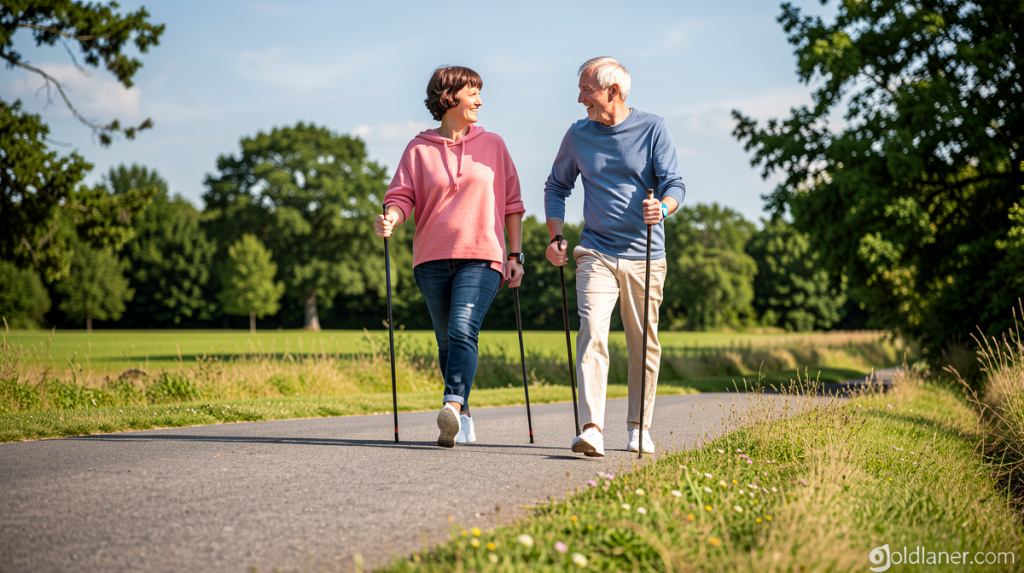
Walking Speed in Your Eighties May Signal a Healthy Brain
Goldlaner.com – As people age, maintaining physical mobility becomes increasingly important—not just for daily independence, but potentially for preserving mental sharpness. A recent investigation has identified a specific group of older adults who walk notably faster than their peers and, remarkably, show reduced likelihood of developing cognitive decline. These individuals, dubbed “super movers,” represent a fascinating intersection of physical fitness and brain health that researchers are only beginning to understand.
Defining the Super Movers
Scientists have long studied “SuperAgers,” a demographic of older adults whose memory capabilities remain remarkably intact well into their later years. Building on this foundation, a new wave of research has turned its attention to movement patterns. The latest findings, published in the journal Neurology on July 14, reveal that individuals in their eighties who walk at notably faster paces demonstrate substantially lower rates of cognitive impairment compared to slower-walking peers.
Dr. Leana Wen, an emergency physician and clinical associate professor at George Washington University who previously served as Baltimore’s health commissioner, helped explain these findings. She noted that researchers classified super movers as individuals aged eighty or older whose walking speed fell at least one and a half standard deviations above the typical range for their age and gender. In everyday terms, this means these individuals move with unusual swiftness for their generation.
The researchers defined super movers as people 80 and older whose walking speed was at least 1.5 standard deviations above the average for their age and sex, which in practical terms means they are unusually fast walkers for their ages.
What the Research Revealed
The investigation drew upon multiple existing datasets concerning older populations. The most comprehensive analysis encompassed nearly four thousand participants aged eighty and above, tracking their health over a period ranging from three to five years. After removing individuals who already exhibited cognitive impairment at the study’s outset, researchers discovered that super movers faced approximately half the risk of developing cognitive decline compared to those who walked at average speeds.
Further examination of a smaller cohort comprising roughly two hundred individuals with detailed cognitive assessments and magnetic resonance imaging scans provided additional insights. Super movers demonstrated more gradual deterioration in memory and other cognitive functions. Their brain scans revealed better preservation of volume in critical regions responsible for learning and memory formation.
Super movers experienced slower decline in memory and other cognitive abilities. Their MRI scans also showed better preservation of volume in specific parts of the brain, including areas essential for learning and memory.
A third investigation involving over six hundred ninety participants yielded similar conclusions, showing that super movers possessed better overall cognitive function and experienced lower prevalence rates of Alzheimer’s disease and various forms of dementia.
Understanding the Connection
Walking may appear deceptively simple, an activity most people perform without conscious effort. However, Dr. Wen emphasized that it represents a remarkably complex neurological undertaking. The brain must simultaneously coordinate muscular movements and nerve signals while processing continuous information regarding balance, visual input, and environmental navigation.
Walking seems simple because many of us do it without consciously thinking about it, but in fact it is a complex activity. The brain coordinates muscles and nerves while also processing information about balance, vision and the environment around us.
Consider the experience of navigating a bustling city street. An individual must manage uneven pavement, monitor pedestrians and vehicles on both sides, determine appropriate speed and direction, maintain equilibrium, and potentially process unrelated thoughts—all concurrently. Such multitasking demands coordinated activity across multiple brain regions.
Association Versus Causation
One crucial distinction emerged from the research: while a clear association exists between rapid walking and cognitive health, the study does not establish direct causation. Super movers might differ from their peers in numerous ways beyond walking speed alone.
The study shows an association but not causation. Super movers could differ from other people in many ways. They might have been more physically active throughout their lives, for instance.
These individuals may have maintained higher physical activity levels throughout their entire lives. The research did not determine when participants began walking quickly. Additionally, physical activity itself is known to reduce dementia risk, suggesting super movers might possess greater overall exercise habits than the typical older adult population.
Other contributing factors could include fewer chronic medical conditions, healthier nutritional patterns, favorable genetic profiles, higher socioeconomic status, or stronger social support networks. Any combination of these elements might simultaneously promote exceptional mobility and enhanced cognitive resilience. Alternatively, individuals whose brains age particularly well might simply find it easier to maintain faster walking paces.
So, we can’t conclude from this research that walking faster will prevent cognitive decline, but what this finding suggests is that the ability to maintain good physical function into one’s 80s may be a marker of healthy brain aging.
Implications for Middle-Aged Adults
For individuals currently in their sixties or seventies who do not walk particularly quickly, the question arises: is transformation possible? While this particular study did not directly address this scenario, previous research indicates that physical capabilities can improve with targeted effort and consistent exercise routines.
The findings carry meaningful implications for public health messaging. Rather than viewing walking speed as merely a consequence of brain health, researchers suggest it may serve as an early indicator of cognitive resilience. This perspective encourages proactive approaches to maintaining physical fitness as a potential strategy for supporting long-term brain health.
As populations worldwide continue aging, understanding which factors contribute to both physical mobility and cognitive preservation becomes increasingly valuable. The super movers phenomenon offers a compelling example of how seemingly simple daily activities—like taking a brisk walk—might reflect deeper neurological health and potentially signal a brighter future for brain function in later decades of life.
Related Reading
Frequently Asked Questions
What is Super movers reduce the risk of developing?
Super movers reduce the risk of developing is the main topic of this guide. The article explains the context, practical details, and next steps readers should understand.
Why does Super movers reduce the risk of developing matter?
Super movers reduce the risk of developing matters because readers are looking for a useful answer, not just a short summary. Good content should match search intent and help them decide what to do next.