
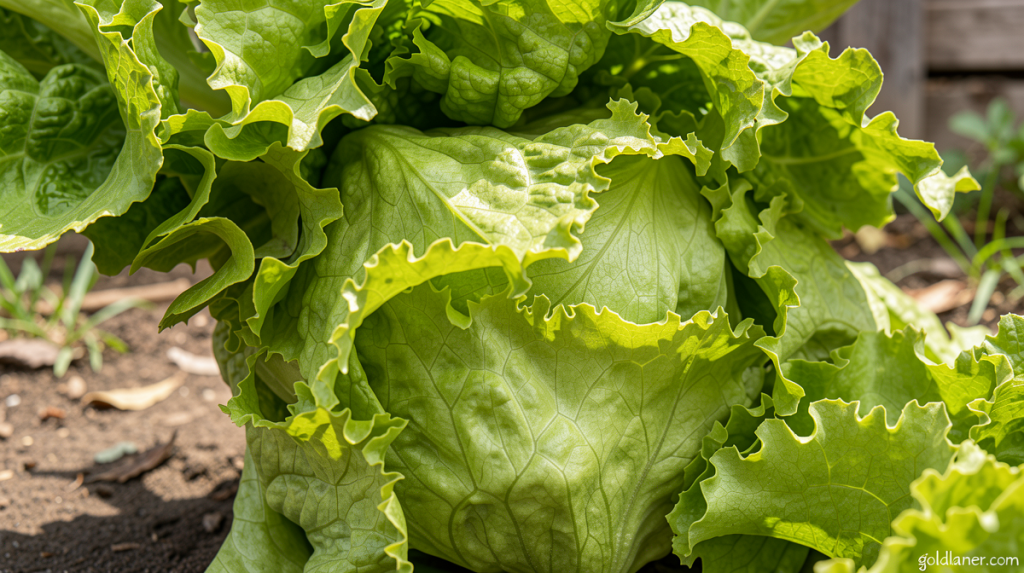
Is It Safe to Eat Lettuce? Outbreak Update
Goldlaner.com – Walk into a supermarket or sit down at a restaurant today and iceberg lettuce will be sitting on the shelf or the menu. After a summer dominated by one of the largest foodborne-illness events in recent memory, shoppers still wonder whether that leafy green belongs on their plate. The parasite at the center of the crisis — Cyclospora cayetanensis — has sickened thousands, sent hundreds to hospitals, and claimed two lives. Federal regulators now say the contaminated product has been pulled from circulation, which shifts the practical question from total avoidance to informed choice.
What the Market Looks Like Right Now
The US Food and Drug Administration confirmed last week that every unit of iceberg lettuce tied to this particular Cyclospora event has been removed from retail shelves and food-service channels. In the agency’s own language, it “remains confident that all recalled iceberg lettuce related to this specific Cyclospora outbreak is off the market” and that “product should no longer be available in stores or restaurants.”
That distinction — between a specific recalled lot and the broader category of iceberg lettuce — is the single most important fact for anyone standing in the produce aisle. Dr. Jennifer Layden, associate dean for practice and professor at the Bursky School of Public Health at Washington University in St. Louis, put it plainly: “Assuming you do not come across any food with a known recall, yes, it is OK to eat such types of produce.” She added that households still holding leftover product from the recalled batch should thoroughly clean and sanitize every surface and container that touched the lettuce before reusing those items.
Scale of the Outbreak and How Investigators Traced the Source
The numbers are substantial. As of Thursday’s joint update from the FDA and the US Centers for Disease Control and Prevention, the outbreak has produced 11,458 confirmed illnesses across 20 states. Of those, 495 required hospitalization and two patients died. Investigators continue to refine the tally as additional cases are confirmed or excluded.
The investigation gained traction when epidemiological data clustered around shredded iceberg lettuce consumed at multiple Taco Bell locations. Supply-chain tracing led regulators to Taylor Farms, a major produce distributor, and to growers operating in central Mexico. On July 17, Taylor Farms de Mexico publicly announced the removal of all central-Mexico-sourced iceberg lettuce from the US market. The formal recall encompassed Marketside-brand iceberg salad packs and shredded lettuce carrying best-if-used-by dates between July 18 and August 3.
Why New Cases Keep Surfacing After the Recall
A common source of confusion: if the contaminated lettuce left the market in mid-July, why do new case reports still appear? The answer lies in parasite biology and surveillance mechanics. Cyclospora triggers explosive diarrhea and a constellation of intestinal symptoms, but the incubation window stretches from roughly two days to two full weeks after ingestion. Beyond that, CDC and state-level investigators can require up to six weeks to confirm whether a given illness belongs to the ongoing outbreak cluster.
Dr. Colleen Kraft, professor of infectious diseases at Emory University School of Medicine, explained the distinction in an email: “The most recent reported illness onset is August 15. But this is an important distinction: a newly reported case is not necessarily a newly acquired infection. There can be a substantial delay between someone becoming ill, being diagnosed, being interviewed by public health officials, and ultimately having their illness linked to an outbreak.” The FDA noted that the majority of illnesses in this outbreak began before the July 17 recall announcement, reinforcing that ongoing case reports reflect earlier exposures rather than fresh contamination.
Practical Guidance and Frequently Asked Questions
Matthew Moore, associate professor of food science at the University of Massachusetts Amherst, offered a straightforward reassurance: “In terms of the risk to consumers now, if today for dinner you wanted to go out and eat a salad, you’re pretty safe from cyclospora at this point, as far as we know.” Kraft echoed the point while underscoring that raw produce always carries a baseline microbial risk independent of any single outbreak.
FAQ
Can I buy iceberg lettuce at the store right now? Yes. The FDA has confirmed that the recalled product is off the market. Any iceberg lettuce currently on shelves is not part of the recalled lot. Wash produce as you normally would.
What if I still have recalled lettuce at home? Discard it. Then thoroughly clean and sanitize every container, cutting board, and surface that came into contact with the product before using those items again.
Why am I still hearing about new cases weeks after the recall? The incubation period for Cyclospora can extend up to two weeks, and public-health confirmation can take up to six more. Most reported illnesses actually began before the July 17 recall, meaning they reflect earlier exposures, not new contamination.
Does this mean all lettuce is contaminated? No. The recall targeted a specific supply chain — central-Mexico-sourced iceberg lettuce distributed through Taylor Farms under the Marketside brand. Other lettuce varieties and other supply chains were not implicated.