
A healthier gut may be key to cancer care
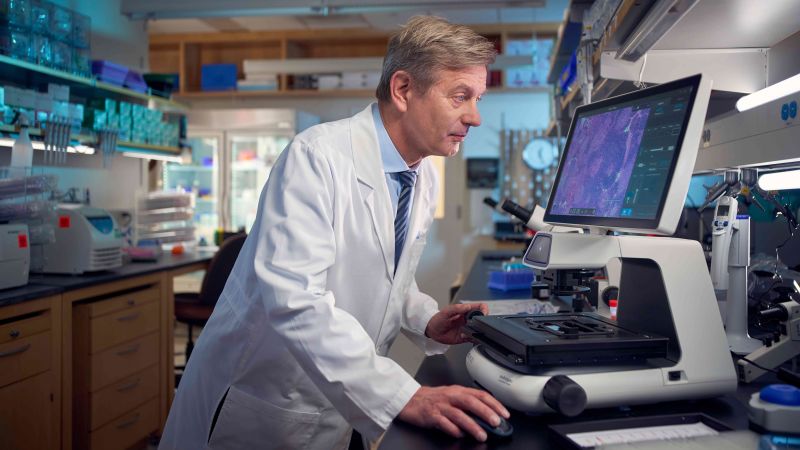
A Healthier Gut May Be Key to Cancer Care
A healthier gut may be key – Dr. Marcel van den Brink, a leading expert in bloodborne cancers such as leukemia, has spent years navigating one of medicine’s most complex challenges. In the early 1990s, he witnessed patients undergoing a procedure known as allogenic hematopoietic cell transplant, where their immune systems were systematically dismantled to make room for donor cells. This method, which uses aggressive chemotherapy to eliminate the patient’s existing immune system, creates a window of vulnerability as the body rebuilds itself. During this critical period, patients are often isolated in controlled environments to shield them from harmful pathogens. Van den Brink recalls how nurses and families would interact with patients through gloves that stretched over plastic barriers, a measure designed to prevent contamination. Beyond isolation, patients were also subjected to high-dose antibiotics to sterilize their gut and bloodstream, aiming to minimize the risk of infection.
Despite these precautions, the 1990s saw a significant number of transplant recipients succumb to complications like graft-versus-host disease, where donor immune cells mistakenly attack the recipient’s healthy tissues. Van den Brink noted that the medical team’s efforts, while well-intentioned, inadvertently disrupted the body’s natural defenses. “We were causing a lot of collateral damage with our aggressive treatment,” he remarked, highlighting a pivotal moment in the field. This realization sparked a new direction in cancer research, focusing on the intricate relationship between gut microbes and the immune system. The breakthrough was underscored recently at a symposium in California, where US Health and Human Services Secretary Robert F. Kennedy Jr. addressed a gathering at the City of Hope Cancer Center in Duarte. Van den Brink, now serving as the center’s president, joined other experts to discuss the microbiome’s potential as a revolutionary tool in cancer care.
Dr. Jay Bhattacharya, director of the National Institutes of Health, praised the findings at the symposium, calling them “mind-blowing.” The event, titled “The Next Frontier of Cancer Prevention and Care,” emphasized the growing body of research linking gut bacteria to disease outcomes. A recent report by the American Society of Clinical Oncology lists nearly 100 studies exploring ways to modify the gut microbiome to enhance cancer treatment. These investigations have revealed that the balance of microbes in the digestive tract plays a crucial role in immune response, particularly in therapies that rely on the body’s own defenses to combat tumors. As the field expands, the potential for microbiome-based interventions has become a central topic in oncology circles.
One such advancement is the upcoming late-phase trial at the University Hospitals Seidman Cancer Center in Cleveland. This study will test CBM588, a strain of Clostridium butyricum, as a method to bolster cancer therapies. The bacteria, already popular in Japan as an over-the-counter supplement for digestive issues, will be administered to nearly 700 patients with advanced renal cell carcinoma. Participants will take the probiotic capsules alongside their standard immunotherapy regimens, aiming to improve treatment efficacy. Dr. Pedro Barata, a principal investigator on the trial, described the project as ambitious. “We’re hoping to change the standard of care,” he stated, underscoring the transformative potential of this approach.
“We were causing a lot of collateral damage with our aggressive treatment,” said Dr. Marcel van den Brink, reflecting on the early days of transplant medicine.
The microbiome’s role in cancer care gained momentum through earlier studies, including one conducted at the City of Hope Cancer Center in Los Angeles. That research demonstrated that CBM588 could enhance outcomes for patients receiving immune-based therapies. Dr. Sumanta Pal, who led the City of Hope study and is also a co-investigator in the new trial, traced his interest in the microbiome to a decade-long conversation with Dr. Paul Frankel, a biostatistician at the same institution. Frankel shared insights from the livestock industry, where farmers noticed that the health of their animals often correlated with the bacterial composition in their gut. “If their chickens are [healthy and growing well], they’ll limit how often they clean the litter when they put in new chickens,” Frankel explained, illustrating the early recognition of microbial influence on immunity.
These observations have since informed human health research. In poultry operations, for instance, prebiotics like inulin are commonly used to support the growth of beneficial bacteria such as Bifidobacteria. Similarly, the use of probiotics in other animals has shown promise in improving disease resistance. Pal, who has applied these principles to cancer patients, emphasized the importance of gut health in treatment success. “The microbiome is a critical factor in how the immune system responds to therapy,” he explained, linking the findings from animal studies to human applications.
The integration of microbiome research into cancer care has also prompted a shift in treatment strategies. Instead of solely targeting the immune system with chemotherapy, scientists are now exploring ways to enhance its function through microbial manipulation. This approach could reduce the side effects of aggressive treatments while improving long-term survival rates. Van den Brink, who has been at the forefront of these developments, noted that the field has evolved significantly since the 1990s. “We’ve gone from simply wiping out the immune system to rebuilding it with precision,” he observed, highlighting the advancements in understanding microbial interactions.
As the trials progress, the potential applications of the gut microbiome in cancer care continue to broaden. Researchers are examining whether specific bacterial strains can influence the effectiveness of immunotherapies, reduce inflammation, or even prevent tumor recurrence. The success of these studies could redefine how cancer is treated, making the gut a key player in the fight against the disease. With the support of institutions like the National Cancer Institute, the path toward microbiome-based therapies is gaining momentum, offering hope for more personalized and effective treatment options.
Experts caution that while the findings are promising, more research is needed to determine the optimal methods of microbiome modulation. The upcoming trial with CBM588 represents a significant step forward, but it is just one of many experiments exploring this frontier. As scientists unravel the complexities of the human microbiome, the potential to harness its power in combating cancer becomes increasingly tangible. This shift in perspective underscores a fundamental truth: the health of our gut may not only influence our digestion but also play a pivotal role in our overall resilience to disease.
