
The Greens’ Gorton and Denton by-election win was about inclusion — not sectarianism
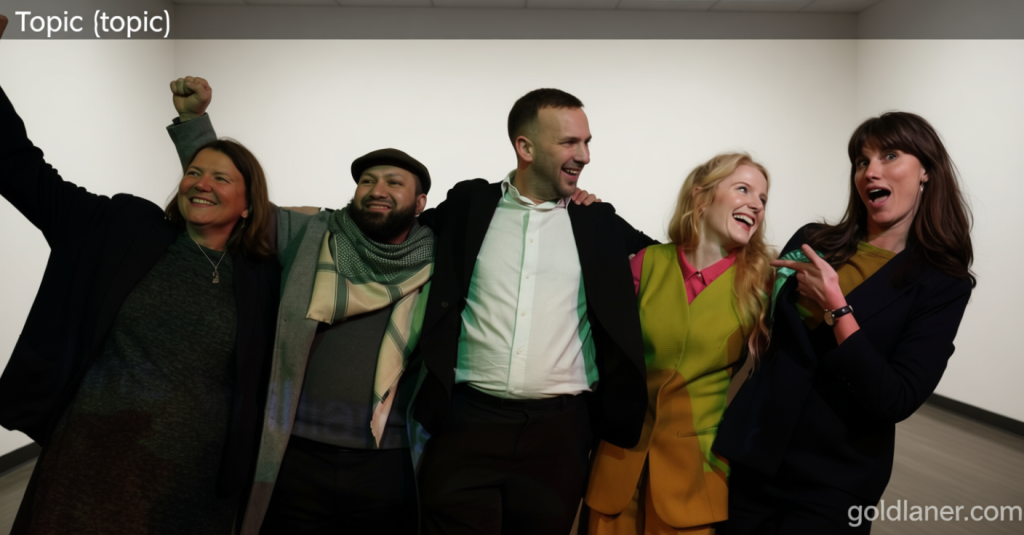
The Greens’ Gorton and Denton by-election win was about inclusion — not sectarianism
A night of historic change and shared hope
What a night it was. The Green Party’s first parliamentary by-election triumph in Gorton and Denton marked a turning point. For the first time, they shattered a Labour majority that had stood for over 13,000 votes. The result wasn’t just a political shift—it was a symbolic win for a new approach to governance.
Our success in the North of England, with Hannah Spencer as our representative, is more than a milestone. It represents a broader movement toward a politics that unites rather than divides. This victory speaks to the possibility of a more hopeful, inclusive vision for the UK.
Breaking the barriers of communication
UK politics has long relied on a one-way communication style, often using a narrow, Westminster-centric English. Reform’s candidate, Matt Goodwin from Kent, epitomized this traditional approach. Yet, in Gorton and Denton, where nearly 40% of residents are Muslim and many speak Urdu, Bangla, Arabic, or other languages at home, this method fell short.
While opponents relied on crisp Radio 4 English, the Greens chose to speak in the languages people truly use. This wasn’t just about accessibility—it was a deliberate effort to mirror the lived experiences of communities often overlooked in mainstream discourse.
Language as a bridge, not a wall
“In a democracy, language should never be a barrier to participation; it should be a bridge.”
Our campaign featured materials in multiple languages, including a viral Urdu video. Critics, like those who lost the election, labeled this as divisive or ‘sectarian.’ But this interpretation misses the mark. Multilingual outreach isn’t about splitting voters—it’s about inviting them into the conversation, ensuring their voices are heard and valued.
Examples from abroad, such as Zohran Mamdani’s success in New York, show how bilingual and multicultural strategies can expand political engagement. His use of Arabic, Spanish, and Urdu in campaign videos helped connect with communities that mainstream politics had ignored. This approach resonated, even earning praise from within the Labour Party.
A campaign rooted in trust and representation
For the people of Gorton and Denton, our message was clear: their issues—rent, bills, the NHS, racism, and peace—are relevant to everyone. Whether you speak English, Punjabi, or Somali, your concerns matter. Multilingual efforts acknowledge this truth, affirming that every citizen has a place in the democratic process.
“You belong here. Your voice counts.” This was the core of our strategy. By reflecting the realities of diverse communities, we built a connection that transcended language and ideology. The 26.5% swing toward the Greens in this election isn’t just a statistic—it’s a testament to the power of inclusive dialogue.
Ultimately, this win proves that when people feel seen and heard, they can rediscover their belief in politics. It’s a reminder that inclusion isn’t a compromise—it’s the foundation of a stronger, more united society.
This site is protected by reCAPTCHA and the Google Privacy Policy and Terms of Service apply. Your information will be used in line with our Privacy Policy
