
The Greens’ Gorton and Denton by-election win was about inclusion — not sectarianism
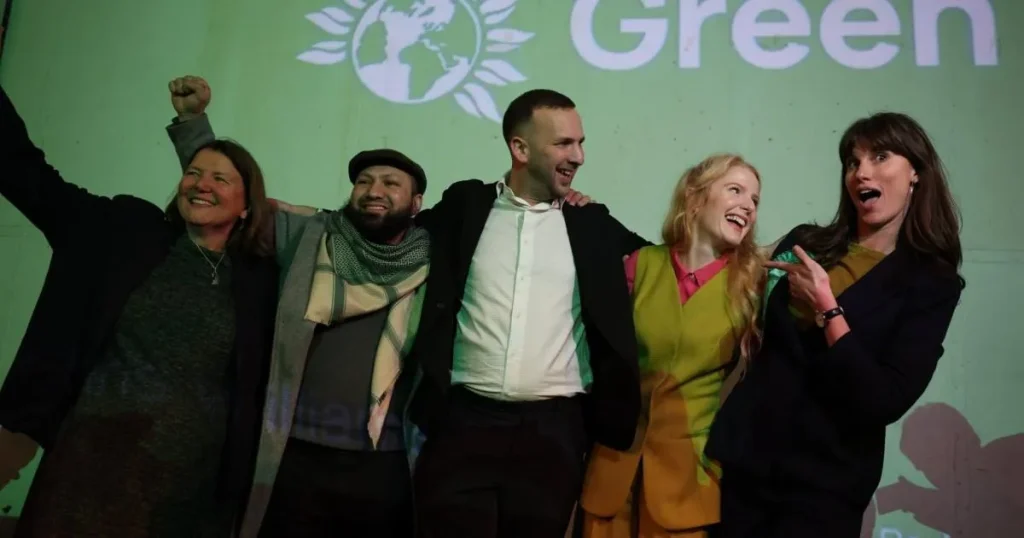
The Greens’ Gorton and Denton by-election win was about inclusion — not sectarianism
It’s not just the Greens’ first parliamentary by-election victory in Gorton and Denton that’s significant. The outcome also marked a historic shift, as the party overturned a once rock-solid Labour majority of over 13,000 votes. This milestone wasn’t just a political triumph—it was a message that a new kind of politics is taking root in the UK.
A Shift in Political Landscape
The win underscores how inclusive platforms can reshape democratic engagement. For the first time, a Green MP has been elected in the North of England, but the victory transcends that. It signals a broader movement toward connecting with communities through shared values and mutual respect.
Our campaign’s success wasn’t solely due to policy strength or the charismatic presence of Hannah Spencer, our candidate. It was the way we spoke to people—directly, authentically, and in their own words. In areas like Gorton and Denton, where nearly 40% of residents identify as Muslim and many speak languages such as Urdu, Bangla, or Arabic at home, this approach made all the difference.
The Power of Language
Traditional politics often uses a narrow, one-size-fits-all communication style—typically the English spoken in Westminster. Reform’s candidate, Matt Goodwin, exemplified this, but his defeat highlighted the limitations of such a framework. In contrast, our multilingual outreach bridged gaps by acknowledging the lived experiences of those who may feel excluded from mainstream discourse.
“You can communicate policy in crisp Radio 4 English, as our opponents did, but that can only get you so far,” the article notes. “To get people to feel hope, to really understand why politics matters, you need to speak in their own language—figuratively and literally.”
Producing materials in multiple languages, including a viral Urdu video, wasn’t a tactic—it was a commitment. The campaign ensured that diverse voices were reflected in the conversation, allowing people to see themselves in the political process. This aligns with the Greens’ vision of building a democracy where everyone feels represented.
Lessons from Abroad
Similar strategies have worked elsewhere. In New York, Zohran Mamdani’s success hinged on campaign videos in Arabic, Spanish, and Urdu, which expanded political dialogue in communities often overlooked by mainstream parties. His victory was praised by Labour figures, who now grapple with the implications of such inclusive tactics.
When we address issues like rent, bills, the NHS, racism, or peace, these concerns resonate across linguistic and cultural lines. Multilingual campaigning doesn’t divide—it invites participation. It’s a reminder that language should be a bridge, not a barrier, in democratic spaces.
Our victory in Gorton and Denton isn’t just about increasing parliamentary representation. It’s a testament to the power of inclusion, where people’s experiences are acknowledged and their voices are valued. This approach has driven a 26.5% shift in support toward the Greens, proving that hope and unity can outlast prejudice.
Some critics, notably those who lost the election, argue that our methods are divisive. But this misinterprets the intent. By speaking in the languages people know, we’ve shown that politics can be a place for everyone.
To view the video, JavaScript must be enabled, and a browser that supports HTML5 is required. Metro’s senior politics reporter Craig Munro analyzed the election in the Alright, Gov? newsletter, sent every Wednesday. Sign up here.
This site is protected by reCAPTCHA, and the Google Privacy Policy and Terms of Service apply. Your information will be used in line with our Privacy Policy.
