
Lebanon: Israel trades fire with Hezbollah in south and east
Lebanon: Israel trades fire with Hezbollah in south and east
Israeli forces claimed they eliminated a Hezbollah intelligence official following the death of Iran’s Supreme Leader, Ali Khamenei, which prompted retaliatory attacks from the Iran-backed militant group. The Lebanese government has implemented a ban on Hezbollah’s military operations, aiming to curb the conflict. A fragile and uneasy peace had existed between Israel and Hezbollah since the previous year, with Lebanon’s government overseeing security in the southern region near the Israeli border.
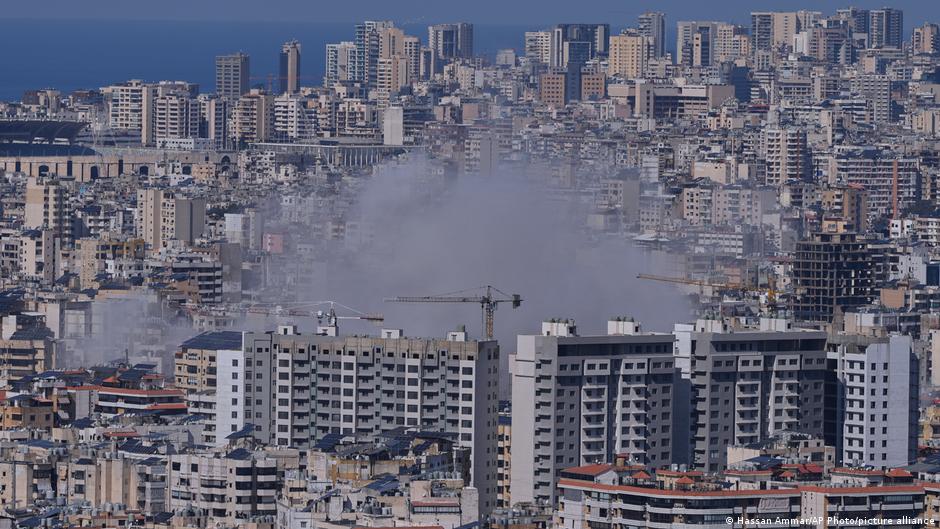
On Monday, the Israel Defense Forces announced strikes in Beirut, killing Hussein Makled, who led Hezbollah’s intelligence headquarters. These attacks came after Hezbollah launched missile fire into Israel on Sunday, in response to Khamenei’s death. The Lebanese Health Ministry reported 52 fatalities and 154 injured as Israeli strikes targeted southern Beirut and border areas, updating an earlier count of 31 deaths. The IDF issued 18 urgent evacuation alerts for buildings linked to Hezbollah in villages and towns near the de facto border, according to Avichay Adraee, the military’s Arabic-language spokesperson.
“We have issued 18 urgent evacuation warnings for buildings used by the Hezbollah terrorist organization in the following villages and towns,” the IDF’s Arabic language spokesman Avichay Adraee posted on X, alongside a list of locations.
Hezbollah, founded by Iran’s Revolutionary Guards in 1982, stated it launched the attacks to avenge “the pure blood” of Khamenei, who was killed in a bombing on Saturday. This marked the first time in over a year that Hezbollah fired missiles into Israel, following the most intense Israeli strikes in the same period. Israel declared the group responsible for the escalation and labeled its leader, Naim Qassem, as a “target for elimination.” However, the military has not yet signaled plans for a ground incursion.
Civilians clogged major Lebanese roads as they fled areas at risk, beginning overnight Sunday into Monday and continuing past dawn. Meanwhile, the government in Beirut appeared to take steps to de-escalate tensions, with more explosions heard in the capital. Prime Minister Nawaf Salam held a Cabinet meeting and later asserted that the state retains exclusive control over declaring war and peace, urging an immediate halt to Hezbollah’s security and military activities unless authorized.
“The decision of war and peace is exclusively in its hands,” Salam said, emphasizing the need to prohibit all Hezbollah military actions as being outside the law and requiring the group to surrender its weapons to the Lebanese state.
The truce’s terms included Lebanon’s government assuming control of southern security, moving Hezbollah forces away. Yet, whether the government can truly enforce this remains unclear, particularly as tensions in Iran intensify. The conflict has tested the fragile balance established last year, with Hezbollah’s actions now challenging the agreement’s stability.
