
To get Air Force One delivered by 2028, Boeing takes another massive charge
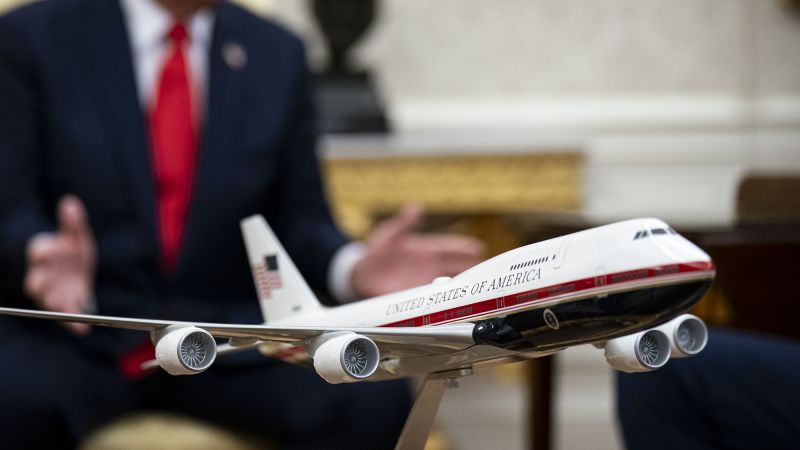
Boeing’s Air Force One Program Faces Another Financial Hit as Delivery Deadline Approaches
Goldlaner.com – The financial burden of Boeing’s presidential aircraft initiative has grown even heavier. In a recent quarterly report, the aerospace manufacturer disclosed that it is deploying considerable additional resources to ensure the first of two new Air Force One planes reaches completion by 2028. This timeline represents a four-year extension beyond the original schedule, accompanied by billions of dollars in extra expenses compared to initial projections.
During a Tuesday communication with staff members through an internal email, Chief Executive Officer Kelly Ortberg confirmed that the company is “significant resources” toward completing the heavily customized 747-8 jets. According to Boeing’s quarterly financial statement released alongside the announcement, this acceleration of production and certification efforts within the Air Force One division resulted in an additional $280 million expense during the previous quarter alone.
Mounting Costs and Contract Evolution
Boeing has committed to absorbing these escalating expenses, which now exceed $3.1 billion in total overruns. The program’s financial trajectory has drawn considerable attention from President Donald Trump, who has maintained a personal interest in the aircraft’s development since before his first presidential term.
President Trump persuaded former Boeing CEO Dave Calhoun in 2018 to sign a government contract that capped the cost to the American taxpayer at $3.9 billion.
That original agreement has undergone modifications, with the total price tag now estimated at approximately $4.5 billion when accounting for spare parts and supplementary components. Throughout the past six years, the aircraft have consistently exceeded Boeing’s financial expectations for multiple interconnected reasons.
Technical Challenges and Political Context
Boeing has identified several contributing factors to the substantial cost overruns, including engineering modifications necessitated by wiring and structural requirements, scheduling setbacks, performance problems at a critical supplier, and engineering inefficiencies stemming from the pandemic period.
Impatient with the ongoing delays, Trump last year accepted a 747 jet donated by Qatar to function as Air Force One while the new aircraft are completed. The U.S. military had installed security features on this aircraft to make it operational. While Trump has utilized this plane for travel, he has publicly acknowledged that it does not possess the same security capabilities as both the current and future government-contracted presidential aircraft.
Earlier this month, Trump traveled to a NATO summit in Turkey aboard the Qatari-gifted aircraft, but made an unexpected decision to return home on one of the older Air Force One jets due to security considerations. The existing presidential planes have operated continuously since 1990, initially serving under the George H. W. Bush administration. By 2015, the government determined that maintenance and operational costs had become prohibitively expensive, necessitating replacement.
Broader Financial Challenges for Boeing
Trump’s involvement in the Air Force One contract predates his presidency. In a December 2016 social media message, he threatened to terminate the aircraft order entirely, citing the high expenses associated with their design. Former CEO Calhoun described both the aircraft and his negotiations with Trump as “unique” in 2022, though he cautioned that the agreement carried substantial risk and that Boeing should not have entered into it.
These Air Force One-related losses have coincided with other significant financial difficulties for the manufacturer. When Boeing renegotiated the presidential aircraft contract, it was simultaneously working to restore its 737 Max program following two fatal crashes that grounded the entire fleet for 20 months. Additionally, a door plug blowout on a Boeing 737 Max in January 2024 triggered further production delays, increased regulatory examination, and additional financial losses.
On Tuesday, Boeing reported a $428 million loss for the second quarter, building upon a $7 million loss recorded in the first quarter. While this quarterly deficit was marginally smaller than the corresponding period in 2025, the company’s overall balance sheet continues to show considerable red ink across multiple divisions.
Related Reading
Frequently Asked Questions
What is To get Air Force One delivered?
To get Air Force One delivered is the main topic of this guide. The article explains the context, practical details, and next steps readers should understand.
Why does To get Air Force One delivered matter?
To get Air Force One delivered matters because readers are looking for a useful answer, not just a short summary. Good content should match search intent and help them decide what to do next.
