
Beyond the Shopping Aisles: Why Mamdani’s Grocery Vision Sparks Deeper Political Debate
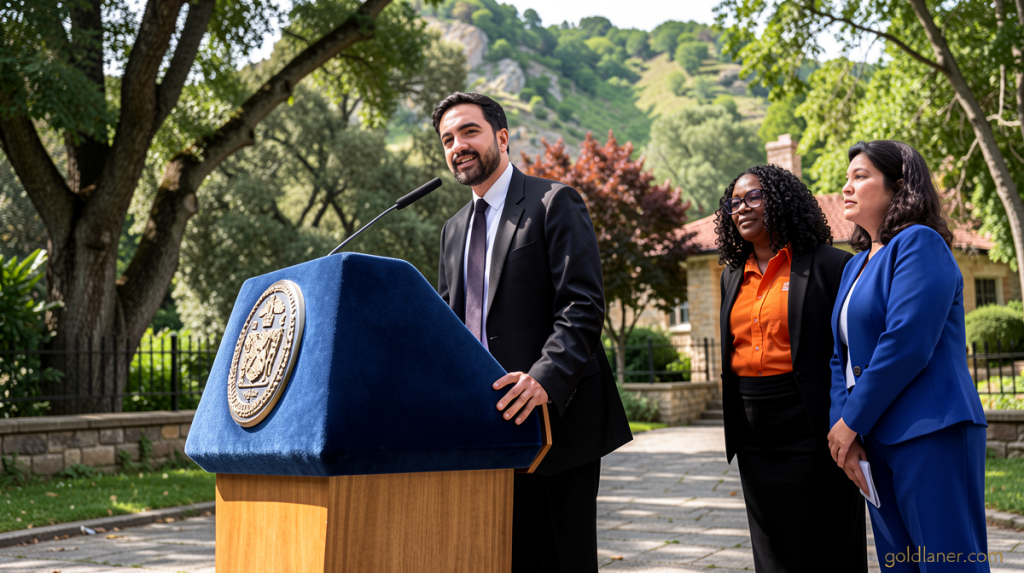
Goldlaner.com – When New York City Mayor Zohran Mamdani unveils fresh details regarding his initiative to establish five publicly owned grocery locations across the five boroughs, social media platforms quickly fill with vintage photographs of Boris Yeltsin. These images capture the former Soviet leader during his American journey in 1989, just months before the USSR collapsed. The photographs depict Yeltsin standing inside Houston’s Randall’s supermarket, visibly amazed by the sheer selection of frozen products lining the shelves. He sampled complimentary cheese portions and examined the seafood display before departing with a complimentary gift bag. During his subsequent flight, the Russian president remained seated with his head resting in his hands, reflecting on the nearly empty shelves characterizing Soviet food markets back home. His biography records his emotional question: “What have they done to our poor people?”
That moment from decades ago illuminates why Mamdani’s proposal generates such passionate responses today. American supermarkets have long represented the triumph of free-market capitalism. The notion that government—frequently characterized as bureaucratic and ineffective—might deliver superior grocery selection compared to retail giants like Walmart and Costco provokes strong reactions from skeptics. Many envision “Mamdani marts” transforming into bleak, state-operated establishments offering limited variety, perhaps featuring only a single soup option. However, this controversy extends far beyond which brand of ketchup public stores will stock or how much eggs will cost. At its core, the debate centers on competing visions of governmental responsibility.
A Test of Competing Ideals
Advocates view the initiative as government stepping in to address genuine challenges facing working families who struggle with food costs. Critics, meanwhile, perceive a socialist-leaning mayor attempting to challenge one of America’s most cherished institutions. Nevin Cohen, associate professor at the CUNY School of Public Health, observes that “The debate is not really about the specific mechanics of the model.” Instead, Cohen characterizes the proposal as “a test of competing ideas about what we expect government to provide.”
Several practical details often escape public attention. These proposed stores represent neither revolutionary thinking nor complete government control. The city intends to engage private companies to operate the locations and procure merchandise. Furthermore, approximately 99 percent of New York residents will likely never purchase groceries at one of these facilities. The stores certainly will not dismantle John Castimatidis’ Gristedes supermarket dynasty.
The Mythic American Supermarket
The American grocery store has achieved legendary status globally, thanks to innovations ranging from the shopping cart to barcode technology. During the Cold War era, supermarkets served as powerful symbols of democratic prosperity. The U.S. Information Agency actively distributed photographs of American grocery stores worldwide to showcase the advantages of the “American way of life.” This abundance of consumer selection grew dramatically over fifty years. Between 1960 and 2010, the average American supermarket expanded from carrying roughly 6,000 distinct products to stocking approximately 47,000 items.
Subsequent business models amplified this prosperity. Walmart supercenters, Costco warehouse clubs, and Trader Joe’s specialty locations each contributed to expanding consumer choice. Tracey Deutsch, a University of Minnesota historian specializing in food and capitalism, emphasizes that “Food is a potent symbol and catalyst for people’s politics.” She notes that stores became contested spaces during both the civil rights movement and the pandemic. “There’s a sense that grocery stores are the last bastion,” Deutsch explains. “Grocery stores are places where people make their stand for the world they want.”
LaGuardia’s Legacy Lives On
Proponents of market-based approaches argue that New York should facilitate easier Walmart expansion or subsidize Costco memberships for low-income residents. Mamdani’s political philosophy, however, emphasizes utilizing government resources to address daily challenges. He follows the example of his political hero, Mayor Fiorello LaGuardia, a New Deal champion who constructed public parks, housing developments, and the airport bearing his name. Despite resistance from private businesses, LaGuardia established a network of municipal indoor markets during the 1930s. These markets removed street vendors from sidewalks while lowering grocery prices for residents. Several of these historic markets remain operational today.
Mamdani aims to convert the vacant locations, which the city still owns, into publicly operated grocery stores. “LaGuardia believed in a simple definition of the task of government to make people’s lives better,” Mamdani stated last month. “We are one step closer to fulfilling that fundamental responsibility.”
The controversy surrounding these proposed stores reveals more than policy disagreement. It reflects competing visions of how government should serve citizens, whether through market mechanisms or direct intervention. As New York considers this initiative, residents will continue debating whether public grocery stores represent progress or overreach. The answer may depend less on which brand of ketchup appears on shelves and more on what citizens believe government owes them.
Related Reading
Frequently Asked Questions
What is The obsession with Mamdani marts isn t?
The obsession with Mamdani marts isn t is the main topic of this guide. The article explains the context, practical details, and next steps readers should understand.
Why does The obsession with Mamdani marts isn t matter?
The obsession with Mamdani marts isn t matters because readers are looking for a useful answer, not just a short summary. Good content should match search intent and help them decide what to do next.