
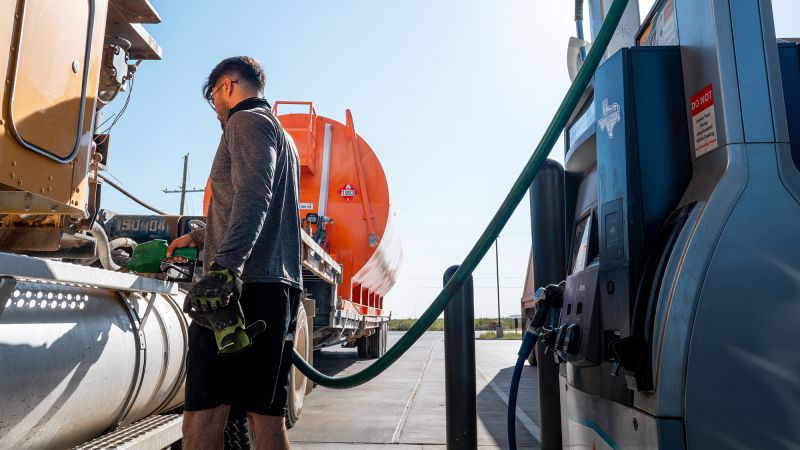
Diesel Costs More Than $6: What It Means for Consumers
Goldlaner.com – Diesel costs more than 6 dollars per gallon nationwide for the first time, with the US average reaching $6.06 on Friday. The rise was rapid, increasing 21 cents in one week, and its effects could extend well beyond drivers who fill up with diesel.
Only about 3% of cars on US roads use diesel, but the fuel is vital to the movement of goods and the operation of major industries. Heavy-duty trucks, freight trains, farm machinery, construction equipment and many vessels depend on it, making higher diesel prices a broader economic concern.
Why diesel prices are climbing
The national average has surpassed the previous record of $5.82 a gallon set in June 2022 after Russia’s invasion of Ukraine. Since the war with Iran began, diesel prices have climbed more than 55%, compared with an increase of roughly 40% for gasoline over the same period.
Oil futures have returned above $100 a barrel amid the conflict involving the United States and Iran. Meanwhile, global refining capacity has been constrained, reducing the supply of fuel that can be made from crude oil.
Refineries in the Middle East and Russia have been damaged by war. Russia has also curtailed diesel exports while dealing with shortages at home, and China has restricted exports to protect domestic supply. Refiners were already directing as much production as possible toward diesel, leaving little room for a quick increase.
“Refiners have already been maximizing the production of diesel. We simply can’t get any more diesel out of the system,” said Andy Lipow, president of Lipow Oil Associates.
How higher diesel costs can reach store shelves
When diesel costs more than 6 dollars a gallon, trucking companies and railroads can impose fuel surcharges on customers. Manufacturers, distributors and retailers may absorb some of those added expenses, but they can also pass them along through higher prices for goods transported over long distances.
Consumers may not see a separate diesel fee at checkout. Instead, transportation costs can become part of the price of furniture, clothing, appliances, packaged goods and other products that travel by truck, rail or ship before reaching a store.
The pressure could be particularly noticeable on the West Coast. California’s average diesel price stands at $7.98 per gallon as the ports of Los Angeles and Long Beach prepare for a large inflow of containers ahead of the holiday shopping season. Moving those goods to warehouses and stores could become more expensive.
“Some pumps aren’t even built to display what could come next,” Patrick De Haan, head of petroleum analysis at GasBuddy, said in a post on X, warning diesel could “blow past” $8 a gallon in California.
Food and farming costs are another concern
Diesel costs more than 6 dollars per gallon as the fall harvest begins, adding pressure for farmers who rely on tractors, combines, irrigation equipment and other machinery. Fuel is also needed to move crops to processing facilities, storage sites and markets.
Goldman Sachs warned clients that global food costs could rise sharply, citing higher diesel and fertilizer expenses linked to the Strait of Hormuz crisis, Black Sea tensions affecting grain trade routes, and the potential for drought and extreme heat associated with El Nino.
Diesel is only one factor behind grocery prices, but it is used throughout the food system: on farms, in freight transport, during distribution and in deliveries to stores. That wide role makes it difficult for businesses to avoid the effects of higher fuel costs.
Heating oil customers could feel the impact
Diesel and heating oil are closely related fuels, so a constrained diesel market can also put pressure on household heating costs. Homeowners who use heating oil may face higher bills as winter approaches, especially if supplies remain tight.
The scale and timing of the impact will vary by region, weather conditions and local fuel availability. Even so, the record diesel price adds another potential source of strain for households already facing higher costs for transported goods and energy.
FAQ: What record diesel prices mean in the US
Will higher diesel prices raise prices immediately?
Not necessarily. Businesses may adjust prices gradually as transportation contracts, fuel surcharges and inventory cycles change. Products that require extensive shipping could be more exposed over time.
Why does diesel matter if most drivers use gasoline?
Diesel powers much of the freight and industrial equipment used to produce and deliver everyday goods. When diesel costs more than 6 dollars per gallon, the added expense can affect supply chains even for consumers who never buy diesel fuel.
Which consumers may notice the effect most?
People in areas with high diesel prices, including California, may see greater pressure on shipping-related costs. Households that rely on heating oil and farmers using diesel-powered equipment may also be directly affected.