
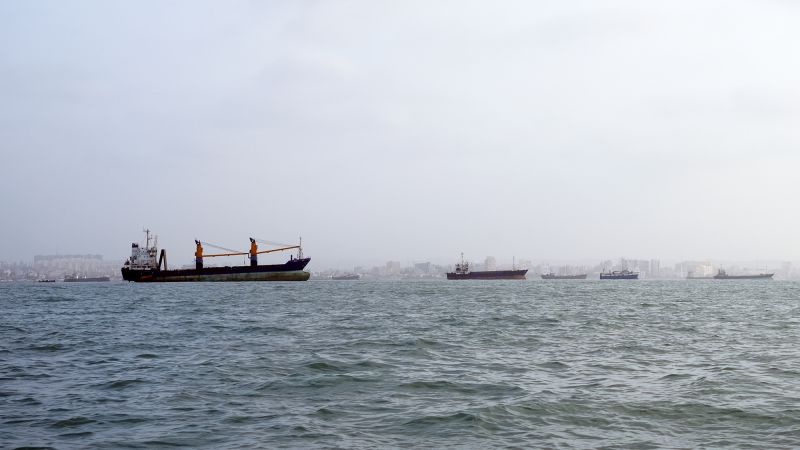
Oil Flow Claims Face Scrutiny as Shipping Data Tells a Different Story
Goldlaner.com – Energy Secretary Chris Wright has been making bold assertions about Middle Eastern oil exports returning to normal levels, but independent tracking data suggests a more complicated picture. While Wright announced on Tuesday that exports surpassed pre-war benchmarks on Sunday and have remained steady for approximately a week, these statements appear disconnected from what satellite imagery and vessel tracking systems are actually recording.
In a social media post on X, Wright explained that American military coordination with Gulf allies enabled crude shipments to navigate the critical Strait of Hormuz. He also noted that regional producers utilized alternative pipeline networks and export terminals to circumvent the waterway entirely. The Department of Energy maintains that it receives daily military observations of vessel movements through this strategic chokepoint.
Tracking the Numbers
Independent analysis reveals significant gaps between official claims and observable reality. Dan Pickering, who founded and leads Pickering Energy Partners, pointed out the inherent challenge in verification.
“In theory, the US government with all its technology and all the military assets they have in the region should have the best number on the flow through the strait,” Pickering stated. “But this is hard to verify.”
Kpler, a market intelligence firm utilizing satellite photography and automated shipping transponders, recorded only 84 total vessel passages through the Strait of Hormuz during the previous week. Sunday alone saw merely nine transits. This represents a substantial decline from pre-conflict levels exceeding 100 daily crossings.
The vessel count raises serious questions about Wright’s assertion that 9 million barrels per day continue flowing through the strait. JPMorgan analysts estimate the actual volume closer to 4 million barrels daily. Matt Smith, Kpler’s commodity research director, emphasized the disconnect.
“It is not possible to reconcile the disparity between what we see and what he is quoting,” Smith explained.
Pipeline Capacity and Shadow Traffic
One complicating factor involves vessels that deactivate their transponders to travel covertly through contested waters. Kpler addresses this by combining satellite visual confirmation with available transponder signals to estimate shadow traffic volumes.
The Department of Energy defended its methodology, asserting superior accuracy over commercial tracking providers. A department spokesperson noted that coordinated military efforts provide the most comprehensive dataset for monitoring oil and refined products departing the Arabian Gulf region.
Wright’s assertion that 5 to 7 million barrels daily bypass the strait via pipelines appears well-supported. Saudi Arabia’s East-West pipeline system alone redirects more than 5 million barrels toward Red Sea terminals. Despite Iranian Houthi allies threatening to blockade the Bab-al-Mandeb strait, Red Sea shipping maintains near-normal throughput levels over recent weeks.
Market Narratives vs. Physical Reality
Wright has projected that 15 million barrels exited the Arabian Gulf over the past seven days, with Sunday alone seeing 20 million barrels depart. Both figures exceed historical pre-war averages. However, Middle Eastern nations have already maximized their pipeline infrastructure to reroute maximum volumes around the strait.
Andy Lipow, president of Lipow Oil Associates, documented that only six vessels passed through the strait on Monday—four inbound and two outbound—with none being crude oil tankers. This limited traffic pattern challenges the administration’s optimistic narrative.
“The administration is really trying to jawbone oil prices to the downside, as they have been doing for months,” Pickering observed.
President Donald Trump has consistently maintained that American forces control the Strait of Hormuz. This claim faces contradiction from the necessity of military escorts for commercial vessels and from Iranian attacks that have targeted 64 transiting ships, causing 17 deaths and 35 injuries among seafarers.
Helima Croft, RBC Capital Markets’ global commodity strategy head, provided additional perspective.
“We are nowhere near normal, but they have had six months of success selling this market narrative,” Croft said.
The market has demonstrated resilience, with prices remaining relatively stable despite what qualifies as a historic supply disruption. This stability stems largely from weakened global demand and substantial Chinese stockpile reductions rather than restored shipping volumes.
Sustaining normal traffic levels requires consistent vessel returns to collect and transport oil. Reluctance to navigate these waters persists while military coordination remains essential. A single day, weekend, or week showing normal traffic proves unsustainable when dependent on active military intervention rather than organic commercial recovery.
Related Reading
Frequently Asked Questions
What is The Trump administration claims oil is flowing?
The Trump administration claims oil is flowing is the main topic of this guide. The article explains the context, practical details, and next steps readers should understand.
Why does The Trump administration claims oil is flowing matter?
The Trump administration claims oil is flowing matters because readers are looking for a useful answer, not just a short summary. Good content should match search intent and help them decide what to do next.