Saudi Arabia turns to Muslim military heavyweights in landmark defense pact as Iran war closes in

Saudi Arabia Turns to Muslim Allies in New Defense Pact
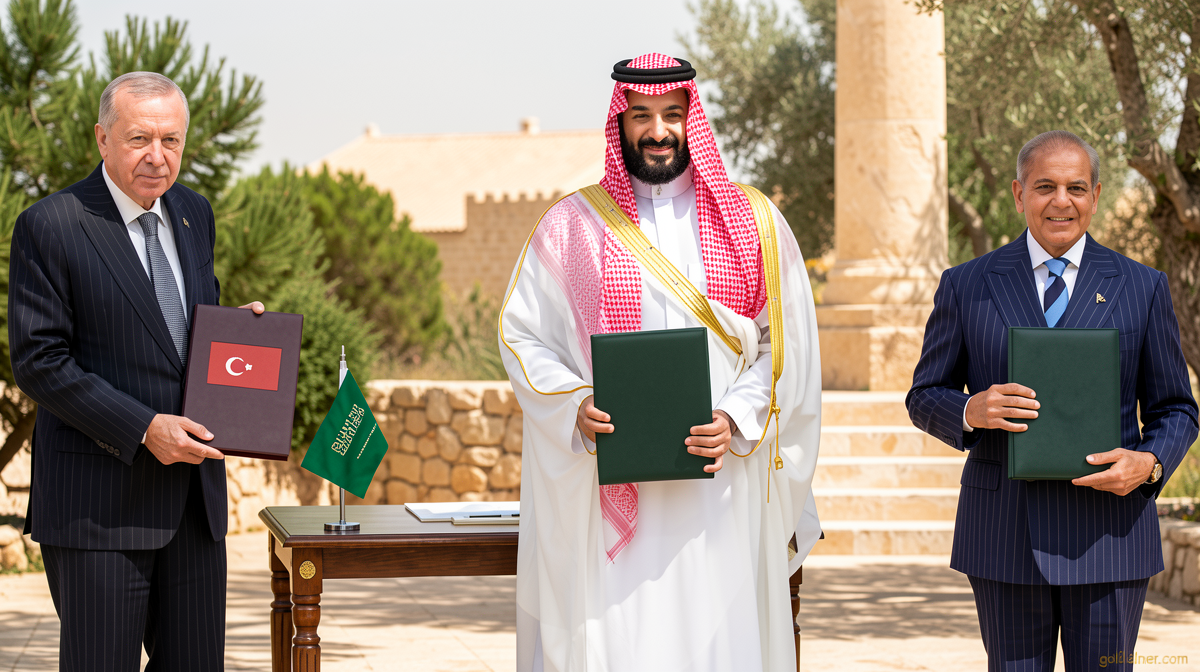
Goldlaner.com – Saudi Arabia turns to Muslim military powers Pakistan and Turkey in a landmark defense agreement that could reshape Middle Eastern security. The three nations signed a mutual defense framework in Mecca on Friday, creating what officials call a NATO-style collective security commitment. This alliance addresses growing concerns about Iranian aggression as regional tensions escalate.
Collective Defense Framework Established
The Mecca agreement establishes that any military attack on one signatory will be treated as an attack on all three nations. This mutual defense clause marks a significant departure from previous security arrangements, potentially drawing Pakistan and Turkey into regional conflicts they had previously avoided.
For Saudi Arabia, the pact strengthens security beyond its long-standing relationship with Washington. Gulf states have shown increasing skepticism about American commitment to regional defense, prompting efforts to diversify partnerships. The agreement aims to enhance collective deterrence while expanding defense cooperation across multiple domains.
Turkey maintains the second-largest military force in NATO, while Pakistan stands as the only nuclear-armed Muslim nation. Together, these capabilities form what analysts describe as a strong Sunni-led defensive front against what Riyadh and its partners view as an expanding Iranian threat.
Strategic Questions Remain
Turkish officials emphasized that the agreement does not target any specific country. The Saudi foreign ministry similarly clarified that the pact does not create a sectarian military bloc. A Turkish official noted that additional regional nations could eventually join, potentially expanding the arrangement like NATO’s post-Cold War growth.
The Mecca statement did not specify exact commitments each nation accepted. Observers note uncertainty about how binding the agreement would be in practice, particularly regarding military obligations when one member faces aggression.
Regional Tensions Drive Agreement
The timing reflects intensifying pressures on Saudi Arabia. Iran has repeatedly struck targets within the kingdom throughout the ongoing conflict, including civilian infrastructure and energy facilities. While direct Iranian attacks diminished following an April 8 ceasefire, Iran-backed militias in Yemen and Iraq have continued operations against Saudi positions.
Riyadh has positioned itself as a vocal opponent of the Iran war, working to moderate the approach of US President Donald Trump toward the Islamic Republic. Nevertheless, persistent attacks from multiple directions have generated considerable concern among Saudi officials.
What This Means for Regional Security
The Mecca treaty functions as both deterrent and warning to Iran: a significant attack on Saudi Arabia could activate the pact, bringing Pakistan and Turkey into the conflict and substantially widening the war’s geographic scope.
Iranian reaction to the agreement was notably negative. Ebrahim Rezaei, a member of the Iranian parliament’s National Security and Foreign Policy Committee, expressed skepticism on X, stating: “The Saudis should understand that a paper agreement with Turkey and Pakistan will not bring them security, just as decades of one-sided dependence on the Americans failed to do so.”
The Mecca agreement builds upon existing military cooperation between the signatories. Saudi Arabia and Pakistan had already concluded a formal mutual defense pact last September, predating the period when Iran began directly striking Saudi sites. This new arrangement expands those bilateral ties into a trilateral framework with broader regional implications.
Frequently Asked Questions
What is the Mecca agreement? It is a mutual defense pact signed by Saudi Arabia, Turkey, and Pakistan in Mecca on Friday, establishing that an attack on one member will be treated as an attack on all three.
Does the pact target Iran specifically? No. Turkish officials and the Saudi foreign ministry have both clarified that the agreement does not target any specific nation or create a sectarian military bloc.
How does this affect regional security? The agreement creates a stronger defensive front against Iranian aggression and could expand the geographic scope of any future conflict involving Saudi Arabia.
What is Iran’s response? Iranian officials have expressed skepticism, with Ebrahim Rezaei stating that the paper agreement may not provide the security that decades of American dependence failed to deliver.