
Trump bombed at the White House Correspondents’ Dinner — and proved its point
Trump Bombed at the White House Correspondents’ Dinner
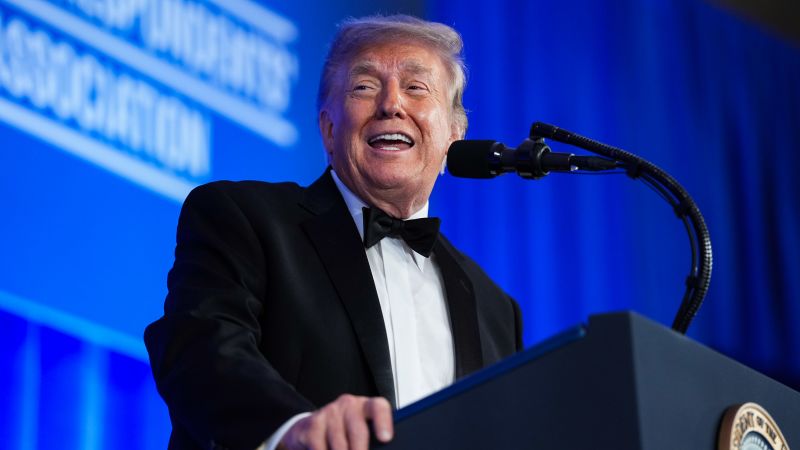
Goldlaner.com – Trump bombed at the White House Correspondents’ Dinner on Friday evening, delivering a speech that many attendees found underwhelming. President Donald Trump’s appearance at the annual event seemed to confirm what critics have long suspected about his comedic timing. Despite attempts at self-aware humor, his jokes fell flat with the audience. Even when he acknowledged his own performance, the laughter was sparse. Media coverage following the event was filled with gentle mockery as journalists poked fun at the president’s efforts.
The cultural significance of the moment should not be overlooked. In many countries, press members openly mocking a sitting leader during a televised address could result in serious legal consequences. America’s democratic system, however, thrives on such free expression. Trump’s speech, perhaps unintentionally, underscored one of the nation’s most treasured principles: robust First Amendment protections that enable citizens and the media to freely critique their government without fear of reprisal.
A Rambling Address Meets Mixed Reception
The president’s hour-long speech covered substantial ground, though clarity was not always its strong suit. He targeted specific journalists by name, revived various nicknames for political opponents, and delivered what appeared to be an unusually high number of weight-related jokes that failed to generate much amusement. Most notably, Trump seemed frustrated with his speechwriters, suggesting they had provided insufficient material for his preparation.
Does anyone understand this stuff?
When Trump posed this question to the audience, the collective response suggested most people were indeed confused. Karoline Leavitt, the White House press secretary, characterized several of the president’s comments as particularly harsh. Beyond the sharp remarks, however, the overwhelming impression was that the speech simply lacked energy. For a president who has consistently projected dynamism, this dullness represented something he clearly wanted to avoid.
Media Dependence Claims and Attendance Context
During his remarks, Trump positioned himself as essential to the survival of the news industry. He confidently declared that when his presidency concludes, many media organizations would face financial difficulties. He also made observations about public attention, suggesting that people care more about him than others, and proceeded to tally how many New York Times front-page stories featured his name.
The audience remained largely quiet throughout much of the address, absorbing comments that felt more appropriate for a political rally than a formal black-tie gathering. This subdued energy prompted some television executives to wonder if Trump had accidentally discovered a new strategy for dealing with the media: simply bore them into submission through a lengthy, unengaging presentation.
Several attendees expressed surprise that Trump brought less original content than expected, particularly given how eagerly anticipated this appearance was. His attendance marked the end of a multi-year absence from the White House Correspondents’ Association’s annual fundraising event. This particular dinner served as a scaled-down version of the April 26th gathering, which had been postponed following an incident involving a gunman attempting to enter the ballroom at the Washington Hilton hotel.
Unity Themes and Press Relations
The Friday evening event took place at the Waldorf Astoria, located across the city from the original venue. This historic building holds special significance for Trump, having once operated as his namesake Washington hotel and serving as an informal gathering place for members of his first administration. During his speech, Trump pointed out the venue’s ornate lighting fixtures, offering to share details about them with anyone interested.
Despite the criticisms, Trump did manage to strike some conciliatory notes. He praised the Secret Service for their work and spoke against political violence in general terms. He emphasized American values regarding free expression, stating that disagreements should be resolved through discussion rather than force.
In this country, we believe in freedom of speech. We settle our differences not with bullets, but with open and vigorous debate. And no deranged loser with a gun will ever change that.
He also made light of the security concerns by joking about guests wearing protective vests beneath their formal attire, noting that many preferred the risk over appearing overly cautious. The speech concluded with Trump thanking the audience for their patience, though whether that patience was tested or rewarded remained a matter of perspective.
Frequently Asked Questions
When did Trump attend the White House Correspondents’ Dinner? Trump attended the White House Correspondents’ Dinner on Friday evening, marking the end of a multi-year absence from the annual event.
Where was the 2026 White House Correspondents’ Dinner held? The event took place at the Waldorf Astoria in Washington, D.C., which is located across the city from the original venue.
Why was the April 2026 dinner postponed? The April 26th gathering was postponed following an incident involving a gunman attempting to enter the ballroom at the Washington Hilton hotel.
What did Trump say about the media’s dependence on him? Trump declared that when his presidency concludes, many media organizations would face financial difficulties, positioning himself as essential to their survival.
How did the audience react to Trump’s speech? The audience remained largely quiet throughout much of the address, with many attendees expressing surprise that Trump brought less original content than expected.
