
In a first, two Chinese scholars win the ‘Nobel Prize’ of mathematics – and China is thrilled
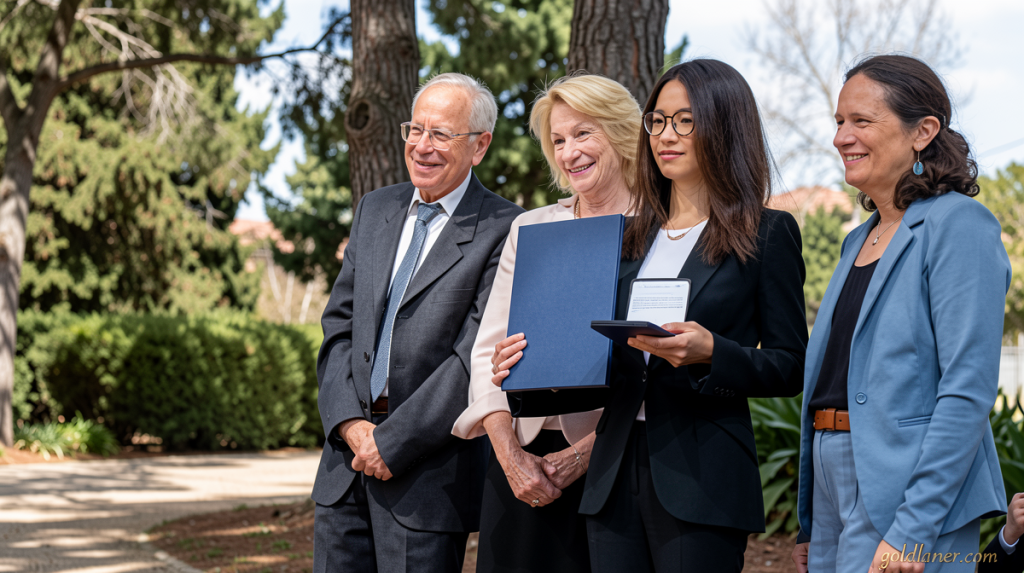
Two Chinese Mathematicians Win Fields Medal in Historic First
Goldlaner.com – In a first two Chinese scholars have achieved a remarkable milestone by winning the Fields Medal, the mathematics world’s most prestigious award often called the Nobel Prize of math. The International Mathematical Union announced on Thursday that Wang Hong and Deng Yu were among four recipients honored for their groundbreaking work. This quadrennial prize recognizes mathematicians under forty who have made exceptional contributions to their field.
The dual victory has sparked widespread celebration across China, with social media platforms buzzing with excitement. Weibo trending topics featured the achievement prominently on Friday morning, while state media outlets published extensive coverage analyzing what this means for China’s scientific ambitions.
A Landmark Achievement for Chinese Mathematics
Wang Hong, age thirty-five, became only the third woman ever to receive the Fields Medal in its ninety-year history. Her research addressed challenging problems in harmonic analysis and geometric measure theory. Deng Yu, thirty-seven, earned his recognition for significant progress in partial differential equations. Both scholars completed their undergraduate studies at Peking University before building international careers.
“This is a landmark achievement for Chinese mathematics,” one widely shared social media post read. “It’s the realization of a dream generations of Chinese mathematicians have shared: building China into a mathematical powerhouse!”
Wang’s victory has been particularly celebrated for advancing female representation in STEM fields. Observers noted that her success challenges long-held assumptions about gender differences in mathematical ability.
Global Recognition and National Pride
Wang currently holds positions at New York University and the Institut des Hautes Études Scientifiques in France, having grown up in Guilin in southern China. Deng teaches at the University of Chicago and hails from Shenzhen, China’s technology hub. Their accomplishments reflect China’s deep cultural emphasis on academic achievement, where top scientists enjoy celebrity status and students face one of the world’s most competitive university entrance exams.
This achievement highlights Beijing’s ongoing investment in positioning China as a global scientific leader. The government has allocated substantial resources to attract international talent and support innovative research programs. Chinese officials view excellence in both applied and fundamental sciences as essential to the nation’s broader development goals.
“For a long time, there has been a stereotype in Western academia: China excels in competitive and applied mathematics, but lacks original breakthroughs in cutting-edge fundamental theories,” one state media commentary observed. “The emergence of Wang Hong and Deng Yu has finally filled this gap, marking a new standard for Chinese mathematics and effectively breaking down prejudices.”
Historical Context and Future Aspirations
Chinese state media identified Wang and Deng as the first Chinese citizens to receive the Fields Medal. Shing-Tung Yau, a scientist born in China, won the award in 1982 but did not hold Chinese citizenship at that time. Terence Tao, an Australian-born mathematician of Chinese descent, also received the honor in 2006.
In a recent interview with a Chinese state-affiliated publication, Yau, now a professor at Tsinghua University in Beijing, described the dual victory as fulfilling a decades-long dream for Chinese mathematicians. He expressed optimism that both recipients might eventually return to China to contribute to education.
“We very much hope they will come back, because that is important for China,” Yau stated, adding his expectation that “scholars trained entirely in China will also be able to win the Fields Medal” in future years.
Both Wang and Deng pursued higher education abroad, reflecting China’s efforts to address the brain drain phenomenon where talented individuals seek opportunities overseas. Deng moved from Peking University to the Massachusetts Institute of Technology before joining the University of Chicago faculty.
