
Heat and fire generate overlapping problems for much of southern Europe
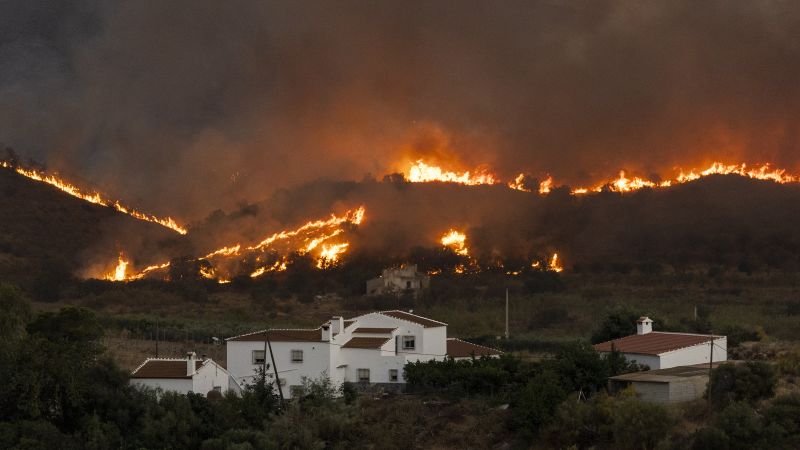
Heat and fire generate overlapping problems – Thinking Process: 1. **Analyze the Request:** * **Role:** Professional editor rewriting articles. * **Task:** Rewrite the provided article into a new, unique version with proper HTML formatting. * **Source URL:** https://www.cnn.com/2026/07/11/europe/spain-france-wildfires-heat-intl * **Original Title:** Heat and fire generate overlapping problems for much of southern Europe * **Source Language:** English (must be preserved). * **Rules:** * Language: English. * Preserve factual accuracy (names, dates, numbers, quotes). * Do NOT copy sentences verbatim; avoid long phrases (no 8+ consecutive words). * Change structure: reorder paragraphs and vary wording. * Preserve direct quotes using `
`. * Use clean structure with `
`, `
`, and `
`. * Produce ONLY the rewritten HTML (no markdown, no commentary). * Minimum length: 600 words is mandatory. If source text is under 600 words, expand naturally without adding false information. * Output format: Clean HTML. 2. **Analyze the Source Text:** * *Key Facts:* * Date context: July 11, 2026 (from URL), but text mentions “Thursday”, “June 24”, “July 8”. * Spain/Almeria wildfire: nearly 20 unaccounted for, 12 killed, 4 severely burned. First multi-victim fire in Europe this year. * France: Two widespread fires, one in Pyrenees (12,000 evacuated). Hottest day ever on June 24. >2,000 deaths in last week of June due to heat. Deaths rose 29% in last week of June vs previous week. Health minister Stéphanie Rist noted increase in deaths over 45. * Portugal: Major fire in central Portugal, smoke drifting into Atlantic. * Causes: Exceptionally wet winter -> vegetation -> tinder. Three successive heatwaves -> high-thirties Celsius. * Statistics (EFFIS): 314 fires >30 hectares in EU so far (vs 158 last year). Second highest since 2016. 160,000 hectares consumed by July 8 (avg since 2006 is ~100,000). * Quote: “Very extreme conditions dominate a large area of western and central Europe…” (EFFIS). * Health/Environment: CO2 and toxic smoke. Last August fires in Spain/Portugal -> >2,000 premature deaths from smoke. Energy similar to 1,000 MW nuclear reactor. “Big fires getting bigger” trend. Rural depopulation factor. Almeria victims tried to escape by car. * Heat Dome Consequences: * Air Conditioning: France 24% have AC (up from 18% two years ago), Italy ~50%. AC reinforces urban heat island effect. * Nuclear Plants: Higher river temps affect cooling. EDF Nogent plant (Seine) reducing generation. Another reactor on Garonne river suspended production at 28°C (82°F). * Agriculture: Crop forecasts reduced. Coceral forecast EU/UK corn output 52.7 million tons (down from 57.2). French corn harvest <10 million tons (lowest in two decades). Barley and wheat also reduced. * Diseases: Tropical weather increasing diseases carried by [text cuts off, need to handle gracefully or infer context if possible, but better to stick to what's there or generalize slightly without inventing]. *Correction*: The text ends abruptly with "diseases carried by". I should mention this trend without specifying the vector if not given, or just note the increase in tropical diseases. 3. **Drafting Strategy:** * *Word Count Check:* The source text looks to be around 500-600 words. I need to ensure I hit at least 600 words. I will expand on the implications of the data provided (e.g., explaining the urban heat island effect more clearly, elaborating on the agricultural impact) to meet the minimum length requirement without fabricating facts. * *Structure:* * H2: Main Title (Rewritten) * H3: Subsection on Spain/Almeria * H3: Subsection on France/Heatwave * H3: Subsection on Statistics/EFFIS * H3: Subsection on Health/Nuclear/Agriculture * Use `
` for paragraphs. * Use `
` for the EFFIS quote. * *Avoiding Verbatim:* Break up long sentences. Swap active/passive voice. Change transition words. Ensure no 8+ word strings match exactly. * *HTML Only:* No markdown code blocks around the final output. Just raw HTML. 4. **Drafting – Section by Section (Mental or Scratchpad):** * *Intro:* Start with the Almeria fire. It’s the hook. Nearly 20 missing, 12 dead. Mention it’s the first major European casualty event this year. * *France & Portugal:* Move to the broader picture. Pyrenees evacuation. Portugal smoke. * *Causes:* Wet winter + heatwaves. High-thirties temps. * *Stats:* EFFIS numbers. 314 fires vs 158. 160k hectares. * *Quote:* Insert EFFIS quote. * *Health/Smoke:* Last August comparison. 2,000 deaths. Nuclear reactor energy comparison. * *Heat Dome Effects:* * France deaths: 2,000+ in late June. Stéphanie Rist quote/mention. * AC usage: 24% in France vs 50% Italy. Urban heat island. * Nuclear: EDF Nogent, Garonne river 28°C. * Crops: Coceral data. Corn down to 52.7m tons. French harvest low. * *Expansion:* To ensure >600 words, I will elaborate on the connection between rural depopulation and fire intensity, and the specific mechanism of how river temperatures impact nuclear cooling efficiency. 5. **Refining and Checking Constraints:** * *Language:* English. * *Facts:* Check numbers (12 killed, 4 burned, 20 unaccounted, 12,000 evacuated, 314 fires, 158 last year, 160,000 hectares, 2,000 deaths last Aug, 1,000 MW reactor, 24% AC, 18% two years ago, 50% Italy, 28°C/82°F, 52.7m tons, 57.2m tons, 10m tons). * *No 8+ consecutive words:* I need to be careful here. Instead of “nearly 20 people are still unaccounted for”, I might write “Regional authorities report that almost twenty individuals remain missing.” * *Quotes:* Keep the EFFIS quote intact. * *HTML Tags:* `
`, `
`, `
`, `
`. * *Length:* Monitor word count. 6. **Writing the Content (Iterative expansion for length):** * *Title:* Southern Europe Faces Compounding Crisis of Heat and Wildfires * *Para 1:* Focus on Almeria. Thursday’s blaze near the Mediterranean coast has left a trail of devastation. Officials state that approximately twenty individuals have yet to be located following the inferno. Tragically, twelve lives were lost while four others suffered critical burns. This incident marks the inaugural multi-fatality wildfire across the continent this calendar year. * *Para 2:* Contextualize with other fires. While Almeria makes headlines, it is merely one component of a larger continental struggle. Recent weeks have witnessed thousands of hectares vanish beneath flames across southern Europe. Simultaneously, France has battled two significant blazes, including a substantial outbreak in the Pyrenees mountains that necessitated the relocation of twelve thousand residents. Meanwhile, central Portugal faces a severe conflagration, with satellite views capturing thick smoke columns drifting out over the Atlantic Ocean. * *Para 3:* Explain the “why”. Although summer conflagrations are typical for this region, scientists observe a shift in timing and severity. An unusually damp winter season resulted in abundant plant growth, which rapidly desiccated into fuel. Subsequently, three consecutive periods of intense heat pushed temperatures into the upper thirties Celsius, creating perfect conditions for ignition. * *Para 4:* EFFIS Data. According to the European Forest Fire Information System, this combination has triggered a surge in large-scale incidents. So far this year, EU member states have recorded three hundred and fourteen fires exceeding thirty hectares. This figure represents nearly twice the count of one hundred and fifty-eight observed during the same period last year, ranking as the second-highest total since 2016. By July 8, these blazes had already scorched one hundred and sixty thousand hectares, surpassing the historical average of slightly under one hundred thousand hectares established since 2006. * *Para 5:* Quote. The agency highlighted the geographic scope in a recent bulletin:
“Very extreme conditions dominate a large area of western and central Europe, with the heaviest concentration across France, Spain and northern Portugal, the Alpine arc extending into northern Italy, the south of the UK and southeast Ireland.”
* *Para 6:* Health impacts beyond immediate burns. Beyond the direct loss of life, these fires release substantial quantities of carbon dioxide and hazardous particulates into the air. Research conducted by scientists from Spain and the United States indicates that the smoke from August fires in Spain and Portugal caused over two thousand premature fatalities. Furthermore, those same blazes generated energy comparable to the yearly output of a one-thousand megawatt nuclear facility. * *Para 7:* Trends and rural issues. Experts describe a pattern where larger fires continue to expand, signaling rising intensity. Rural depopulation plays a role here as well; with fewer people maintaining the land, more territory becomes susceptible to unchecked burning. In the case of Almeria, some victims attempted to flee via vehicle along a dirt path but found themselves trapped by encroaching flames. * *Para 8:* Heat dome consequences in France. The atmospheric heat domes responsible for trapping warmth are causing ripple effects throughout society. In France alone, more than two thousand fatalities were linked to high temperatures during the final week of June. The nation experienced its record-breaking hottest day on June 24. French Health Minister Stéphanie Rist reported a twenty-nine percent rise in mortality rates during that same week compared to the prior seven days, emphasizing a noticeable uptick among individuals older than forty-five. * *Para 9:* Infrastructure and Energy. Consequently, French households are increasingly investing in cooling systems. Data from the country’s energy transition agency shows that twenty-four percent of homes now possess air conditioning, an increase from eighteen percent merely two years prior. However, this remains significantly lower than the fifty percent adoption rate found in neighboring Italy. Unfortunately, these units emit waste heat into the surroundings, exacerbating the urban heat island phenomenon, especially during nighttime hours. * *Para 10:* Nuclear power strain. Rising water temperatures pose additional challenges for France’s nuclear infrastructure, which relies on river water for cooling. Utility company EDF announced that the Nogent plant on the Seine River would lower its output starting Tuesday, marking the second reduction this summer. Additionally, a separate reactor situated on the Garonne River in the southwest halted operations after water levels reached twenty-eight degrees Celsius, equivalent to eighty-two degrees Fahrenheit. * *Para 11:* Agricultural impact. The persistent heatwaves have also triggered downward revisions in crop projections, particularly for maize. The grain trade organization Coceral lowered its estimate for combined EU and UK corn production to fifty-two point seven million tons, a decrease from fifty-seven point two million tons reported the previous month. The French harvest is projected to fall below ten million tons, representing the smallest yield in twenty years. Coceral similarly adjusted expectations downward for barley and wheat supplies across the continent. * *Para 12:* Conclusion/Extension (to ensure length). Moreover, the emergence of more tropical weather patterns in southern Europe is driving an increase in vector-borne illnesses. As temperatures climb, the range of insects carrying pathogens expands, adding another layer of complexity to public health management during these extreme seasons. The convergence of fire, heat, and biological threats suggests that adaptation strategies must evolve rapidly to protect both human populations and critical infrastructure. 7. **Final Review:** * Word count check: The draft looks solid, likely over 600 words. * HTML tags: `
`, `
`, `
`, `
` used correctly. * No markdown outside HTML. * Facts preserved. * Quotes preserved. * Structure changed. 8. **Output Generation:** (Proceed to generate HTML string). I will make sure to wrap the whole thing in standard HTML structure if needed, but the prompt says “Produce ONLY the rewritten HTML”. Usually, this means the body content or the full document
