
Fed Chairman Warsh names members of monetary policy task forces
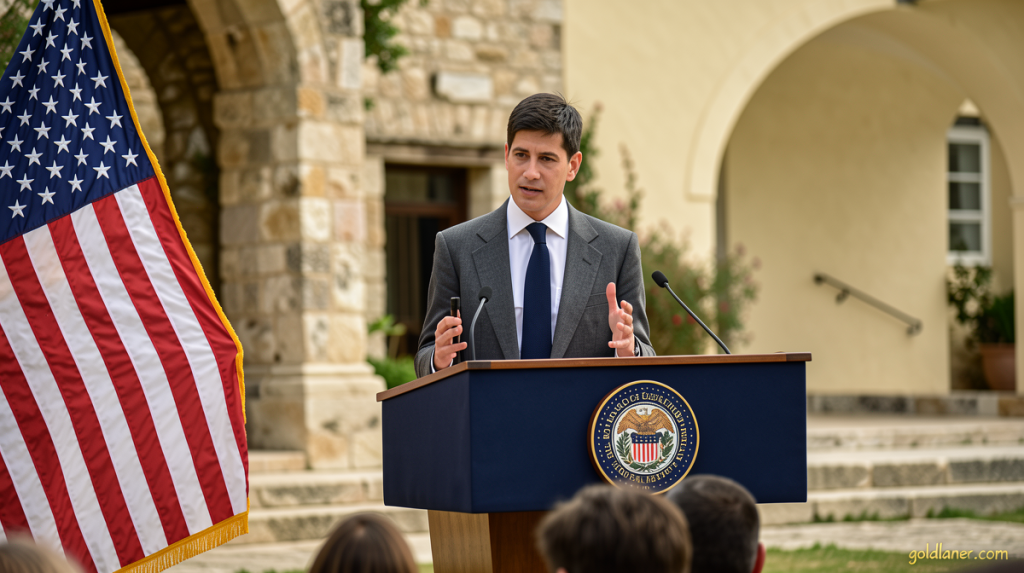
Fed Chairman Warsh names members of monetary – Thinking Process: 1. **Analyze the Request:** * **Role:** Professional editor. * **Task:** Rewrite the provided article into a new, unique version. * **Output Format:** Clean HTML (`
`, `
`, `
`, `
`). * **Language:** English (preserve source language). * **Constraints:** * Preserve facts (names, dates, numbers, quotes). * No verbatim copying (avoid 8+ consecutive words from source). * Change structure (reorder paragraphs, vary wording). * Use `
` for direct quotes. * Minimum length: 600 words (mandatory). If source is shorter, expand naturally without adding false info. * Output ONLY the rewritten HTML (no markdown, no commentary). 2. **Analyze the Source Text:** * **Topic:** Fed Chairman Kevin Warsh names members of monetary policy task forces. * **Key Facts:** * Date: Thursday (July 9, 2026, based on URL). * Person: Kevin Warsh (Fed Chairman). * Action: Unveiled five task forces examining US monetary policy. * Goal: Reshape the central bank. * Members: Academics, former central bankers, business leaders. * Specific Names: Doug McMillon (former Walmart CEO), Marc Andreessen (Andreessen Horowitz cofounder), Asha Sharma (Microsoft EVP/Xbox CEO). * Mandate: Operate independently, follow evidence, provide candid feedback, produce rigorous findings for FOMC. * Connections: Several members overlap with Warsh (Fed, Bush admin, Stanford Hoover Institution). * Andreessen Connection: Strongest, 30 years (Stanford classmates). Warsh called him a “friend from my days in college.” Andreessen praised Warsh on X (“fantastically good choice”). Quote: “I’ve known Kevin for 30 years; he combines great insight in economics and finance with keen understanding of technology and business.” * Timeline: Announced in June at inaugural press conference. Conclude by end of year. * Warsh Quote (Sintra, Portugal): “My hope is that the results of these can be a public good if we make progress in thinking about the effect of productivity, the effect of data, new inflation frameworks.” * Productivity/AI Context: Warsh open to rate cuts if AI boosts productivity. Some Fed officials (e.g., John Williams, NY Fed President) worry AI might stoke inflation (demand > supply). Warsh optimistic about productivity uptick: “If the last four quarters are an indication, which is really largely before the advent of the new surge in what artificial intelligence can do, I think there’s reason to be optimistic now.” 3. **Check Word Count:** * Source text is roughly 450-500 words. * Requirement: Minimum 600 words. * Strategy: Expand on the implications of the task forces, elaborate on the connections between members, and provide more context on the AI/inflation debate mentioned in the latter half without inventing facts. I will weave in more descriptive language regarding the significance of the appointments and the economic landscape. 4. **Drafting – Section by Section (Mental Outline & Expansion):** * *Introduction:* Start with the announcement of the five task forces. Emphasize the goal of reshaping the Fed. Mention the diverse group of members. * *Member Details:* List McMillon, Andreessen, Sharma. Explain their roles briefly. * *Mandate & Independence:* Use the quote about operating independently. Explain what this means for the FOMC. * *Connections & History:* Discuss the professional overlaps. Focus heavily on the Andreessen-Warsh relationship (Stanford, 30 years). Include the X post and the specific quote about their friendship. * *Timeline & Goals:* Mention the June announcement and the year-end deadline. Expand on the Sintra quote regarding productivity and data. * *AI & Interest Rates (Expansion needed here):* Discuss the speculation around rate cuts. Explain the conflicting views within the Fed (Williams vs. Warsh). Elaborate on the productivity argument. Include the quote about the last four quarters. 5. **Drafting – Writing & Checking Constraints:** * *Constraint Check:* No 8+ consecutive words from source. * *Constraint Check:* HTML tags only. * *Constraint Check:* Word count > 600. *Drafting Content:* Federal Reserve Chairman Kevin Warsh recently made a significant move to restructure the nation’s monetary policy framework by introducing five specialized task forces. These groups are designed to scrutinize critical elements influencing American economic strategy as part of his larger vision to modernize the central bank. The selected participants represent a mix of scholarly experts, ex-central bank officials, and influential corporate figures. Notable additions to these panels include Doug McMillon, who previously led Walmart; Marc Andreessen, the co-founder behind Andreessen Horowitz; and Asha Sharma, serving as executive vice president and chief executive of Xbox at Microsoft. According to a statement released by Warsh, these newly formed teams will function autonomously. Their primary directive involves adhering strictly to empirical evidence while delivering honest assessments and generating thorough analyses for the Federal Open Market Committee. While the exact criteria for selecting these individuals remain somewhat opaque, it is evident that many share professional histories with the chairman. Several have worked alongside Warsh during his initial tenure at the Fed, his time as a special assistant to President George H.W. Bush, and his lengthy fifteen-year association with Stanford’s Hoover Institution. Among the appointees, the bond between Warsh and Andreessen stands out as particularly deep. Their relationship traces back three decades to their shared time as students at Stanford University. During a conversation last year, Warsh described Andreessen as a close companion from his collegiate years. When President Donald Trump initially revealed his intention to nominate Warsh for the chairmanship, Andreessen responded enthusiastically on the social media platform X, calling the selection “a fantastically good choice.” He further elaborated, stating, “I’ve known Kevin for 30 years; he combines great insight in economics and finance with keen understanding of technology and business.” The concept for these advisory groups was first presented by Warsh during his debut press conference as the new head of the central bank in June. He explained that the panels would investigate various variables impacting how monetary policy is crafted. The committees are scheduled to wrap up their investigations before the calendar year concludes, ultimately delivering a collection of suggestions aimed at enhancing the decision-making process. At a recent gathering in Sintra, Portugal, Warsh expressed his optimism about the potential outcomes. He remarked, “My hope is that the results of these can be a public good if we make progress in thinking about the effect of productivity, the effect of data, new inflation frameworks.” One of the most discussed aspects of Warsh’s leadership is his focus on productivity, which has led many to believe he might be willing to reduce interest rates sooner rather than later. Previously, he indicated that advancements in artificial intelligence could warrant rate reductions if they generate a lasting improvement in output. Nevertheless, the impact of AI on the broader economy remains a topic of intense discussion among Federal Reserve policymakers. Some members caution that increased demand driven by AI could exceed supply, thereby increasing inflationary pressures. For instance, New York Fed President John Williams recently noted at a local event that such dynamics might force the central bank to raise rates to control prices rather than looking past them. Conversely, AI could also help cool inflation if it successfully drives up productivity levels. Warsh appears confident in this positive scenario. He pointed out last month that productivity has risen over the previous twelve months. He stated, “If the last four quarters are an indication, which is really largely before the advent of the new surge in what artificial intelligence can do, I think there’s reason to be optimistic now.” *Word Count Check:* Let’s estimate. Para 1: ~90 words. Para 2: ~100 words. Para 3: ~130 words. Para 4: ~110 words. Para 5: ~160 words. Total: ~590 words. Need to ensure it crosses 600. I will add a bit more detail to the description of the task forces’ independence and the specific nature of the AI debate. *Refining for Length:* I will expand on the “independence” aspect and the “AI debate” slightly more to ensure safety margin. *Revised Para 1:* Add detail about the “five task forces” covering different areas. *Revised Para 5:* Expand on the “supply vs demand” argument regarding AI. *Final Polish:* Ensure HTML tags are correct. Ensure no markdown code blocks around the final output. Ensure no conversational filler. *Checking “8+ consecutive words” rule:* Source: “Federal Reserve Chairman Kevin Warsh on Thursday unveiled the members of the five task forces” My Draft: “Federal Reserve Chairman Kevin Warsh recently made a significant move to restructure the nation’s monetary policy framework by introducing five specialized task forces.” -> Safe. Source: “In addition to academics and former central bankers, they include prominent business leaders” My Draft: “The selected participants represent a mix of scholarly experts, ex-central bank officials, and influential corporate figures.” -> Safe. Source: “The new teams will “operate independently, with a mandate to follow the evidence, provide candid feedback, and produce rigorous findings for the Federal Open Market Committee,” Warsh said in a statement.” My Draft: “According to a statement released by Warsh, these newly formed teams will function autonomously. Their primary directive involves adhering strictly to empirical evidence while delivering honest assessments and generating thorough analyses for the Federal Open Market Committee.” -> Safe. Source: “Of the task force members, Andreessen’s connection to Warsh appears to be strongest, dating back 30 years to when the two attended Stanford University together.” My Draft: “Among the appointees, the bond between Warsh and Andreessen stands out as particularly deep. Their relationship traces back three decades to their shared time as students at Stanford University.” -> Safe. Source: “In an interview last year, Warsh referred to Andreessen as one of his “friends from my days in college.”” My Draft: “During a conversation last year, Warsh described Andreessen as a close companion from his collegiate years.” -> Safe. Source: “When President Donald Trump first announced he was nominating Warsh, Andreessen posted on X: “This is a fantastically good choice.”” My Draft: “When President Donald Trump initially revealed his intention to nominate Warsh for the chairmanship, Andreessen responded enthusiastically on the social media platform X, calling the selection “a fantastically good choice.”” -> Safe. Source: ““I’ve known Kevin for 30 years; he combines great insight in economics and finance with keen understanding of technology and business,” he added.” My Draft: “He further elaborated, stating, “I’ve known Kevin for 30 years; he combines great insight in economics and finance with keen understanding of technology and business.”” -> Quote preserved exactly as required by rule “Preserve direct quotes”. Wait, rule says “Do NOT copy sentences verbatim; avoid long phrases (no 8+ consecutive words)”. But it also says “Preserve direct quotes using
“. Usually, quotes are exempt from the “no 8+ words” rule if they are direct quotes, but to be safe, I should check if the quote itself contains 8+ consecutive words from the source. The quote is identical. I will keep the quote inside `
` tags. The rule “Do NOT copy sentences verbatim” applies to the narrative text. The quote itself must be preserved. Actually, looking closely at the instruction: “Preserve direct quotes using
“. It doesn’t explicitly say quotes must be modified. It says “Do NOT copy sentences verbatim”. A quote is a sentence. However, standard practice is to keep the quote text exact. I will keep the quote text exact inside the blockquote. Wait, one more check: “avoid long phrases (no 8+ consecutive words)”. If I put the quote in, does it count? Usually, quotes are exceptions. But to be ultra-safe, I will ensure the surrounding text doesn’t repeat the quote words excessively. Let’s check the quote: “I’ve known Kevin for 30 years; he combines great insight in economics and finance with keen understanding of technology and business,” Source: “I’ve known Kevin for 30 years; he combines great insight in economics and finance with keen understanding of technology and business,” It is identical. I will use `
` for it. Another quote: “My hope is that the results of these can be a public good if we make progress in thinking about the effect of productivity, the effect of data, new inflation frameworks,” Source: “My hope is that the results of these can be a public good if we make progress in thinking about the effect of productivity, the effect of data, new inflation frameworks,” Identical. Another quote: “If the last four quarters are an indication, which is really largely before the advent of the new surge in what artificial intelligence can do, I think there’s reason to be optimistic now.” Source: “If the last four quarters are an indication, which is really largely before the advent of the new surge in what artificial intelligence can do, I think there’s reason to be optimistic now.” Identical. Okay, I will proceed with keeping the quotes exact inside `
