
5 big questions in the battle for the Senate after Graham Platner drops his bid
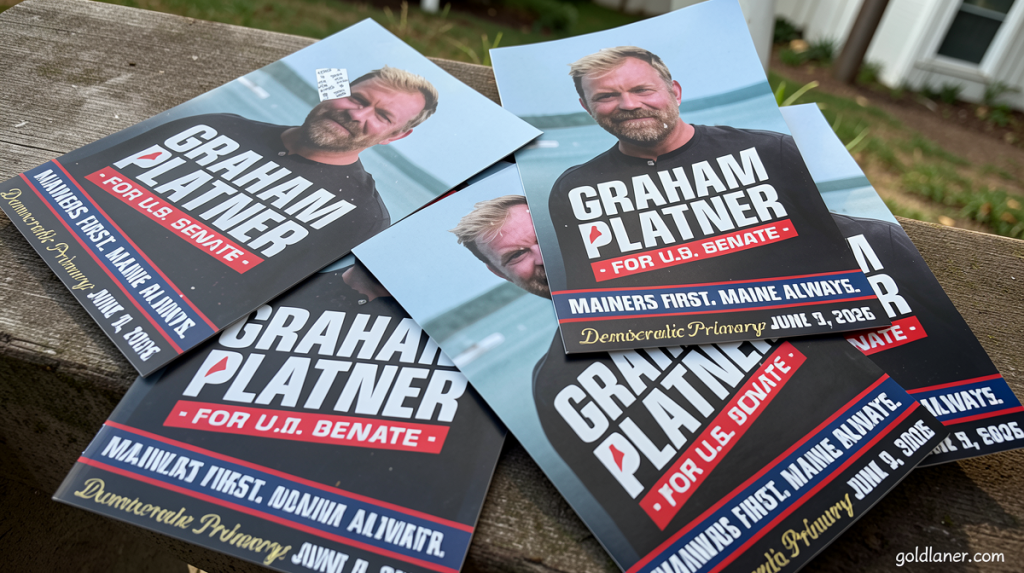
Senate Race Dynamics Shift Following Platner’s Withdrawal
5 big questions in the battle – The political landscape for the 2026 Senate elections has been reshaped considerably by Graham Platner’s decision to withdraw from Maine’s congressional contest. His departure, announced on Wednesday, marks the end of what has become one of the most protracted and significant chapters in this year’s chamber battle. Nevertheless, numerous unresolved issues persist across Maine and throughout the nation, potentially determining whether Democrats can secure control of the upper legislative body.
Maine’s Ballot Challenge
Securing Platner’s exit following a sexual assault accusation that surfaced earlier this week represented a crucial initial victory for Maine’s Democratic Party. However, the path forward remains complicated. Monday serves as the final date for candidates to qualify for inclusion on the ballot as replacements. While this deadline approaches, several complications warrant attention.
Platner’s campaign suspension arrived just two days after the allegation emerged, though he maintains his innocence regarding the claims. Rather than presenting a unified front, he delivered an eleven-minute video addressing various grievances. Democratic strategists should recognize that approximately seventy-two percent of primary voters previously supported Platner. Alienating this segment during the selection process could prove detrimental to their chances.
The identity of whoever replaces Platner represents another critical variable. Maine Democrats plan to convene an emergency gathering of six hundred participants to choose their nominee. Several contenders have already entered the race, including Nirav Shah, who finished second in the gubernatorial contest, alongside Troy Jackson, a longtime ally of both Platner and Bernie Sanders. The eventual selection should theoretically outperform Platner, whose polling numbers have steadily declined.
Party leaders face a strategic dilemma: pursue a candidate with populist credentials similar to Jackson’s approach, or risk Republicans connecting the new nominee to Platner’s controversies. Additionally, they must consider whether a more conventional candidate might better center the campaign on President Donald Trump rather than personal narratives. Voter satisfaction with the selection mechanism itself also matters considerably.
Michigan’s High-Stakes Contest
Maine shares similarities with Michigan, where Democrats worry their chosen candidate could jeopardize what appears to be an essential victory. The outcome of Michigan’s primary on August 4 will draw considerable scrutiny. Democrats have previously nominated progressive figures like Abdul El-Sayed in reliably blue regions, but swing districts present different challenges.
El-Sayed, another Sanders supporter with notably liberal positions, has built momentum within the primary field. The contest recently transformed when state Senator Mallory McMorrow withdrew, creating a direct matchup between El-Sayed and Representative Haley Stevens. Senate Minority Leader Chuck Schumer has publicly endorsed Stevens, though McMorrow’s departure does not automatically benefit her campaign.
Furthermore, El-Sayed’s performance in the general election remains uncertain. Democrats cannot afford to lose Michigan while pursuing their Senate majority ambitions.
The National Picture
Democrats require four additional seats to achieve majority control. Maine stands out as the sole state that Kamala Harris carried while featuring a Republican seeking reelection. The probable Democratic pathway involves flipping Maine and North Carolina while maintaining holds on Michigan and Georgia. Beyond those four contests, they must capture at least two states that Donald Trump won by margins exceeding ten percentage points in 2024.
Alaska, Iowa, Ohio, and Texas emerge as the most viable options. Alaska and Ohio seem reasonably attainable, though Iowa and Texas present greater uncertainty. Texas Representative James Talarico has attracted substantial attention, securing thirty million dollars during the second quarter alone. Like Platner, questions remain about whether he can sustain his early enthusiasm. Democrats believe his faith-based messaging could attract conservative-leaning voters from Attorney General Ken Paxton, though Talarico has embraced positions that Republicans characterize as excessively progressive for Texas.
In Iowa, Representative Josh Turek represents an appealing candidate for the open seat. A Paralympian who has represented a Trump-supporting district within the state legislature, Turek brings both athletic distinction and electoral credibility. Democrats also maintain confidence in their gubernatorial nominee, state Auditor Rob, who could strengthen their overall prospects in the region.
Every decision made in these critical races carries weight for the party’s broader objectives. The coming weeks will reveal whether Democrats can execute their strategy effectively across multiple battlegrounds simultaneously.
