
Police must obtain a warrant when seeking sweep of cellphone location data, Supreme Court rules
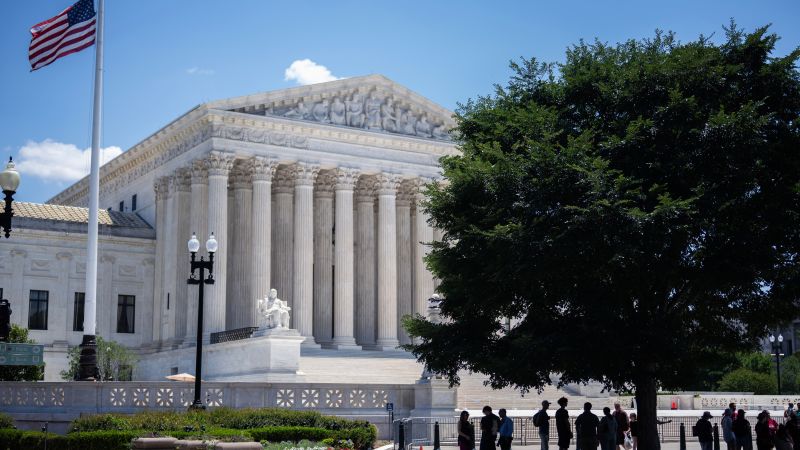
Supreme Court Mandates Warrant for Cellphone Location Data Sweeps
Police must obtain a warrant when – The U.S. Supreme Court has ruled that police must obtain a warrant to conduct broad searches of cellphone location data, a decision that reshapes digital privacy protections in law enforcement. This landmark ruling, delivered on Monday, emphasizes that collecting location information from cell carriers qualifies as a search under the Fourth Amendment. The court’s opinion establishes that such data retrieval requires judicial oversight, ensuring individuals’ right to privacy is not violated without proper legal justification. The ruling centers on the use of “geofence warrants,” which allow authorities to gather location records for people near a specific area during an investigation.
Case and Legal Context
The decision emerged from a case involving Okello Chatrie, a Virginia resident accused in a 2019 bank robbery. When initial leads stalled, investigators sought a geofence warrant from Google to track individuals near the crime scene. Chatrie contested the procedure, arguing it was overly broad and infringed on his constitutional rights. The court’s 6-3 majority opinion, authored by Justice Elena Kagan, reaffirmed that warrants must be tailored to specific targets to avoid sweeping data collection. This legal standard ensures that law enforcement does not cast a wide net without clear cause, aligning with the Fourth Amendment’s intent.
“The Fourth Amendment must, as ever, protect against unjustified governmental intrusion on the privacy of the individual,” stated Justice Elena Kagan in the majority opinion.
The ruling clarifies that while geofence warrants are permissible, they must be “particularized” to prevent overreach. This means the data collected should be limited to those directly relevant to the case, rather than encompassing millions of users’ records. The decision underscores the tension between modern surveillance capabilities and the need for constitutional safeguards, particularly as technology enables precise tracking of people’s movements.
Partisan Divides in the Ruling
Justice Samuel Alito, in his dissent, criticized the majority for what he called an “irresponsible escapade.” He argued that the ruling unnecessarily complicates law enforcement procedures without altering the outcome of Chatrie’s case. “Not one iota of the majority opinion will affect the outcome of this case,” Alito wrote. The decision reflects a deeper ideological split: the majority prioritizes individual privacy, while the dissent warns of potential burdens on investigative efficiency. This divide has intensified debates about the balance between digital surveillance and civil liberties.
Chatrie’s legal team highlighted the risks of geofence warrants, noting that they could expose vast amounts of personal data even when targeting a single suspect. “The potential for abuse is breathtaking,” they argued. “The government can draw a geofence around a church, a political rally, or a gun shop and compel a search of every user’s records.” Conversely, the government maintained that individuals voluntarily share location data with tech companies, making it less private. U.S. Solicitor General D. John Sauer asserted that Chatrie’s data was accessible without a warrant, as he had not taken steps to obscure it.
Broader Implications for Digital Privacy
The Supreme Court’s decision will influence how law enforcement handles digital evidence in future cases. By requiring warrants for location data sweeps, the ruling sets a precedent that tech companies must now justify broad data collection requests under the Fourth Amendment. This change may slow down investigations but strengthens privacy protections, especially as cellphones become integral to daily life. The case also raises questions about the role of third-party companies in storing personal information and the extent to which the government can access it without judicial review.
For Chatrie, the ruling does not immediately resolve his case. He had already entered a conditional guilty plea, so the decision primarily affects how future cases are handled. Legal experts suggest the ruling could lead to more rigorous scrutiny of data requests, ensuring they are narrowly tailored. As technology evolves, the court’s emphasis on particularized warrants underscores the importance of adapting constitutional standards to modern surveillance practices. The decision marks a significant step in safeguarding digital privacy rights for individuals in an increasingly data-driven era.
