
Takeaways from the Supreme Court’s decisions expanding Trump’s firing power but preserving Fed for now
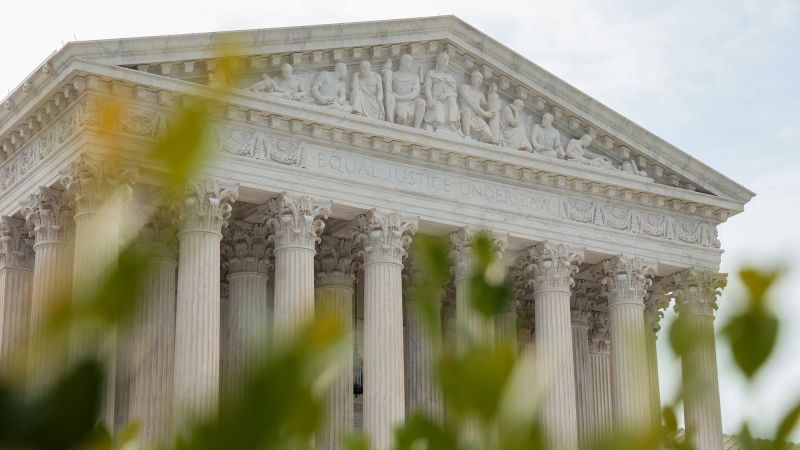
Takeaways from the Supreme Court’s decisions expanding Trump’s firing power but preserving Fed for now
Takeaways from the Supreme Court s decisions – On Monday, the U.S. Supreme Court delivered a pair of rulings that significantly reshaped the balance of power between the executive branch and federal agencies. The decisions marked a pivotal moment for President Donald Trump, who gained authority to remove top leaders of independent federal agencies without needing to demonstrate cause, such as misconduct or malfeasance. This power shift overturned a longstanding 1935 legal precedent, setting the stage for a broader reordering of how executive leadership interacts with the federal government’s oversight structures.
At the same time, the Court’s actions provided a check on Trump’s ability to eliminate key figures from the Federal Reserve. A separate ruling blocked the administration’s attempt to oust Fed Governor Lisa Cook, despite allegations of mortgage fraud. The decision ensured that Cook would retain her position for now, highlighting the Court’s willingness to protect the independence of certain regulatory bodies even as it empowered the president in other areas.
A New Era of Executive Control
The first decision, a 6-3 ruling along conservative-liberal lines, focused on the removal of Rebecca Kelly Slaughter from the Federal Trade Commission (FTC). Trump had dismissed Slaughter in 2023, arguing that the agency’s leaders should be subject to his direct control. The Court’s majority agreed, rejecting the requirement for presidents to show cause before firing agency heads. Chief Justice John Roberts, writing for the majority, emphasized that the executive branch’s authority should not be constrained by outdated rules.
“Subordinates who exercise the president’s power are subject to removal by him,” Roberts wrote. “Then, and only then, can they remain accountable to the president, and the president to the people.”
This ruling redefined the relationship between the president and independent agencies, effectively erasing a key safeguard that had existed since the 1930s. The precedent challenged by the Court, Humphrey’s Executor v. US, had allowed Congress to impose restrictions on presidential firing powers. By overruling this case, the justices opened the door for future presidents to unilaterally replace agency leaders, raising concerns about executive overreach.
While the decision was a win for Trump, it also exposed a divide within the Court. Justice Sonia Sotomayor, the senior liberal justice, dissented strongly, warning that the ruling could lead to “only chaos” in governance. She criticized the majority for abandoning the principles of checks and balances, arguing that the decision stripped agencies of their autonomy without clear justification.
A Personal Setback for Trump
Amid the broader legal shifts, the Court also dealt Trump a personal blow. In a separate case, it upheld a $5 million damages award against him for sexually abusing and defaming E. Jean Carroll, a former magazine columnist. The ruling came after Trump failed to secure a review of the verdict, allowing Carroll to proceed with her claim. The case, which centered on allegations of harassment and false statements, underscored the lingering legal challenges Trump faces beyond his policy ambitions.
Trump’s attempts to eliminate dissenting voices from the government have been a hallmark of his presidency. The recent decisions reflect a pattern of consolidating power, with the Court’s conservative majority aligning with his efforts to reshape federal oversight. However, the Fed case revealed a strategic compromise, as the Court allowed Trump to challenge the agency’s independence but ultimately preserved its structure.
Mail-In Ballots and Electoral Strategy
Another key ruling on Monday addressed the collection and counting of mail-in ballots after Election Day. The justices permitted states to accept such ballots, a decision that coincided with Trump’s ongoing push to limit mail voting and enact voter ID laws. This ruling provided a legal buffer for states, ensuring that ballots cast after the deadline would not be discarded, even as Trump sought to influence the electoral landscape.
The decision came at a critical time for the 2026 election cycle. Trump had previously criticized mail-in voting as a tool for voter fraud, advocating for stricter requirements to ensure ballot integrity. The Court’s allowance of late ballots countered this narrative, though it did not fully resolve the debate over voting methods. The ruling demonstrated the Court’s role in shaping electoral processes, often in response to political pressures.
Tensions Within the Court
The Court’s internal dynamics were on full display during the proceedings. While the majority upheld Trump’s expanded firing authority, the dissenting opinions highlighted disagreements over the scope of executive power. Justice Samuel Alito’s reaction to Sotomayor’s dissent underscored these tensions, with Alito reportedly dismissing her arguments as overly cautious.
Sotomayor’s dissent was particularly pointed, warning that the decision would “fundamentally recalibrate the balance of power” in favor of the presidency. She criticized the majority for reducing the independence of agencies like the FTC, which she argued were vital for protecting everyday Americans. “Somehow Wall Street is special and gets special treatment, but other than that, the agencies that look out for everyday Americans do not,” Sotomayor stated during a news conference, emphasizing the disparity between financial oversight and consumer protections.
Despite the ruling’s implications, the Court’s decision to preserve the Federal Reserve’s independence showed a nuanced approach. While Trump sought to remove Cook based on mortgage fraud allegations, the justices found the evidence insufficient to justify immediate action. The ruling left room for future challenges, ensuring that the Fed’s role as a key economic regulator remained intact for now.
Implications for the Future
These decisions signal a shift in the Court’s philosophy toward executive authority, particularly under a president with a history of challenging institutional boundaries. The removal of agency leaders without cause could embolden future administrations to prioritize political loyalty over bureaucratic independence. However, the preservation of the Fed’s structure suggests that the Court is not entirely aligned in its approach to different agencies, leaving room for debate over which institutions deserve special protection.
As the 2026 election approaches, these rulings will likely shape the political landscape. Trump’s ability to remove critics may enhance his influence over regulatory agencies, but the Court’s cautious stance on the Fed indicates a willingness to safeguard critical institutions. The outcomes of these cases will continue to fuel discussions about the role of the judiciary in maintaining checks on presidential power, even as it adapts to changing political tides.
