
JetBlue pilot reports hitting drone at JFK International Airport same day helicopter reports near collision with model plane
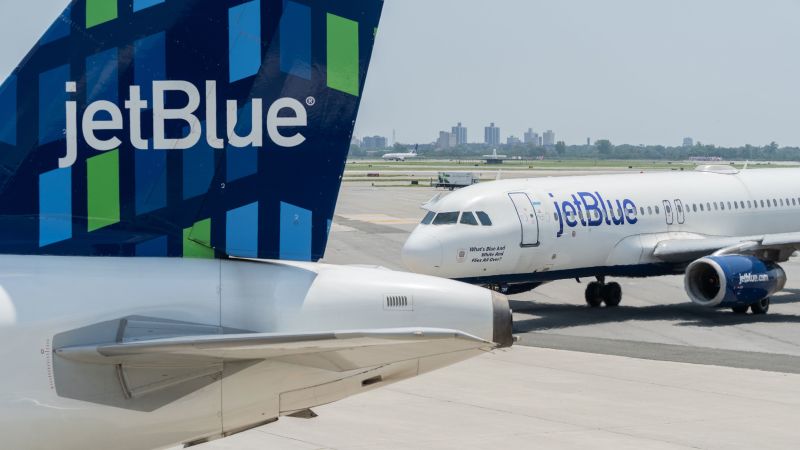
JetBlue Pilot Reports Drone Collision at JFK Airport on Monday
JetBlue pilot reports hitting drone at JFK – On Monday, a JetBlue Airways pilot reported a collision with a drone while descending toward the JFK International Airport runway, marking a significant event in aviation safety. The Federal Aviation Administration (FAA) confirmed the incident, which occurred at an altitude of about 3,000 feet, and is now investigating alongside a separate near-miss involving a helicopter and a model plane. While the FAA stated the events are unrelated, the drone encounter has raised concerns about increasing drone activity near commercial aircraft.
JetBlue Flight 948 Experienced Drone Collision During Final Approach
Flight 948, operating from Las Vegas to JFK, encountered the drone while in the final stages of its landing approach. In a recorded communication with air traffic control, the pilot described the incident as happening “back there in the turn” and noted, “We collided with a drone right above the cockpit.” Despite the impact, the Airbus A321 landed safely shortly after, with no immediate reports of passenger injuries. Post-landing inspections revealed no damage to the aircraft, though the airline emphasized its commitment to thorough safety checks.
“We are clear to land, 13 left,” the pilot said, before confirming, “Just quickly, I couldn’t talk to approach, but we collided with a drone back there in the turn.”
The flight’s path, as tracked by Flightradar24, brought it close to the Sea Bright area, approximately 10 to 12 miles from JFK, during the collision. JetBlue reiterated that safety remains its priority, with the plane inspected post-landing and deemed operational for further flights.
Helicopter Near-Miss with Model Plane at Floyd Bennett Field
Later the same day, a helicopter pilot reported a near collision with a model airplane over Floyd Bennett Field. The FAA noted that this incident occurred at a different location and time, separate from the drone collision. The Bell 407 helicopter, flying from JFK to Manhattan, was about 300 feet above ground when the encounter happened. The model aircraft, described as “a big one at 500 feet,” was operating on a runway used by hobbyists, highlighting the shared airspace between recreational and commercial flights.
Floyd Bennett Field, a former naval air station now under the National Park Service, serves as a hub for model aircraft enthusiasts. The FAA has emphasized the importance of monitoring such activities, especially during peak air traffic times, to prevent potential hazards to larger planes.
FAA Expands Drone Safety Investigations
The FAA’s acknowledgment of these incidents signals a broader review of drone safety protocols. This collision could be one of the first confirmed cases of a drone striking a U.S. passenger jet, building on previous incidents like the January 2025 incident involving a CL-415 firefighting plane. The drone operator in that case faced criminal charges after the wing was damaged. With around 100 drone sightings reported monthly, the FAA is now intensifying efforts to track and regulate UAVs near critical airspace.
Recent near-misses, such as the one reported by a United Airlines pilot at Newark Liberty, underscore the need for stricter drone regulations. The FAA has warned operators of potential fines or jail time for violating airspace rules, emphasizing the risks drones pose to both passenger safety and operational efficiency.
World Cup Drives FAA’s Focus on Drone Restrictions
As the World Cup unfolds across 11 host cities, the FAA has intensified its focus on drone safety, particularly in restricted zones like airports and event venues. Law enforcement agencies have taken action to seize unauthorized drones, including 500 units found in areas designated for emergency response operations. These measures aim to reduce risks during high-traffic events, ensuring airspace remains secure for commercial and recreational flights alike.
The FAA continues to collaborate with airlines and local authorities to enhance drone detection systems and improve pilot training. With incidents like the JetBlue collision and the helicopter near-miss, the agency is prioritizing proactive strategies to prevent future collisions and maintain air safety standards.
