
Can the so-called nanobubbler save the Reflecting Pool?
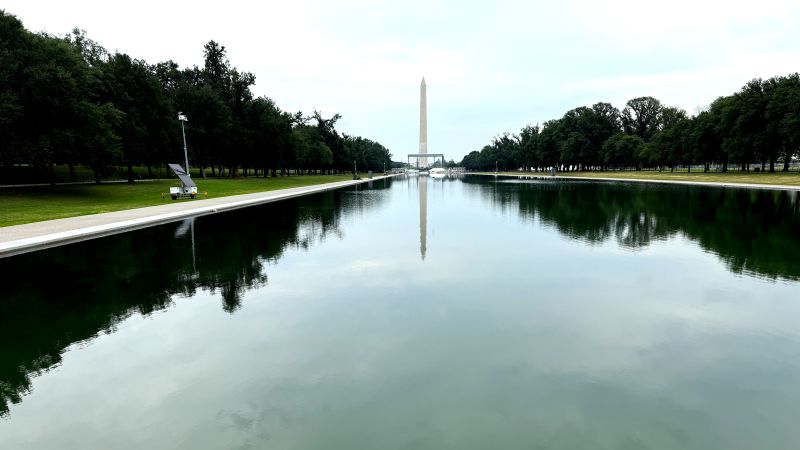
Can the so-called nanobubbler save the Reflecting Pool?
Can the so called nanobubbler save – Efforts to restore clarity to the Lincoln Memorial Reflecting Pool have turned to a $1.7 million innovation known as the “ozone nanobubbler.” This device, capable of generating 500 million microscopic bubbles per teaspoon of water, aims to combat algae, bacteria, and other contaminants through a process called oxidation. The Trump administration has positioned the technology as a cutting-edge solution, but its effectiveness in maintaining the pool’s pristine appearance remains under scrutiny. The project, which involves a company based in Brookfield, Ohio, marks a bold attempt to tackle a longstanding issue with a landmark that has resisted cleanliness for decades.
A Bold Experiment in Water Treatment
The Reflecting Pool, a iconic feature of the National Mall, holds 6.5 million gallons of water. For years, it has faced challenges in maintaining its clear, reflective quality, often marred by algae blooms and organic buildup. The nanobubbler technology, which has only been deployed in limited capacities elsewhere, was introduced as a potential game-changer. However, its application to such a large and shallow body of water raises questions about its practicality. The system works by infusing oxygen into the water through an array of fine nozzles, creating a dense layer of bubbles that interact with pollutants.
Greenwater Services, the firm responsible for the pool’s water quality, has been at the center of this initiative. The company, which had no prior experience with large-scale water treatment projects, was chosen under a no-bid contract, drawing criticism from some quarters. Despite the controversy, the administration has emphasized the technology’s promise, with officials claiming it could revolutionize how public water features are maintained.
Political Tensions and a Public Relations Challenge
The project has become a flashpoint in the broader debate over Trump’s renovation efforts. While the pool’s condition is a visible symbol of the administration’s commitment to revitalizing national landmarks, it has also highlighted logistical and financial hurdles. The National Park Service, which oversees the pool, has been caught in the crossfire, with its role in the nanobubbler’s implementation questioned. At the same time, the owner of Greenwater Services, whose company has ties to the Trump campaign, has sparked speculation about the project’s motives.
Chas Antinone, the president and chief operating officer of Greenwater Services, addressed the political dimension of the initiative during an interview with CNN. “Yes,” he stated, when asked if the project had proceeded as planned. “I’ve got no political affiliation in this thing whatsoever either way. And I don’t really care about that part.” Antinone emphasized that the company’s primary goal was to ensure the pool’s water remained clear and reflective, aligning with its intended purpose.
“Our job was to come here and bring a technology that we think can keep the Reflecting Pool looking clean and reflect the way it is supposed to.”
A review of campaign finance records revealed no direct contributions from Antinone to the Trump campaign, though the company itself had previously supported the administration. The nanobubbler’s deployment has, however, been entangled in political discourse, with critics arguing that its use was more about optics than scientific merit. As the pool became a symbol of the nation’s political divisions, questions about the technology’s long-term viability have intensified.
A Timeline of Implementation and Challenges
Greenwater Services provided CNN with a detailed account of its work with the Trump administration, outlining the steps taken to meet the president’s goal of restoring the pool by the July Fourth holiday, which celebrates America’s 250th anniversary. From the outset, the company had to operate swiftly, as the permanent ozone nanobubbler unit was not yet fully fabricated in Ohio. To compensate, temporary systems were installed just days after the pool was refilled with water.
On June 6, four stand-alone mobile units were introduced into the Reflecting Pool. These units, which differ from the permanent design, generated visible white plumes of bubbles as they released nanobubbles into the water. According to the company, the temporary machines were operating at the same intensity as the planned permanent system. At that time, the water was reported to be clear, with all systems functioning as intended. However, by June 12, the algae had returned, prompting the National Park Service to request the removal of the temporary structures.
Greenwater Services declined to specify the reason for the algae’s resurgence, leaving the cause of the setback unclear. The company quickly dismantled the units, taking them off-site as the pool’s appearance shifted once again. While the nanobubbler’s short-term success was evident, its long-term impact remains uncertain, with no official timeline provided by the Department of Interior for the more extensive pipe repairs needed to sustain the technology.
Industry Perspectives and Unanswered Questions
Joe Trusty, editor of Pool Magazine and a former pool service professional, acknowledged the nanobubbler’s appeal as a buzzword in the industry. “It’s not surprising that they were brought into the conversation,” he noted. “Nor is it surprising that they implemented it.” Yet he also pointed out the challenges of applying such technology to a large, shallow water feature like the Reflecting Pool. “Whether or not it will be effective in this scale and depth remains to be seen,” Trusty said, highlighting the need for further testing.
The project has exposed both the potential and the limitations of the nanobubbler. While its ability to generate a high concentration of oxygen bubbles is impressive, the lack of a clear maintenance strategy and the reliance on temporary equipment have raised concerns. The Department of Interior’s decision to prioritize rapid results over long-term infrastructure improvements has drawn criticism, with some arguing that the nanobubbler is a temporary fix for a complex problem.
As the Reflecting Pool continues to serve as a backdrop for national events, its condition reflects broader debates about the balance between innovation and practicality. The nanobubbler’s success or failure may not only determine the pool’s fate but also shape perceptions of the Trump administration’s ability to deliver on its promises. For now, the pool’s restoration is a test of both technology and governance, with the public watching closely for signs of improvement or further complications.
With the algae bloom resurfacing and the permanent system still in development, the nanobubbler’s role in the pool’s revival remains in question. The National Park Service and the White House have yet to clarify the reasons behind the temporary units’ removal, leaving the project’s trajectory uncertain. As the debate over the technology’s efficacy continues, the Reflecting Pool stands as a reminder of the challenges that arise when public projects are tied to political agendas.
