
What we know about Trump’s Great American State Fair
Insights into Trump’s Great American State Fair Initiative
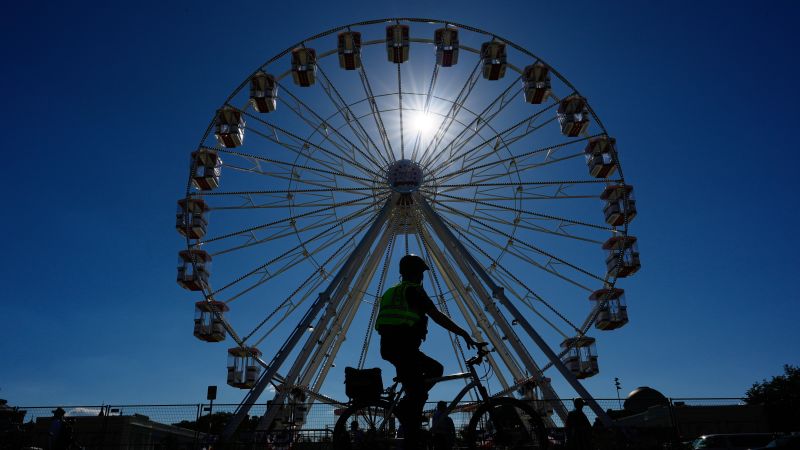
What we know about Trump s Great – The 16-day Great American State Fair, spearheaded by the Trump administration, has officially launched at the National Mall in Washington, DC. This event, designed as a modern World’s Fair, invites attendees to explore pavilions representing all 50 U.S. states and territories. With a packed lineup of activities, including military flyovers, film screenings, and a towering 110-foot Ferris wheel, the fair aims to celebrate American diversity through immersive experiences.
Trump’s Vision for a National Celebration
President Donald Trump first introduced the idea of a 250th-anniversary event during his 2023 campaign. Three years later, the vision has materialized into a grand spectacle. Trump’s personal touch is evident in the inclusion of a scaled-down replica of his proposed 250-foot “triumphal arch,” a symbolic structure he has long championed. At the event’s kickoff on Wednesday, he declared, “This is the beginning of the golden age of America,” highlighting his belief in the fair’s role as a showcase for national pride.
Freedom250 and the Organization Behind the Event
The fair is managed by Freedom250, a nonprofit organization closely aligned with the Trump administration. This group has orchestrated numerous 250th-anniversary initiatives, such as the Rededicate 250 prayer event held on the National Mall in May. While the fair is free to attend, Freedom250 has encouraged visitors to RSVP, emphasizing the event’s significance as a communal gathering.
State Participation and Financial Challenges
Despite the fair’s ambitious scope, not all states have actively participated. Officials from Washington, Massachusetts, Illinois, North Carolina, and Connecticut told CNN they opted out of organizing state booths, citing budget constraints. However, local groups have stepped in to represent their states, creating a collaborative effort to showcase regional culture. For instance, Arizona’s pavilion is designed as a “sensory journey,” according to Paul Behnen, creative director at Off Madison Ave, which partnered with the Arizona Office of Tourism to craft the exhibit.
Immersive State Experiences
Each state’s booth offers unique interactive elements to reflect its heritage. In Montana, visitors can engage with a fossil-digging station, while Minnesota’s pavilion features a game where participants select from a pond filled with miniature common loons, the state’s official bird. Florida’s display highlights its citrus industry, complete with a mini-golf putting green shaped like the state’s geography. Oklahoma’s booth, on the other hand, aims to challenge stereotypes by blending natural landscapes with artistic interpretations, as Amy Blackburn, executive director of the Oklahoma Tourism and Recreation Department, explained: “We really wanted to focus on dispelling some preconceived notions about Oklahoma and getting people to see all the diversity and wonderful experiences we have to offer in our state.”
Highlighting the American West
The fair also emphasizes the cultural richness of the American West. Daily rodeo shows will feature precision-riding demonstrations, alongside traditional Mexican charro performances. Visitors can interact with American Miniature Therapy Horses during meet-and-greets, adding a touch of both entertainment and wellness to the event. These activities underscore the fair’s effort to blend historical traditions with contemporary appeal.
Freedom Trucks: Mobile Museums of American History
Freedom250 has deployed mobile museums, dubbed the Freedom Trucks, to narrate the story of America’s founding. These units utilize AI-generated videos and artwork to present the nation’s history. Content is sourced from Hillsdale College, a Christian liberal arts institution in Michigan, and PragerU, a conservative media group known for educational materials that counter a “dominant left-wing ideology.” The trucks serve as a dynamic platform to engage audiences with historical narratives, reinforcing the fair’s thematic focus.
Event Adjustments and Musical Lineup
Recent adjustments have been made to the event’s schedule. Earlier this month, some concerts were canceled after artists withdrew, but organizers remain confident in their musical offerings. Freedom250 CEO Keith Krach assured CNN, “We’re literally gonna have hundreds of performers. We’ve got something for everybody, you know what I mean. We’ll have great speakers, military bands, amazing entertainers, amazing singers, magicians, all that stuff.” This commitment to variety ensures the fair caters to a broad audience, from history enthusiasts to casual visitors.
Cultural and Culinary Highlights
Complementing the event’s cultural focus is a diverse array of food offerings. Attendees can enjoy state fair classics such as jumbo corn dogs, turkey legs, and large servings of fries. These items, often associated with traditional fairs, are presented alongside more regional specialties, creating a sensory experience that mirrors the country’s culinary breadth. The fair’s organizers have emphasized the importance of these elements in fostering a sense of shared identity and celebration.
Partisan Tensions and Public Perception
While the fair is marketed as a unifying event, some critics have raised concerns about its political leanings. A spokesperson for Oregon Gov. Tina Kotek, a Democrat, noted that the fair “is shaping up to be a more partisan affair than originally presented.” This sentiment reflects broader debates about the role of the Trump administration in shaping national narratives. Despite these concerns, the event continues to attract a wide range of participants, from patriotic citizens to those curious about its message.
Legacy and Future Implications
The Great American State Fair serves as a testament to the Trump administration’s efforts to leverage national celebrations for political and cultural purposes. By combining historical education with entertainment, the event aims to leave a lasting impression on visitors. As the fair unfolds through July 10, it will remain a focal point for discussions about America’s past, present, and future. The success of this initiative could influence similar projects, setting a precedent for how political entities engage with public events to shape national consciousness.
Through its blend of innovation and tradition, the fair not only celebrates the nation’s 250th anniversary but also highlights the role of leadership in curating collective experiences. Whether viewed as a patriotic triumph or a politically charged spectacle, the event will undoubtedly spark conversation and reflection on what it means to be American in the modern era.
