
Wyndham Clark wins second US Open title after flirting with record collapse
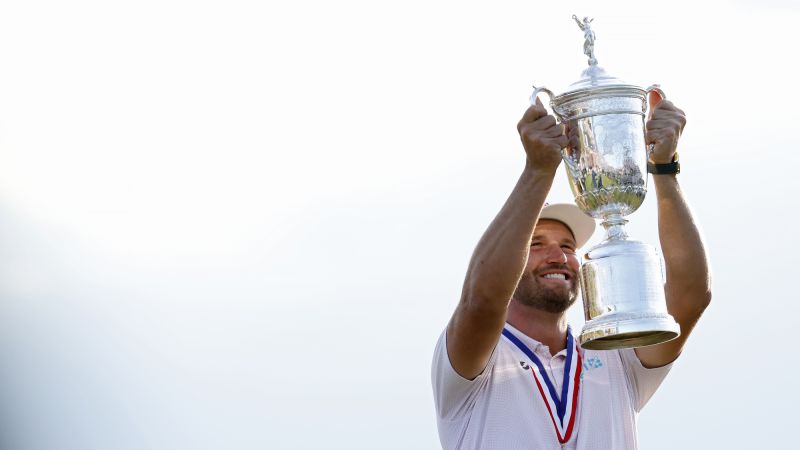
Wyndham Clark Secures Second US Open Triumph Amid Dramatic Comeback
Wyndham Clark wins second US Open – Wyndham Clark’s journey to victory at this year’s US Open was anything but smooth. After a harrowing experience the previous year, where he famously smashed a locker at Oakmont in a moment of frustration, the 32-year-old American entered the final round with the weight of redemption on his shoulders. His performance this time around was a testament to his resilience, culminating in a hard-fought win that not only restored his reputation but also etched his name into the annals of US Open history.
A Bitter Past, A Sweet Present
Last year’s US Open had left Clark in a precarious position. Missed the cut and publicly criticized for his outburst, he felt his career was on the verge of unraveling. This year, the New York crowd, captivated by Scottie Scheffler’s pursuit of a career Grand Slam, turned their attention toward Clark with skepticism. The pressure was palpable as he navigated the Shinnecock Hills course, where every swing felt like a test of his mental fortitude. Yet, this victory tasted particularly sweet after the turmoil of 2025.
“The first one was kind of just the breakthrough of knowing I can do it,” Clark reflected after his decisive two-putt par on the final hole. “And then this one was a lot of redemption. Last year was so tough, a terrible year. I left this place in shambles, and it’s amazing what a year can do. I’m leaving here this Sunday as a champion, and I’m just so blessed.”
Steadfast in the Face of Adversity
Clark’s path to victory was marked by moments of peril. He entered the final day with the largest 54-hole lead in US Open history, a margin that seemed insurmountable at first glance. However, the tournament quickly turned into a high-stakes battle, with Sam Burns mounting a relentless challenge. The Shinnecock Hills crowd, initially unkind, began to shift their support as Clark demonstrated grit in critical moments. His ability to maintain composure under pressure became the defining narrative of the week.
A pivotal moment occurred on the par-5 16th hole, where Clark’s worst drive of the tournament veered left into thick fescue. With precision, he gouged his way out of the hazard, narrowly avoiding a bunker, and executed an 8-iron that landed on the back edge of the green. The final birdie putt, a 30-foot stroke, secured a two-shot lead with holes remaining—a moment that symbolized his resurgence. “It was a signature moment with muted applause,” he noted, acknowledging the crowd’s mixed reactions throughout the day.
Unyielding Support and Unforgiving Conditions
Throughout the final round, the gallery’s support was split. While many backed Scheffler, who had shown flashes of brilliance but struggled to close the gap, Clark’s every move was met with a blend of tension and admiration. Even the grandstand behind the seventh green erupted in cheers when his shot rolled off the green and into the bunker, a reminder of the crowd’s volatility. “I get it—they were rooting for Scottie,” Clark admitted, highlighting the emotional stakes of the event.
Scheffler, the world’s top-ranked player, finished tied for fourth after a 71. “Winning major championships is extremely difficult,” he said, reflecting on the competition. “Clark had some stones down the stretch. … Being in the arena is not for everybody, and I think it shows a lot about Wyndham, how he handled not only this golf course but I think the crowd today. And he is a well-deserving champion.”
A Historic Achievement and Personal Triumph
Clark’s victory marks a significant milestone in US Open history. He became the first wire-to-wire winner since Martin Kaymer’s triumph at Pinehurst No. 2 in 2014, showcasing his consistency and ability to perform under pressure. The final score of 4-under 276 underscored his dominance, though the journey to that number was far from a cakewalk. His final round, while not without its struggles, was a masterclass in composure, especially after a narrow escape on the 17th hole.
The emotional weight of the win was amplified by the presence of his father, Randall, who had traveled overnight from Denver to witness the moment. Clark’s humility shone through as he addressed the crowd at the closing ceremony, acknowledging their initial hostility. “New York didn’t really like me—I love you guys,” he said, raising the silver trophy. “But I get it. Some of it’s self-deserved. I did some unfortunate things last year that I really regret, and I’ve been sorry multiple times and I’m still sorry, so hopefully I can win you guys over eventually.”
Close Calls and Unfinished Business
Sam Burns, the player who had come closest to dethroning Clark, finished just one shot short of the title. After a three-putt bogey on the 15th, Burns rebounded with an 18-foot birdie, keeping his hopes alive. However, a missed 10-foot putt on the 17th and a 17-foot birdie chance on the 18th that grazed the right edge of the cup left him with lingering regrets. “I would say last year at Oakmont I felt more I lost the golf tournament,” Burns remarked, though his performance this year demonstrated his potential for future glory.
Tom Kim, another contender who celebrated his birthday on Sunday, fell short as he bogeyed the 17th hole, finishing third with a 70. Despite the setbacks, Clark’s ability to convert critical putts and weather the storm of doubt was a standout aspect of his game. His victory not only solidified his place among US Open champions but also highlighted his growth as a player capable of overcoming immense pressure.
Reflections and a New Chapter
As the dust settled on Shinnecock Hills, Clark’s triumph was celebrated as a blend of personal achievement and historical significance. The contrast between his 2025 collapse and this year’s success underscored the transformative power of perseverance. With two US Open titles and two wins in the last month, Clark has proven that his 2024 victory was not a fluke but a continuation of his rise in the sport.
The crowd’s eventual admiration for Clark’s performance was a fitting end to a week filled with drama. Even those who had shouted “Don’t choke, Wyndham” during the final round found themselves in awe of his resilience. “Today it’s my day,” Clark said, capturing the essence of his emotional journey. His story is a reminder that in golf, as in life, the path to success often requires navigating both triumph and trial.
