
New discovery may have been Stonehenge prototype
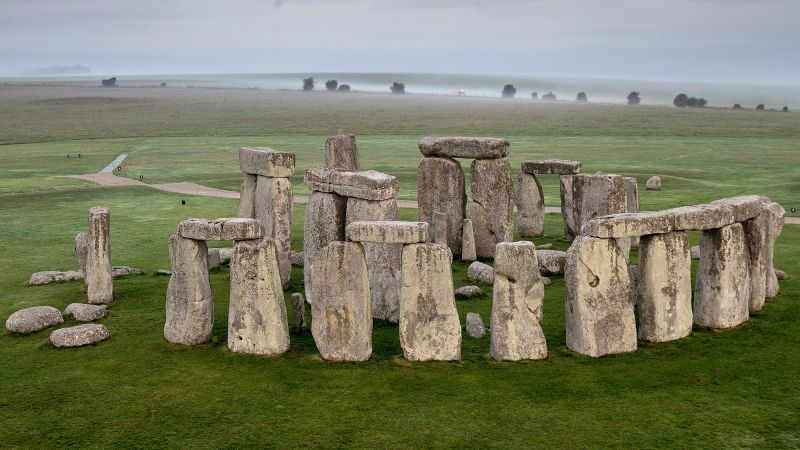
Ancient Solstice Alignment Uncovered Near Stonehenge
New discovery may have been Stonehenge – Archaeologists have unearthed a 5,000-year-old structure in southwest England, potentially offering insights into the origins of Stonehenge. This ancient setup, composed of two wooden poles spaced 120 meters apart, aligns with the solstices, mirroring the orientation of Stonehenge’s stones. The discovery, made in Bulford, Wiltshire, just 5 kilometers from the iconic monument, has sparked renewed interest in prehistoric astronomical practices.
Site of Discovery and Chronological Context
The find was made in Bulford, Wiltshire, located just 5 kilometers from the iconic Stonehenge. The structure, dating back to approximately the same period as the initial earthworks of Stonehenge, predates the famous stones by about 500 years. Researchers from Wessex Archaeology revealed that the poles were likely positioned 5,000 years ago, a time when the first construction phases of Stonehenge were taking shape. This suggests the site may have been a precursor to the later monument, serving as a foundational element in its development.
Archaeological Investigation and Radiocarbon Analysis
Phil Harding, leading the team, utilized radiocarbon dating to confirm the structure’s placement around 5,000 years ago. This method helped determine the age of the wooden poles embedded in pits, establishing their significance in the Neolithic timeline. The findings suggest that this early alignment was part of a broader network of ancient observatories, indicating the importance of celestial events in prehistoric society. Harding’s work highlights how these communities meticulously planned their surroundings to reflect cosmic patterns.
Demonstration of Celestial Alignment
Using reconstructions of the ancient sky and landscape, Fabio Silva showcased how the poles would have matched the solstices. His analysis highlighted that the alignment was not accidental, but a deliberate design. This could mean that the people of that era had an advanced understanding of astronomy, using the structure to track seasonal changes. Silva’s research also underscores how such alignments were likely central to cultural and spiritual practices, linking human activity to natural cycles.
Artifacts and Symbolic Significance
Alongside the wooden poles, researchers uncovered various artifacts, including pottery, animal bones, charcoal, and worked flints. These items imply that the site was a gathering place for solstice celebrations, with evidence suggesting communal activities centered around the alignment. One notable discovery was a rare disc-shaped knife, possibly placed as a symbolic reference to the sun disc, adding depth to the site’s cultural importance. The knife, described as extremely rare, hints at the symbolic value placed on celestial phenomena by ancient inhabitants.
Expert Insights and Broader Implications
Susan Greaney, an archaeology lecturer at the University of Exeter, expressed intrigue about the discovery, noting that its details are yet to be fully published. She emphasized that the alignment found at Bulford is part of a significant Neolithic settlement, highlighting the eastern region’s role in both daily life and monumental construction. The site’s proximity to the River Avon suggests that it was a crucial part of the Stonehenge landscape, with communities living and building on both sides of the river. Greaney’s comments stress the need to view Stonehenge not as an isolated achievement but as part of a larger cultural and architectural continuum.
Reconstructing the Past with Modern Techniques
Wessex Archaeology’s statement underscores the role of modern techniques in uncovering ancient truths. The team’s radiocarbon dating efforts provided precise timelines for the structure’s creation, aligning it with the early phases of Stonehenge’s development. This method allowed researchers to cross-reference the site’s use with other contemporary monuments, revealing a pattern of shared astronomical knowledge across the region. The alignment of the poles with solstices demonstrates a sophisticated grasp of celestial mechanics, challenging previous assumptions about prehistoric capabilities.
Understanding Stonehenge as a Part of a Legacy
Harding’s remarks in the statement reflect the discovery’s potential to redefine Stonehenge’s historical context. He noted that the ability to accurately plot the sun’s midsummer rising was a remarkable feat for prehistoric communities. This early structure, he argued, could be one of the greatest finds of his career, offering a window into the origins of monumental architecture. Silva’s work further supports this, showing how such alignments were not unique to Stonehenge but part of a wider tradition of celestial observation.
Implications for Neolithic Culture and Technology
The Bulford site raises intriguing questions about the technological and cultural advancements of Neolithic societies. The presence of artifacts like the disc-shaped knife suggests that these communities engaged in complex symbolic activities, blending practical needs with spiritual significance. The use of wooden poles, rather than the later stone structures, indicates an evolving approach to monument building, where materials and methods adapted over time. This evolution may have been driven by the need to refine astronomical accuracy or to create more enduring markers of time.
Future Research and Historical Context
As further analysis of the site’s artifacts and alignment continues, archaeologists aim to piece together a more comprehensive picture of Neolithic life. The discovery adds a layer of complexity to the timeline of Stonehenge’s construction, suggesting that its design was not a sudden innovation but the result of centuries of accumulated knowledge. By studying Bulford, researchers can better understand how early societies interacted with their environment, using natural features as tools for timekeeping and ritual.
Connecting the Past to the Present
The Bulford site serves as a bridge between the ancient past and modern archaeological science. The integration of radiocarbon dating with celestial reconstructions exemplifies how technology enhances our ability to interpret historical data. These methods allow for a more nuanced understanding of human ingenuity, revealing that the alignment of monuments with solstices was a deliberate act of cultural expression. As the study progresses, it may offer new perspectives on the interconnectedness of prehistoric communities across England, highlighting shared traditions and innovations.
Conclusion: A New Chapter in Stonehenge’s Story
This discovery marks a pivotal moment in the study of Stonehenge’s prehistory, offering a glimpse into the early stages of its development. The structure’s alignment with solstices, combined with the presence of symbolic artifacts, suggests that the site was more than a practical tool—it was a cultural landmark. As researchers delve deeper into the Bulford findings, they may uncover further evidence of how prehistoric societies harnessed the power of the sun, creating monuments that continue to inspire awe today.
