
The Great Hydration Break Debate takes over the World Cup
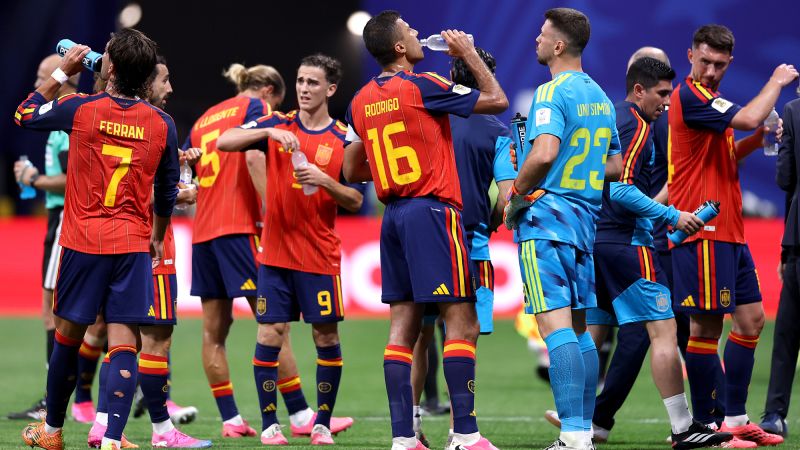
The Great Hydration Break Debate Takes Center Stage at the World Cup
The Great Hydration Break Debate takes – With the summer World Cup now in its seventh day, the tournament has already produced 24 group games and 75 goals, setting the stage for what promises to be an intense month of competition. As the action continues to unfold across North America, one issue has sparked widespread discussion among fans, analysts, and players alike: the introduction of hydration breaks. These brief interruptions, mandated by FIFA, have become a focal point of debate, dividing opinions on their impact and purpose.
A New Rule in the Heat of Competition
FIFA’s decision to implement hydration breaks in both halves of every match has been framed as a proactive step to prioritize player welfare, particularly in the sweltering conditions that North America’s summer weather can bring. The governing body claims the measure is part of its broader commitment to ensuring athletes remain hydrated and physically prepared throughout the grueling tournament. According to FIFA, the breaks—lasting three minutes each—allow players to replenish fluids and electrolytes, a critical need in high-temperature and high-humidity environments.
However, the rule’s universality has raised eyebrows. FIFA insists that hydration breaks are required regardless of the weather, even in milder conditions. For instance, during the Ghana vs Panama encounter in Toronto, the temperature was a relatively cool 19 degrees Celsius (66.2 degrees Fahrenheit), yet the break was enforced. Similarly, games in climate-controlled stadiums—such as those with retractable roofs—have not been exempt. This has led to accusations that the policy is more about commercial interests than genuine player protection.
Commercialism vs. Tradition
While the hydration breaks are ostensibly designed to aid athletes, critics argue they are a strategic move to boost revenue. With television commercials now inserted during the stoppages, broadcasters like FOX have found new opportunities to monetize the event. Fans have noted that these breaks often disrupt the flow of the game, particularly in high-stakes matches where momentum can shift dramatically. For example, in the Mexico-South Africa opener, the American network missed crucial moments of play due to the timing of the ads.
“Hydration breaks are a bit interesting,” said Netherlands captain Virgil van Dijk. “Because I was obviously watching almost all the games up until today, and every time going to commercial is a bit, not really how I like it. I think for the neutral watchers on TV, it’s also not great.”
The controversy has also extended to how these breaks affect in-game dynamics. Some matches have seen teams leverage the pause to reorganize tactics, with managers using the time to adjust formations or strategies. Belgium coach Rudi Garcia acknowledged this, stating, “For me, it’s a coaching break more than a cooling break, so to me it’s very important.” This perspective highlights the dual nature of the rule: a physiological necessity and a tactical tool.
Impact on Momentum and Fan Experience
One of the most contentious aspects of the hydration breaks is their influence on the rhythm of the game. Critics claim that the three-minute pauses create a noticeable disruption, especially in matches where the flow is already tight. For example, England’s 4-2 victory over Croatia on Wednesday saw fans express frustration when the breaks were called, with some even booing the decision. The interruptions have been described as a “culture clash,” with traditionalists decrying them as an erosion of soccer’s timeless continuity.
Despite the backlash, the policy remains in place, and its effects are already being felt. The breaks have effectively split matches into four segments, a format more familiar to US sports fans. This structural change has not only altered the viewing experience but also introduced a new layer of commercial activity. With more advertising slots available, FIFA and its partners are capitalizing on the opportunity, blending sports and entertainment in ways that may not sit well with purists.
Canada’s Comeback in the Opening Match
As the debate over hydration breaks intensifies, the tournament itself continues to deliver unexpected narratives. Canada’s opening match against Bosnia, which was initially seen as a challenge, showcased a remarkable turnaround. In the first half, the team struggled to match Bosnia’s intensity, appearing second-best in key moments. However, manager Jesse Marsch made tactical adjustments in the second half, introducing winger Ali Ahmed and striker Cyle Larin to rejuvenate the squad.
This strategic shift transformed Canada’s performance, turning them into a formidable force. The victory not only highlighted the importance of adaptability in coaching but also underscored how the World Cup’s evolving rules can shape outcomes. While the hydration breaks remain a point of contention, the tournament’s broader developments, such as Canada’s resurgence, illustrate the dynamic nature of the competition.
The Broader Implications of the Rule Change
The hydration breaks have become a microcosm of the broader tensions at the World Cup. On one hand, they are a practical response to the physical demands of modern soccer, especially in extreme weather conditions. On the other, they are viewed as a calculated effort to increase commercial appeal and revenue. FIFA’s decision to enforce these breaks, even in less demanding environments, has fueled concerns about the prioritization of profit over the purity of the sport.
Analysts suggest that the breaks may also serve as a buffer for referees, providing them with time to review decisions or manage player substitutions. Yet, this benefit is often overshadowed by the criticism from fans who feel the interruptions are unnecessary. The debate has even extended to the broader implications for player health, with some arguing that the breaks could be a lifeline for athletes in hot climates, while others believe they are a gimmick.
As the tournament progresses, the hydration breaks will likely remain a topic of conversation. Their presence has already influenced the way games are played and watched, and their long-term impact will depend on whether fans can reconcile their utility with their disruption. For now, the rule stands as a symbol of FIFA’s efforts to balance athletic performance with financial strategy, even as it tests the patience of many.
In the coming weeks, the World Cup will continue to unfold with its share of drama, innovation, and controversy. The hydration breaks, while a small part of the broader picture, have already become a defining feature of the tournament’s unique identity. Whether they are seen as a necessary adjustment or an overreach, their role in shaping the competition is undeniable. As players adapt to the new rhythm and fans voice their opinions, the debate is far from over.
For those who prefer a more uninterrupted flow, the hydration breaks may feel like an intrusion. But for others, they represent a modernization of the game that aligns with the evolving demands of professional soccer. The World Cup, after all, is a living entity, constantly adapting to new challenges and opportunities. As the tournament moves forward, one thing is clear: the beautiful game is now being played under a different set of rules—and the conversation around them is just beginning.
