
Trump’s Iran agreement draws rare reproach from powerful Republicans
Republican Discontent Grows Over Trump’s Iran Accord
Trump s Iran agreement draws rare – After unveiling the details of his Iran policy, President Donald Trump faced unexpected backlash from some of his closest allies in Congress. While the initial reaction among key Republican senators was one of silence, the discontent quickly escalated, with a group of senior GOP lawmakers openly questioning the terms of the agreement. This shift in sentiment signals a potential challenge for Trump’s strategy as he navigates the final months of his presidency.
Initial Skepticism and Internal Division
Within 24 hours of the agreement’s release, a faction of Republican senators began expressing reservations about its provisions. These concerns were not limited to theoretical critiques; some lawmakers were vocal in their doubts, urging Trump to reconsider his approach. The most striking among them was outgoing Louisiana Senator Bill Cassidy, who described the deal as a “step back” for the United States. “Iran has grown stronger, while we have weakened,” Cassidy said, highlighting the perceived imbalance in the pact’s outcomes.
Other Republicans, including Texas Senator John Cornyn and Alaska Senator Lisa Murkowski, echoed similar sentiments. Cornyn, also set to leave Congress, voiced apprehension about the agreement’s implications, stating, “Everything I’ve heard about it causes me concern.” Murkowski, a long-time Senate leader, added that the deal seemed to “reverse progress” made in previous negotiations. She noted, “Significant resources have been allocated, and lives have been lost, yet Iran remains in a position that resembles its pre-deal status.” These comments underscore a growing divide within the party, even among those who had previously supported Trump’s foreign policy.
Leadership’s Uncertain Stance
Despite the mounting criticism, Senate Majority Leader John Thune remained cautiously neutral. Initially, he told reporters he was still “processing” the agreement’s details, emphasizing the need to “ensure financial incentives are tied to Iran’s nuclear activities.” Later, Thune acknowledged the deal as a “positive move” but stressed it was only the first phase of a broader strategy. His measured response reflects the cautious approach many Republicans are taking, balancing support for Trump with the need to scrutinize the pact’s long-term consequences.
The uncertainty extends beyond Thune. Some lawmakers are skeptical about the likelihood of a final agreement, fearing it may not pass in a GOP-controlled Congress without major revisions. This doubt is compounded by the agreement’s inclusion of a $300 billion reconstruction fund, which has drawn sharp criticism for its perceived generosity to Iran. The provision, which aims to revive economic ties with the country, has been labeled by opponents as a “financial handout” that undermines U.S. leverage.
Wicker and Cruz Lead the Opposition
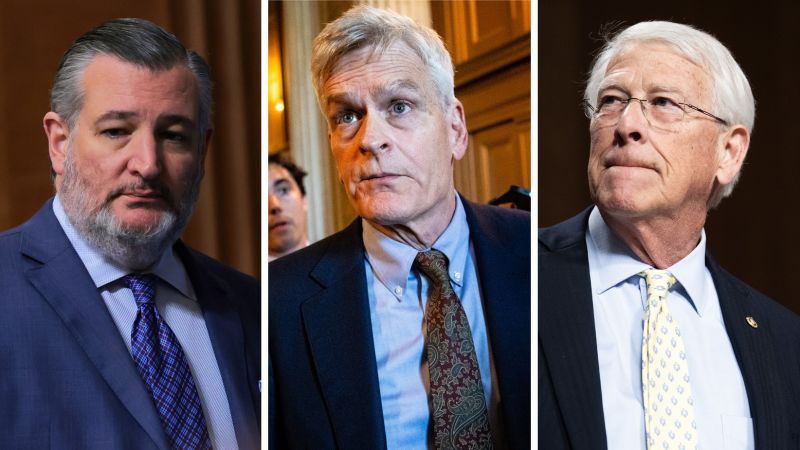
Among the most vocal critics is Senator Roger Wicker of Mississippi, the top Republican on the powerful Armed Services Committee. Wicker initially withheld public comments for a day after the agreement’s details were made available, but by Thursday, he had issued a scathing statement. “The memorandum of understanding appears to undermine the achievements of Operation Epic Fury,” he wrote, arguing that the deal “fails to align with the President’s strategic objectives.” Wicker compared the current agreement to the 1938 Munich Accords, suggesting it could mirror the mistakes of past U.S. concessions to Iran.
“I am concerned that the memorandum of understanding negotiates away the victories of Operation Epic Fury in ways that are completely out of step with the President’s goals,” Wicker stated. He accused the administration of allowing Iran to “profit from reopening the Strait of Hormuz” and questioned the wisdom of lifting sanctions as part of the deal.
Ted Cruz, the Texas senator and a leading critic of Iran, also targeted the $300 billion fund. “History shows that providing billions to theocratic extremists who seek our destruction is a disastrous move,” Cruz warned. “The President is following a path that risks American security, and I believe he’s been advised poorly on this matter.” Cruz argued that the funds would be used by Iran to “strengthen its military and destabilize the region,” a claim that resonates with many conservative lawmakers wary of Iran’s ambitions.
Implications for the Midterm Elections
The growing dissent within the Republican Party has raised concerns about the agreement’s survival in the face of upcoming midterms. With the GOP holding control of the Senate, the pact’s approval could hinge on whether lawmakers can reconcile their concerns with the administration’s priorities. However, the disagreement may complicate efforts to pass other major legislation, including a costly bill to fund ongoing military operations in Iran.
Analysts suggest that the internal conflict reflects a broader tension between Trump’s foreign policy goals and the priorities of his base. While the president seeks to reduce tensions with Iran, some Republicans argue that the deal’s concessions could embolden the country’s leaders. “This agreement risks ceding strategic advantages to Iran while rewarding its nuclear program,” said one anonymous GOP senator. “The party is in disarray, and it’s unclear if Trump can unify his allies before the election.”
A Changing Political Landscape
As Trump’s presidency enters its most challenging phase, the Iran agreement has become a symbol of the shifting dynamics within the Republican Party. The deal has drawn scrutiny not only for its economic terms but also for its alignment with the president’s broader agenda. Critics have pointed to Trump’s “ballroom project” and his “retribution campaign” as indicators of his inconsistent leadership, with the Iran pact adding to the list of controversies.
Some lawmakers are also questioning the agreement’s impact on U.S. credibility. “If we’re offering Iran billions in aid without demanding concrete commitments, we risk appearing weak on the global stage,” said a senior Republican strategist. This perception of weakness could resonate with voters who are already critical of the administration’s handling of foreign affairs. With the November elections looming, the debate over the Iran deal has taken on added significance, as Republicans seek to avoid damaging their prospects in key states.
While the president’s supporters argue that the agreement represents a pragmatic solution to a complex problem, the opposition within the party highlights the risks of appeasing Iran. The situation now mirrors the early days of Trump’s presidency, when his policies often sparked internal debate. Yet, the stakes have never been higher, with the outcome of this disagreement potentially shaping the GOP’s future for years to come.
As the Senate grapples with the deal, the question remains: will Trump’s vision for Iran hold together in the face of rising skepticism? With a significant portion of his allies now questioning the pact’s terms, the answer may determine whether the agreement becomes a cornerstone of his legacy or a liability in the lead-up to the midterms.
