
Trump’s name removed from Kennedy Center website branding
Trump’s Name Removed from Kennedy Center Website Branding
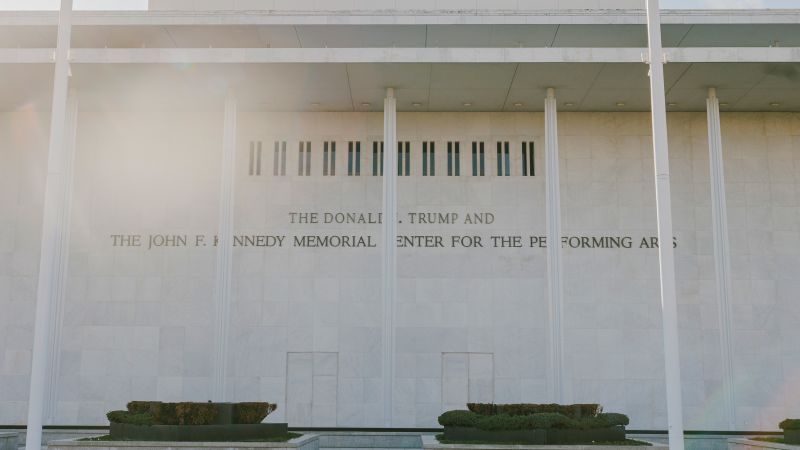
Trump s name removed from Kennedy – A federal court ruling has prompted a significant change at the John F. Kennedy Center for the Performing Arts, with the institution’s website logo now stripped of the former president’s name. The decision came after a judge mandated the removal of “Donald J. Trump” from the organization’s branding, marking a pivotal moment in the ongoing legal battle over the center’s identity. While the large lettering on the Kennedy Center’s exterior still bears the president’s name, the internal branding and digital presence have been updated to reflect a new designation. This shift signals a broader effort to align the center’s public image with its founding legacy, as outlined in a memo shared with staff last week.
Court Order and Immediate Compliance
The Kennedy Center’s general counsel issued a directive to staff, emphasizing the need for swift action to comply with the court’s ruling. According to the memo, which was obtained by CNN, the organization must remove all references to Trump from its branding by June 12, 2026. The instructions include updating email signatures, letterhead, and marketing materials immediately, while more extensive changes—such as signage, brochures, and website pages—must be completed by the specified deadline. “To comply with this order, you must immediately change email signatures, letterhead, and other documents to reflect the name as ‘The John F. Kennedy Center for the Performing Arts,’ or ‘Kennedy Center,’” the memo stated, highlighting the urgency of the task.
The center’s website, which previously featured the phrase “Trump Kennedy Center” in its logo, has been revised to eliminate the president’s name. This change came shortly after the board of directors, which includes Trump’s staunch supporters, voted to rename the institution in December. However, the legal challenge has forced the center to revisit its decision, resulting in a more immediate overhaul of its branding. The court’s ruling underscores the tension between the center’s new management and the former president, who has been vocal about his dissatisfaction with the decision.
Trump’s Frustration and Revised Plans
President Donald Trump expressed frustration over the court’s decision, initially suggesting that he would transfer full control of the Kennedy Center to Congress. In a post on his Truth Social platform, he criticized the ruling, stating his intention to take over the performing arts center and assert authority over its operations. However, Trump has since tempered his remarks, indicating that he would instead focus on renovating the facility. “I’m the chairman, so we’ll just keep it going. Somebody has to do it,” he told reporters aboard Air Force One. “Everybody, they want me to stay very badly, so we’re going to take a look at it.”
The president’s comments reflect a shift in strategy following the court’s intervention. While he remains critical of the name change, Trump appears to be prioritizing the center’s development over direct political confrontation. His statement also hints at the ongoing support he receives from key allies, who may be urging him to maintain influence over the organization. The memo from the Kennedy Center’s general counsel, however, leaves little room for ambiguity, requiring all staff to adhere to the updated branding guidelines without delay.
Event Details and Continued Operations
Despite the name change, the Kennedy Center remains active in its cultural programming. Later this month, the institution will honor comedian Bill Maher with the prestigious Mark Twain Prize for American Humor, an event set to feature a lineup of renowned entertainers. According to a promotional email, the ceremony will include performances by Louis C.K., Whitney Cummings, Woody Harrelson, Arianna Huffington, Jay Leno, John Mellencamp, and Stephen A. Smith. The event is described as a “gala performance featuring some of the biggest names in comedy,” drawing attention to its significance as a platform for celebrated figures in the entertainment industry.
The ticketing structure for the ceremony offers multiple options, with performance-only tickets starting at $99. More comprehensive packages, including access to exclusive events and VIP experiences, range from $750 to $1500. These prices reflect the popularity of the Mark Twain Prize, which has become a notable annual tradition. The center’s continued operations suggest that the legal dispute, while impactful, has not disrupted its commitment to hosting major cultural events. The event also serves as a reminder of the Kennedy Center’s role as a hub for artistic excellence, regardless of its branding adjustments.
Legal Context and Broader Implications
The court order to remove Trump’s name from the center’s branding stems from a legal challenge over the use of his title in association with the institution. The ruling highlights the legal complexities surrounding the renaming of public spaces and the rights of former officials to maintain their names in such contexts. While the center’s exterior signage remains a point of contention, the digital and internal branding changes indicate a clear alignment with the court’s directive.
The Kennedy Center’s decision to update its branding reflects a strategic move to distance itself from the political affiliations of its former leadership. The memo to staff underscores the importance of consistency across all materials, ensuring that the center’s identity is no longer tied to Trump’s administration. This step is part of a larger effort to reestablish the institution’s focus on the arts and its historical connection to President John F. Kennedy, who established the center in 1971 as a tribute to the nation’s cultural heritage.
The controversy surrounding the name change has also sparked discussions about the role of public institutions in political branding. Critics argue that the removal of Trump’s name from the center’s branding could be seen as an attempt to erase his influence, while supporters view it as a necessary correction to align with the center’s original mission. The court’s intervention has provided a clear mandate for this transition, leaving the Kennedy Center to navigate its new identity without the former president’s direct involvement.
Staying Compliant and Moving Forward
As the deadline for the name change approaches, the Kennedy Center is working to ensure all materials are updated in accordance with the court’s order. Staff members have been instructed to review and revise every instance of Trump’s name in their documentation, from emails to promotional content. The center’s commitment to compliance has been reaffirmed through the memo, which outlines specific actions required to complete the transition by June 12. This includes modifying templates, forms, and digital assets to reflect the revised branding.
The center’s leadership has emphasized that the name change does not affect its operations or the quality of its programming. The updated branding is intended to streamline the organization’s public image, ensuring clarity for visitors and stakeholders. The decision also aligns with the broader trend of institutions distancing themselves from controversial political figures, particularly in the wake of recent rulings. As the Kennedy Center prepares for its upcoming events, the focus remains on maintaining its status as a premier venue for the performing arts, free from the political entanglements that previously defined its branding.
In conclusion, the removal of Trump’s name from the Kennedy Center’s website branding marks a significant shift in the institution’s public identity. The court’s ruling has necessitated rapid changes across all levels of the organization, from digital logos to physical signage. While the president has expressed his displeasure with the decision, the Kennedy Center’s leadership appears resolute in its commitment to compliance and the arts. The upcoming Mark Twain Prize ceremony further illustrates the center’s dedication to its cultural mission, as it continues to honor and celebrate the talents of prominent figures in the entertainment world. This development not only reflects the legal and political dynamics at play but also reinforces the Kennedy Center’s role as a neutral space for artistic expression and public engagement.
