
Israeli soldiers open fire on car in West Bank, killing 7-month-old baby
Israeli Soldiers Open Fire on Car in West Bank, Killing 7-Month-Old Baby
A Tragic Incident in Hebron Sparks Outcry
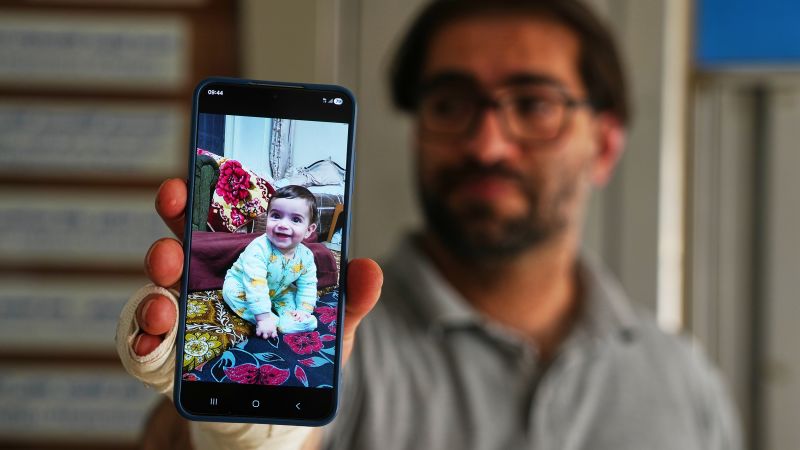
Israeli soldiers open fire on car – On Friday, an Israeli military vehicle was targeted by gunfire in the occupied West Bank, resulting in the death of a 7-month-old Palestinian infant and injuries to his parents, as confirmed by the Palestinian Ministry of Health. The incident occurred near the city of Hebron, where the boy, named Sam Fahd Abu Haykal, was traveling with his family when the shooting took place. The ministry reported that the gunfire struck the vehicle, killing the baby and leaving his parents with critical wounds.
The event has drawn immediate condemnation from Palestinian officials and residents, who are questioning the circumstances under which the child was targeted. Sam’s grandmother, Firyal Abu Haykal, described the scene to Reuters, stating that a single bullet pierced the car and claimed the life of her grandson. “This incident is beyond belief and cannot be justified,” she said, her voice trembling. “We are being targeted simply because we are in our homes, doing nothing but living our lives.” Her words underscore the growing frustration among local communities, who feel increasingly vulnerable to military actions.
“
The incident is unbelievable and unacceptable,” Firyal Abu Haykal told Reuters. “We are being harmed just because we decided to stay at our homes.”
While the Palestinian authorities reported the tragedy, the Israel Defense Forces (IDF) provided a different perspective in a statement. According to the IDF, soldiers “perceived” the vehicle as moving toward them at an accelerated pace, prompting a single shot to be fired. The statement acknowledged that the individuals injured were “uninvolved civilians” and emphasized that the decision to open fire was based on the soldiers’ assessment of the situation. “The incident is currently under review,” the IDF added, as investigators seek to determine the exact sequence of events.
The tragedy highlights a recurring pattern of violence in the region, with similar incidents reported in recent months. In March, four members of a Palestinian family, including two boys aged 5 and 7, were killed by Israeli soldiers during a late-night drive following the conclusion of the daily Ramadan fast. The family, described as “out for a quiet evening,” was caught in the crossfire, and the event was cited as a stark reminder of the ongoing tensions between Israeli forces and Palestinian civilians.
Escalating Tensions and Questions of Accountability
The shooting of the infant has intensified scrutiny over the IDF’s operations in the West Bank, where civilian casualties have been a frequent concern. Analysts and human rights organizations have called for transparency, urging the military to provide a full account of the incident. “The use of force against a child is a profound violation of international law,” said one activist, emphasizing the need for accountability in such cases.
Local residents have expressed shock and anger, with many organizing vigils to honor Sam Fahd Abu Haykal. “How can a child be a target?” asked a community leader, who spoke at a gathering in Hebron. “Every day, people are caught in the middle of conflict, and this is the latest in a series of tragic events.” The community’s response reflects a broader sentiment of despair and helplessness, as families continue to live under the shadow of military activity.
“
The incident is unbelievable and unacceptable,” Firyal Abu Haykal told Reuters. “We are being harmed just because we decided to stay at our homes.”
International reactions have also begun to surface, with some nations calling for an independent investigation into the shooting. The United Nations has previously noted the high number of civilian casualties in the West Bank, and this incident has been cited as further evidence of the challenges faced by Palestinian civilians. “This is not an isolated case; it is part of a larger pattern of disproportionate force,” stated a UN representative, urging both sides to review their tactics.
Meanwhile, the IDF has reiterated its commitment to minimizing harm while carrying out operations. A spokesperson emphasized that the soldiers acted in self-defense, citing the vehicle’s movement as a key factor. “Every decision to use lethal force is made with the intention to protect Israeli lives,” they said. However, critics argue that the threshold for perceived threat may be too low, particularly in areas with high civilian density.
A History of Tragic Encounters
Similar incidents have been reported with increasing frequency, underscoring the persistent nature of the conflict. In March, the shooting of a family during their post-Ramadan drive was a significant moment, as it occurred at a time when many Palestinians are more relaxed and less vigilant. “It was a peaceful evening, and the family had no idea they were in danger,” recalled a local witness, adding that the event left the community in disbelief.
The latest incident adds to a growing list of civilian casualties attributed to Israeli military actions. According to the Palestinian Ministry of Health, over 200 children have been killed in the West Bank this year alone, a statistic that has fueled debates about the proportionality of force. “These numbers are alarming and reflect the reality of life under occupation,” said a spokesperson for a human rights group, highlighting the emotional toll on families and the broader population.
As the investigation into the recent shooting continues, the focus remains on whether the IDF’s actions were justified or if the child was an unintended victim of escalating tensions. The incident serves as a poignant reminder of the human cost of conflict, with its impact resonating far beyond the immediate family. “Sam Fahd’s death will not be forgotten,” said a Palestinian activist, “and it will continue to fuel the fight for justice and peace in this region.”
With the situation in the West Bank remaining volatile, the incident has reignited calls for a comprehensive review of military operations. Advocates for Palestinian rights argue that the frequency of such events demands a reevaluation of tactics, particularly in areas where civilians are the primary presence. “We need to ensure that every action taken by the IDF is both necessary and measured,” said a legal expert, adding that accountability is essential for restoring trust between communities and the military.
As families mourn and the international community watches closely, the focus is on the lives lost and the unanswered questions surrounding the shooting. The incident has become a symbol of the ongoing struggle, with its implications stretching far beyond the immediate tragedy. For now, the world waits for further clarity from the IDF, hoping for a resolution that addresses the pain and suffering of those impacted by the violence.
