
Even Trump says he doesn’t know ‘where the hell’ his own false claim about Black unemployment came from
Even Trump says he doesn’t know ‘where the hell’ his own false claim about Black unemployment came from
The Unfounded Statistic: A Case of Uncertainty
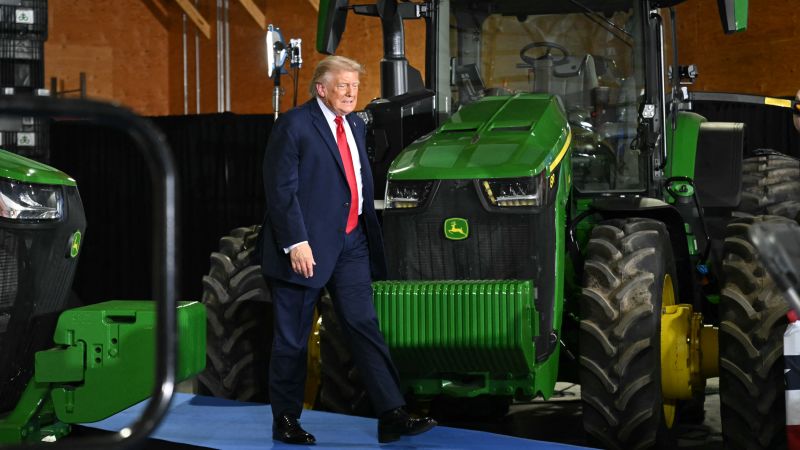
Even Trump says he doesn t know – During a public appearance in Wisconsin, President Donald Trump found himself grappling with a perplexing statistic. While he typically boasts about economic figures with unwavering confidence, this particular claim left him momentarily puzzled. He mused aloud about its origin, stating, “I don’t know where the hell that stat come — but we’ll take it.” This hesitation underscored a broader pattern: Trump’s tendency to wield data as a rhetorical tool, even when the numbers are questionable or misleading.
“And we’ve also had huge drops in — and I’ll tell you, this is something that’s amazing: African American unemployment is now doing better than it’s ever done. And I don’t know where that stat came from, but I’ll take it,” he said. “I don’t know where the hell that stat come — but we’ll take it.”
What the Data Actually Shows
Upon closer examination, the statistic Trump referenced is not as groundbreaking as he suggested. According to federal records, the most recent unemployment rate for Black or African American individuals in May 2026 stood at 6.6%, a slight improvement from the 7.3% recorded in April. This figure, however, is not a record low. In fact, it exceeds the rate Trump assumed when he took office in 2025, which was 6.2% in January of that year. The December 2024 rate, 6.1%, further illustrates the consistency of the trend, which has remained stable for the past 34 months under the Biden administration.
The true record-low Black unemployment rate, at least since the federal dataset began tracking in the early 1970s, was achieved in April 2023 under Biden, when it reached 4.8%. This was the lowest rate in the dataset’s history, surpassing the previous benchmark of 5.3% set during Trump’s first term in August and September 2019. While Trump’s claim about “huge drops” might seem plausible at first glance, the 0.7-percentage-point decline from April to May 2026 was modest compared to the 0.9-point drop in March to April 2024, which occurred during Biden’s tenure.
A Historical Perspective on Racial Unemployment Disparities
Black unemployment has historically remained higher than the rates for other racial groups, a trend that has persisted across administrations. Even as the overall national unemployment rate dipped to 4.3% in May 2026, the rate for Black individuals remained notably elevated. This discrepancy highlights the complex nature of economic recovery, where certain populations may lag behind others despite broader improvements. The data underscores that while progress has been made, significant gaps still exist, and Trump’s assertion of a “record” decline may downplay these ongoing challenges.
For instance, the 6.6% rate in May 2026 is higher than the 6.2% in January 2025 and the 6.1% in December 2024. These figures are seasonally adjusted, meaning they account for regular fluctuations influenced by factors like holidays and weather. However, even with this adjustment, the claim that Black unemployment is “doing better than it’s ever done” appears to be overstated. The 4.8% rate set in April 2023 remains the lowest documented, and Trump’s mention of a “huge drop” between April and May 2026 does not reflect a historical milestone.
Contrasting Trends: Trump’s Claims vs. Real Data
Trump’s statement about Black unemployment was just one of several questionable claims made at the Wisconsin event. He also referenced other statistics that had long been debunked by fact-checkers. These included assertions about record-low inflation, surging stock markets, and rapid job growth, all of which were either misleading or based on incomplete data. The lack of scrutiny for these figures raises questions about the reliability of his messaging, particularly when he seems unsure of their origins.
When Trump hesitantly questioned the source of the unemployment statistic, it was unclear whether he had ad-libbed it or was relying on a prepared script. This ambiguity has become a hallmark of his political communication, where he often blends unverified claims with well-established facts. The White House, as of the time of this report, has yet to provide a clear explanation for the statement, despite CNN’s repeated requests sent on Friday night and Saturday morning. This silence adds to the confusion, leaving the public to speculate on the validity of his assertions.
The Implications of a Misleading Narrative
By framing the 6.6% unemployment rate as a record low, Trump may be attempting to downplay the struggles of Black Americans in the labor market. This narrative could be used to justify his policies or to create a perception of economic success, even as other groups have seen more substantial gains. The 4.8% rate from April 2023, for example, was a result of sustained efforts to address racial disparities in employment, which Trump’s administration has not fully replicated.
Experts note that while month-to-month changes can be volatile, multi-month trends provide a clearer picture of economic conditions. The 0.7-point decline in Black unemployment between April and May 2026, though positive, is not indicative of a major turnaround. It is important to recognize that such declines often occur within broader cycles of economic expansion and contraction, and they should be viewed alongside other indicators like wage growth and job creation in specific sectors.
A Pattern of Inaccurate Assertions
The Wisconsin event marked another instance of Trump’s pattern of presenting data without sufficient verification. This behavior is not isolated; throughout his presidency, he has frequently cited statistics that lack supporting evidence or have been refuted by credible sources. The unemployment rate for Black Americans, while improved compared to previous months, has not reached a level that would be considered a historic low, yet Trump’s rhetoric suggests otherwise.
Despite this, the claim about Black unemployment gained traction in the media, with some outlets amplifying his assertion without immediate correction. This highlights the importance of critical analysis in political discourse. While Trump’s admission of uncertainty might appear self-deprecating, it also reveals a strategic approach to shaping public perception through selective use of data. The 6.6% rate, though better than April’s 7.3%, remains a point of contention in discussions about racial equity and economic progress.
Broader Context: A Nation’s Economic Progress and Racial Gaps
The national unemployment rate of 4.3% in May 2026 reflects a strong economy, yet it does not fully capture the experiences of all demographic groups. For Black Americans, the unemployment rate has remained higher than the national average, indicating persistent challenges that require targeted solutions. Trump’s claim, while not entirely incorrect, simplifies a nuanced reality. The 6.6% rate is an improvement, but it does not erase the fact that disparities still exist and that the path to full recovery is uneven.
As the nation continues to navigate economic cycles, the role of accurate data becomes increasingly vital. Trump’s admission of uncertainty about the origin of the statistic serves as a reminder that even the most confident political figures can be caught off guard by misleading information. The debate over Black unemployment rates will likely persist, with each administration’s performance measured against the backdrop of historical trends and the ongoing quest for equity in the labor market.
Conclusion: Fact-Checking in a Sea of Claims
Trump’s admission that he couldn’t recall where the false claim about Black unemployment originated illustrates the importance of fact-checking in political rhetoric. While the 6.6% rate in May 2026 is a positive sign, it is not a record low, nor does it represent a dramatic shift in the economic landscape. The data shows that progress has been made, but it also underscores the need for continued attention to disparities that persist even amid national improvements.
Fact-checkers and analysts have long highlighted the gaps between Trump’s assertions and the actual data, and this incident is another example of that trend. The lack of a clear explanation from the White House further fuels skepticism, suggesting that the claim was either a last-minute addition or a misstatement
