
The Supreme Court gave Republicans another congressional win. But its ruling means much more.
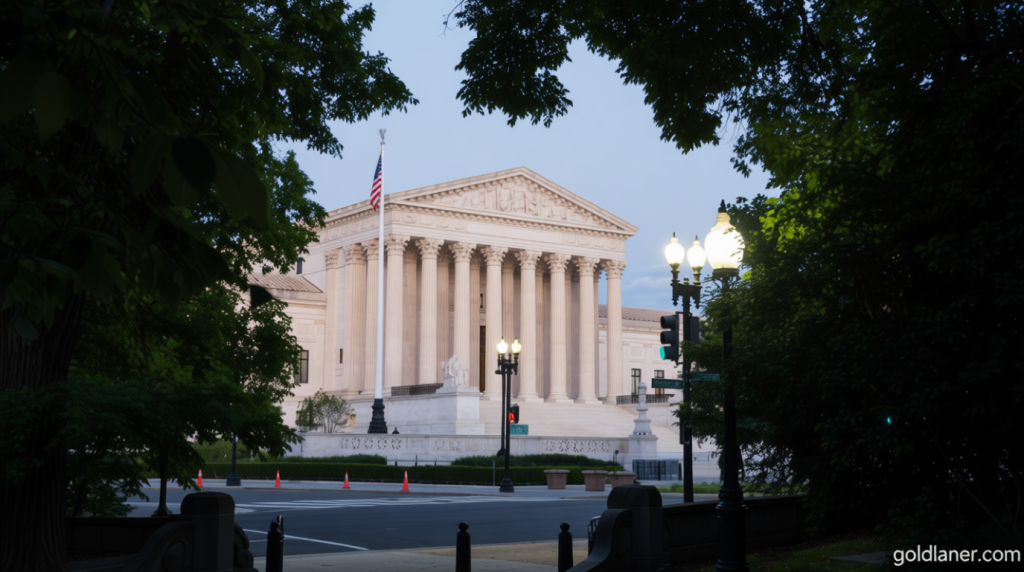
Supreme Court’s Ruling in Alabama: A Political Shift for Republicans
The Supreme Court gave Republicans another – The Supreme Court gave Republicans a significant advantage in Alabama’s congressional redistricting case, with a landmark decision on June 3, 2026, allowing the state to maintain a map that historically diluted Black voting power. The ruling, which overturned a prior finding of racial discrimination, reinforces the conservative majority’s stance on state autonomy in drawing electoral boundaries. By permitting Alabama’s redistricting plan, the court has enabled Republicans to consolidate control over congressional representation, potentially altering the balance of power in the U.S. House of Representatives. Critics argue that this decision signals a broader trend of weakening federal safeguards for minority voters, as the Supreme Court gave Republicans a strategic edge in shaping the political landscape.
Reversing a Previous Decision
In 2023, the Supreme Court had previously ruled against Alabama, determining that its redistricting plan intentionally weakened Black voters’ ability to elect candidates of their choice. The state had concentrated Black residents into a single district, leaving them with limited influence in statewide elections. However, the recent ruling by the same court now overturns that conclusion, permitting Alabama to retain a map that splits Black voters across multiple districts, diluting their collective power. This reversal reflects the court’s evolving interpretation of the Voting Rights Act, as the Supreme Court gave Republicans a renewed opportunity to reshape electoral outcomes.
The Impact of the Ruling
The Supreme Court’s decision has profound implications for voting rights, particularly in Southern states where similar cases have been pending. By prioritizing legislative “good faith,” the ruling allows states to redraw districts with minimal oversight, even if racial bias is evident. Alabama’s map, which now features only one Black district among seven, has effectively reduced the chances of Black Democrats securing representation. This shift has been met with criticism from civil rights advocates, who argue that the Supreme Court’s action undermines decades of progress in ensuring equitable voting access. The ruling also raises concerns about the erosion of protections that have historically safeguarded minority communities.
“We reach this conclusion with great reluctance and dismay,” the three-judge panel had previously stated in its 2023 opinion. Now, the Supreme Court’s reversal appears to validate the state’s efforts to maintain the status quo, demonstrating how the court gave Republicans a key tool to influence election results. The decision highlights the growing influence of state legislatures in determining the political power of minority voters, a trend that has accelerated in recent years.
A Rush to Judgment
The recent ruling came after a relatively expedited process, with limited time for comprehensive briefings and oral arguments. This rushed approach has drawn scrutiny from legal analysts, who question whether the court gave Republicans sufficient time to address all aspects of the case. By emphasizing “good faith” in legislative decisions, the majority dismissed the lower court’s 78-page analysis, which detailed Alabama’s systematic efforts to dilute Black voting strength. The decision not only weakens the Voting Rights Act’s enforcement but also sets a precedent for future cases where states can reshape districts to favor their political base.
Broader Implications for Voting Rights
The Supreme Court’s action in Alabama is part of a larger pattern of decisions that have weakened minority voting protections across the nation. In Louisiana v. Callais, decided on April 29, 2026, the court struck down key provisions of the 1965 Voting Rights Act, further enabling states to redraw districts with fewer federal constraints. This trend has already begun to reshape political outcomes in several Southern states, as the Supreme Court gave Republicans a framework to prioritize majority interests over minority representation. The ruling also underscores the interconnectedness of redistricting and electoral strategy, as states seek to maximize their political gains through careful map design.
The impact of the Supreme Court’s ruling extends beyond Alabama, with potential consequences for representation in upcoming midterm elections. Alabama’s legislators, who had long resisted creating a second Black district, now have the green light to proceed with a map that advantages Republican candidates. This development could reduce the number of Black Democrats in Congress, as the Supreme Court gave Republicans a decisive win in a key battleground state. The decision reflects a broader shift in the court’s approach to voting rights, with far-reaching effects on the nation’s democratic processes.
