
Top-ranked Aryna Sabalenka: ‘Just want to quit tennis’ after French Open quarterfinal defeat
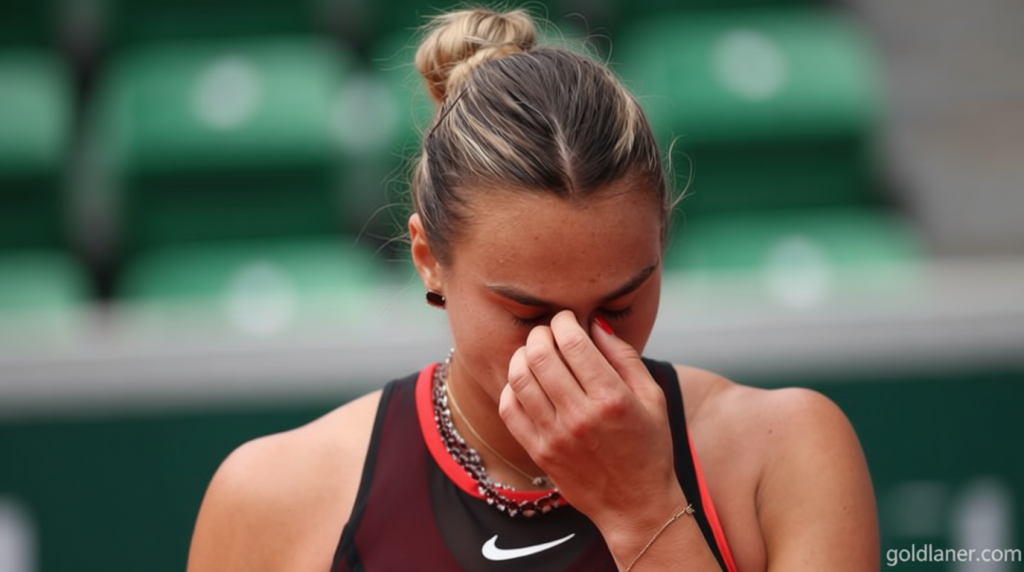
Top-Ranked Aryna Sabalenka: ‘Just Want to Quit Tennis’ After French Open Quarterfinal Defeat
Top ranked Aryna Sabalenka – French Open quarterfinals delivered a stunning upset as world No. 1 Aryna Sabalenka, the reigning Wimbledon champion, faced a dramatic collapse against Diana Shnaider. The match, played on Wednesday, saw Sabalenka lose 3-6, 7-5, 6-0, marking her first defeat in the tournament and ending her hopes of claiming the title. Despite leading 4-1 in the second set and holding a two-point advantage while serving for the match, Sabalenka’s resolve crumbled, leaving her in emotional turmoil. The loss, coupled with her earlier frustration, prompted her to express a desire to walk away from the sport momentarily.
“Just want to quit tennis right now,” Sabalenka said after the match, her voice tinged with exhaustion and disappointment. “We’ll see in few days. Hopefully I’ll get back on track mentally.”
Shnaider, a 22-year-old qualifier, capitalized on Sabalenka’s vulnerability, securing her first grand slam quarterfinal victory. The Belarusian star’s performance was riddled with unforced errors, a stark contrast to her usual composure. The defeat was particularly painful for Sabalenka, who had previously faced a similar fate against Coco Gauff in last year’s final. In that match, she lost the first set before unraveling with a series of mistakes, a pattern that repeated itself this time.
The match’s climax unfolded in the third set, where Sabalenka’s frustration peaked. She fell 0-30 down in the sixth game, screaming after each lost point and appearing overwhelmed by the pressure. Although she saved two match points at 0-40, her final shot sailed into the net, sealing her fate. Sabalenka later reflected on the mental toll of the loss, describing it as a culmination of overthinking, missed opportunities, and self-doubt.
“I just think it’s combination of everything,” Sabalenka lamented. “You overthink, then you make easy mistakes, then you miss opportunities.”
Sabalenka’s struggles mirrored her earlier match against Gauff, where she had shouted at her team box and displayed visible signs of distress. “I just have to sit back and openly think about what’s going on in my head in those tough moments,” she said, acknowledging the emotional challenges of competing at the highest level. “Because I’m quite an experienced player. I have been through so many things, and I overcome so many things.”
Shnaider’s victory was a testament to her resilience, as she extended her Roland Garros run to the semifinals. The 22-year-old, who had already reached a major quarterfinal for the first time, described her performance as a mix of focus and determination. “Well, honestly I am speechless. Super happy,” Shnaider said. “I feel like I was trying to focus point by point. Not thinking about the score. She is the world No. 1, so I just trying to do my best. I just had to fight for every point.”
A Shocking Tournament Landscape
While Sabalenka’s defeat was a major blow, it was part of a broader trend of unexpected results at the 125th edition of the French Open. Defending champion Coco Gauff fell in the third round, and four-time champion Iga Swiatek exited in the fourth. These exits created a ripple effect, opening the door for underdog players to challenge the favorites. Among them was Maja Chwalinska, who advanced to the semifinals by defeating No. 22-seeded Anna Kalinskaya in a hard-fought third-round encounter. Chwalinska’s triumph marked her second appearance at the Roland Garros semifinals, a rare feat for a Polish woman.
Chwalinska, a qualifier, drew inspiration from Emma Raducanu’s 2021 US Open run, where the British player made history as an 18-year-old wildcard. “It was such an impressive run, you know,” Chwalinska recalled. “Also, she was so young.” The 24-year-old Polish player’s victory over Kalinskaya came after a grueling three-qualifying-round journey, underscoring her perseverance. The win also highlighted the tournament’s unpredictability, with unseeded players taking down high-profile names.
The Italian Triumph in Men’s Tennis
In the men’s draw, the French Open saw a surge of Italian talent, with 10th-seeded Flavio Cobolli securing a place in the semifinals. Cobolli’s 4-6, 6-4, 6-4, 6-4 victory over No. 4 seed Felix Auger-Aliassime was a pivotal moment, ensuring an Italian finalist for the first time in over a decade. The Italian contingent included Cobolli and Matteo Berrettini, with Matteo Arnaldi set to join them in the semifinals after their match.
However, the men’s tournament was not without its own surprises. Top-ranked Jannik Sinner, the defending champion, was stunned in the second round, while 24-time Grand Slam winner Novak Djokovic suffered a similar fate in the third. Both players had led two sets before crumbling under pressure, adding to the list of notable upsets. According to Opta, this marks the first major tournament since 1977 without a former champion in either the men’s or women’s semifinals, a historic anomaly in the sport’s calendar.
The Italian breakthrough was a highlight of the tournament, with Cobolli’s run showcasing the country’s growing presence in tennis. His semifinal clash against Berrettini or Arnaldi will be a crucial test of his mettle, as he aims to carry the momentum into the final stages. Meanwhile, the women’s draw continued to surprise, with Shnaider’s victory over Sabalenka signaling a new era of competition.
Aryna Sabalenka’s Mental Struggles
Sabalenka’s loss to Shnaider was not just a physical defeat but a mental one. The Belarusian star, known for her tenacity on the court, appeared shaken during the match, especially in the decisive third set. Her aggressive volleys and deep baseline play were replaced by hesitant strokes, a sign of her waning confidence. The pressure of playing against a qualifier in a high-stakes match seemed to amplify her anxiety, leading to a breakdown in her usual form.
Sabalenka’s emotional reaction was emblematic of her larger struggles this season. Despite her early dominance in the tournament, she had shown signs of fatigue, particularly in the first set. Her inability to maintain focus during critical moments cost her dearly, as Shnaider capitalized on her errors to turn the tide. The 27-year-old from Belarus admitted that the mental lapses were as damaging as the physical mistakes, a challenge she is determined to overcome.
“I just saw some moments of her frustration,” Shnaider said, reflecting on Sabalenka’s performance. “I know Aryna, that she’s a very emotional person.”
For Sabalenka, the loss was a setback but not the end of her journey. She expressed hope that a day of reflection, including a potential session of destruction in the locker room, would help her reset. “You know those rooms where you just go in and you smash everything,” she said. “Probably I will spend a whole day tomorrow over there destroying stuff. Maybe it will help, maybe not.” The self-awareness and resilience she displayed after the match suggest a player willing to learn from her mistakes.
The French Open continues to evolve as a stage for both established stars and rising talents. With Sabalenka’s exit, the tournament now holds the promise of new narratives and unseeded players stepping into the spotlight. As the semifinals approach, the focus will shift to whether the underdogs can capitalize on the chaos, or if the top seeds will find their footing. For now, Sabalenka’s story serves as a reminder of the fine line between triumph and despair in the world of professional tennis.
