
Federal court blocks Alabama plan for new congressional districts that could help Republicans
Federal court blocks Alabama plan for new congressional districts that could help Republicans
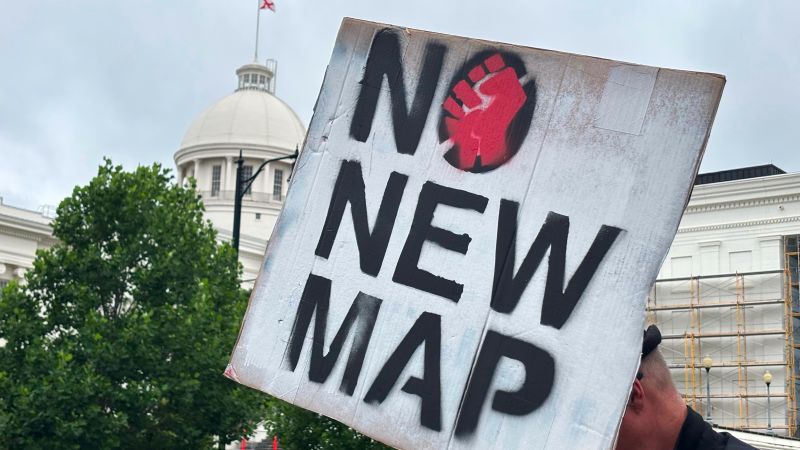
Federal court blocks Alabama plan for new – On Tuesday, federal judges issued a temporary injunction against Alabama’s proposal to implement a new congressional map that could shift the balance of power in a critical House race during the upcoming midterm elections. The decision, handed down by a three-judge panel in the state’s ongoing redistricting case, prevents Alabama from altering its current district boundaries at this time. The court ordered the state to retain the same districts established under a previous ruling, which were used for the 2024 elections. This ruling marks a significant setback for state Republicans, who had hoped to use a revised map to regain the seat currently held by Democratic Representative Shomari Figures.
Legal battle over voting rights and district fairness
Advocates for Black voters in Alabama had sought the preliminary injunction, emphasizing that the same panel in 2023 identified the state’s existing map as intentionally discriminatory. They argued that changing the map mid-election year would create unnecessary confusion and undermine fair representation. The plaintiffs claimed that the new map would dilute the voting power of Black communities, particularly in districts where they have historically been a majority. This legal maneuver underscores the growing tensions between partisan redistricting efforts and claims of racial bias in electoral systems.
The temporary block on Alabama’s plan highlights the broader implications of the Supreme Court’s April ruling, which struck down a majority-Black district in Louisiana. That decision weakened the federal Voting Rights Act, emboldening Republicans in Southern states to pursue similar strategies. The ruling in Louisiana, which removed a district that had consistently elected Democratic representatives, has sparked a wave of redistricting initiatives across the region. Alabama’s move is part of this coordinated effort to reshape voting districts in ways that favor the GOP, particularly in races where minority voters have been pivotal.
Strategic adjustments in key states
In addition to Alabama, Tennessee has also accelerated its redistricting process. The state’s legislature quickly enacted new congressional districts after the Supreme Court’s ruling, splitting a majority-Black district in Memphis. This adjustment could enable Republicans to secure all nine of Tennessee’s House seats in the November elections. The state’s actions include temporarily reopening the candidate qualification period for August primaries, allowing new contenders to enter the race while existing candidates may shift districts or withdraw. Such measures aim to maximize Republican chances of winning additional seats in the midterms.
Other Southern states, including South Carolina, have considered similar changes. Republican-led lawmakers in South Carolina proposed altering the primary election dates, shifting the June 9 congressional primary to August under revised districts. This strategy would allow the state to adjust district boundaries before the primary, potentially improving GOP prospects for capturing a seat. The decision to postpone Louisiana’s congressional primaries until later this summer by Republican Governor Jeff Landry further illustrates the urgency with which states are trying to align their electoral maps with new political priorities.
Partisan motivations and electoral impact
The redistricting frenzy is driven by a broader strategy to consolidate power, especially as President Donald Trump seeks to preserve Republicans’ narrow House majority. By restructuring districts to dilute minority voting strength, states aim to gain an edge in competitive races. The Supreme Court’s weakening of the Voting Rights Act has provided legal cover for these adjustments, enabling Republicans to draw lines that favor their candidates. Alabama’s case exemplifies this trend, as the new map was designed to give Republicans an advantage in a key race against Democratic Rep. Shomari Figures.
While Alabama’s plan is stalled, the legal and political battle over redistricting continues. The ruling serves as a reminder of the judiciary’s role in safeguarding voting rights, even as partisan interests push for changes. For Democrats, the decision in Alabama offers a temporary reprieve but also exposes their vulnerability in other states. In California, Democrats have already introduced their own redistricting plan, aiming to secure more seats by consolidating urban voting blocs. Meanwhile, in Utah, the party expects to gain a seat through court-imposed boundaries that prioritize minority representation.
The temporary block on Alabama’s map has created a ripple effect across the nation. Legal experts note that the ruling could influence how other states approach their redistricting efforts, especially those with upcoming primaries. For instance, Texas, which Trump urged to redraw its districts last summer, has already finalized its map. However, some states, like Georgia and North Carolina, still face litigation over their proposed boundaries. The pace of these adjustments reflects a race against time, with political actors striving to secure advantages before the November elections.
Historical context and future implications
Redistricting in Alabama has been a contentious issue for years, with Republicans repeatedly challenging maps that they claim disadvantage Black voters. The 2023 ruling by the three-judge panel confirmed their suspicions, citing evidence of intentional discrimination. This decision has been a catalyst for Alabama’s current push to reshape its districts, but the latest federal ruling shows that the state cannot act unilaterally without judicial approval. The legal battle has become a focal point in the larger debate over voting rights, with implications for the 2026 midterms and the future of partisan representation.
As the election season progresses, the impact of redistricting on voter turnout and political outcomes will be closely watched. The temporary injunction in Alabama underscores the importance of maintaining consistency in district boundaries during an election year, preventing last-minute changes that could sway results. However, the ruling does not resolve the underlying dispute; it simply delays the implementation of the new map. Republicans are likely to challenge the decision in higher courts, seeking to overturn the injunction and realign the districts as planned.
Experts suggest that the outcome of this case could influence similar battles in other states. If the Supreme Court sides with Alabama, it may embolden Republicans to pursue more aggressive redistricting strategies. Conversely, a reversal could strengthen the argument that such changes are inherently discriminatory. The broader implications extend beyond Alabama, as the ruling ties into the national conversation about the Voting Rights Act and its effectiveness in protecting minority voters. With the November elections approaching, the stakes for both parties have never been higher.
Meanwhile, Democrats are positioning themselves to counter the GOP’s efforts. In addition to their plans in California and Utah, they are monitoring developments in states like Georgia and North Carolina, where legal challenges are ongoing. These adjustments are part of a coordinated strategy to protect and expand minority voting power, ensuring that the midterms reflect the will of the electorate. The battle over redistricting is not just about maps; it’s about the future of political representation and the balance of power in Congress.
The federal court’s intervention in Alabama adds a new layer to the already complex redistricting saga. While it temporarily halts the state’s plan, it also highlights the role of the judiciary in mediating partisan conflicts. The ruling serves as a reminder that redistricting is a powerful tool in shaping electoral outcomes, and the competition to control it is fierce. As the November elections near, the decisions made in courtrooms across the country will determine the direction of the U.S. House and the strength of the political parties heading into the next phase of the legislative battle.
With the legal landscape in flux, the impact of redistricting on the 2026 midterms remains uncertain. Alabama’s temporary setback may allow Democrats to hold onto their current advantage in the state, but it could also prompt Republicans to seek alternative routes, such as appealing to the Supreme Court or adjusting their strategies in other races. The situation in Tennessee, where the new map is already in place, suggests that some states are more prepared to act swiftly, even as others face delays and challenges. This dynamic illustrates the evolving nature of redistricting battles, where timing, legal arguments, and political will play critical roles in shaping the final outcomes.
As the story unfolds, the focus will shift to how these changes affect voter participation and electoral fairness. The federal court’s decision in Alabama is a clear indication that the fight over redistricting is far from over. It also raises questions about the long-term viability of the Voting Rights Act and its ability to prevent discriminatory practices in states with Republican-controlled legislatures. The ruling has reignited discussions about the need for stronger protections to ensure that minority voters have an equitable voice in the democratic process, even as the political stakes continue to escalate.
